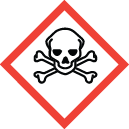
Cas no 814-68-6 (Acryloyl chloride)

Acryloyl chloride (C?H?ClO) is a highly reactive acyl chloride derivative of acrylic acid, characterized by its α,β-unsaturated carbonyl structure. This colorless to pale yellow liquid is widely utilized in organic synthesis, particularly for introducing acrylate functional groups into molecules via acylation reactions. Its key advantages include high reactivity with nucleophiles (e.g., alcohols, amines) and compatibility with polymerization processes, enabling the production of acrylate-based polymers and crosslinked materials. Acryloyl chloride is also valued for its role in synthesizing specialty chemicals, adhesives, and coatings. Proper handling is essential due to its moisture sensitivity, corrosivity, and lachrymatory properties. Storage under inert conditions is recommended to maintain stability.
Acryloyl chloride structure
Product Name:Acryloyl chloride
CAS No:814-68-6
MF:C3H3ClO
MW:90.5083200931549
MDL:MFCD00000731
CID:39941
PubChem ID:13140
Update Time:2025-10-14

Acryloyl chloride Chemical and Physical Properties

Names and Identifiers

    • Acryloyl chloride
    • chloridkyselinyakrylove
    • Propenoyl chloride
    • ACRYLOYL CHLORIDE STAB. WITH 2 6-DI-TER
    • ACRYLOYL CHLORIDE, STAB.
    • Acryloyl Chloride (stabilized with Phenothiazine)
    • 2-Propenyl chloride
    • Acrylyl chloride
    • prop-2-enoyl chloride
    • 2-Propenoyl chloride
    • acryloyl chlorid
    • AKOS009031459
    • InChI=1/C3H3ClO/c1-2-3(4)5/h2H,1H2
    • Acryloyl chloride, >=97%, contains ~400 ppm phenothiazine as stabilizer
    • Acryloyl chloride 200 ppm phenothiazine as stabilizer
    • acryloylchlorid
    • HSDB 6330
    • A840137
    • DTXSID1061150
    • FT-0621885
    • NSC-93770
    • A0147
    • GS-3769
    • 814-68-6
    • Acryloyl chloride, 97.0%, contains <210 ppm MEHQ as stabilizer
    • F1905-7140
    • MFCD00000731
    • EINECS 212-399-0
    • AMY18873
    • Acryloylchloride
    • UNII-8K23O56TG5
    • NSC93770
    • WLN: GV1U1
    • A801564
    • acryloyl choride
    • Acrylic acid chloride; Acrylyl chloride; NSC 93770; Propenoyl chloride
    • Chlorid kyseliny akrylove [Czech]
    • Acrylic acid chloride
    • BCP06212
    • C3H3ClO
    • BP-31001
    • BRN 0635744
    • 8K23O56TG5
    • NSC 93770
    • NS00042320
    • HFBMWMNUJJDEQZ-UHFFFAOYSA-
    • Chlorid kyseliny akrylove
    • acryl chloride
    • acrylic chloride
    • Q4676582
    • Acryloyl chloride, purum, >=96.0% (HPLC)
    • BP-30255
    • ACRYLYL CHLORIDE [HSDB]
    • EN300-19484
    • chlorohydroxyallene
    • Acryloyl chloride (6CI, 8CI)
    • A 0147
    • 2-Propenoyl Chloride; Acrylic Acid Chloride; Acrylyl Chloride; NSC 93770; Propenoyl Chloride
    • DB-024470
    • MDL: MFCD00000731
    • Inchi: 1S/C3H3ClO/c1-2-3(4)5/h2H,1H2
    • InChI Key: HFBMWMNUJJDEQZ-UHFFFAOYSA-N
    • SMILES: O=C(C=C)Cl
    • BRN: 635744

Computed Properties

  • Exact Mass: 89.98720
  • Monoisotopic Mass: 89.987242
  • Isotope Atom Count: 0
  • Hydrogen Bond Donor Count: 0
  • Hydrogen Bond Acceptor Count: 1
  • Heavy Atom Count: 5
  • Rotatable Bond Count: 1
  • Complexity: 57.9
  • Covalently-Bonded Unit Count: 1
  • Defined Atom Stereocenter Count: 0
  • Undefined Atom Stereocenter Count : 0
  • Defined Bond Stereocenter Count: 0
  • Undefined Bond Stereocenter Count: 0
  • Surface Charge: 0
  • Tautomer Count: nothing
  • XLogP3: 1.4
  • Topological Polar Surface Area: 17.1

Experimental Properties

  • Color/Form: colorless liquid
  • Density: 1.114
  • Melting Point: 72-76°C
  • Boiling Point: 75°C
  • Flash Point: 16 oC
  • Refractive Index: n20/D 1.435(lit.)
  • Solubility: Miscible with water.
  • Water Partition Coefficient: Miscible with water.
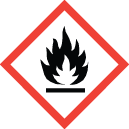
  • Stability/Shelf Life: Stable, but reacts violently with water. Incompatible with alcohols, oxidizing agents, strong bases. Light-sensitive. Highly flammable.
  • PSA: 17.07000
  • LogP: 0.93780
  • Vapor Pressure: 1.93 psi ( 20 °C)
  • Sensitiveness: Moisture & Light Sensitive
  • Solubility: It can be miscible with chloroform and decomposed in water and ethanol. Volatile.

Acryloyl chloride Security Information

Acryloyl chloride Customs Data

  • HS CODE:2916190090
  • Customs Data:

    China Customs Code:

    2916190090

    Overview:

    2916190090 Other unsaturated acyclic monocarboxylic acids(Including its anhydride\Acyl halide,Peroxides and peroxyacids and their derivatives).Regulatory conditions:AB(Customs clearance form for Inbound Goods,Customs clearance form for outbound goods).VAT:17.0%.Tax refund rate:9.0%.MFN tariff:6.5%.general tariff:30.0%

    Declaration elements:

    Product Name, component content, use to, Acrylic acid\Acrylates or esters shall be packaged clearly

    Regulatory conditions:

    A.Customs clearance form for Inbound Goods
    B.Customs clearance form for outbound goods

    Inspection and quarantine category:

    R.Sanitary supervision and inspection of imported food
    S.Sanitary supervision and inspection of exported food
    M.Import commodity inspection
    N.Export commodity inspection

    Summary:

    2916190090 unsaturated acyclic monocarboxylic acids, their anhydrides, halides, peroxides, peroxyacids and their derivatives.supervision conditions:AB(certificate of inspection for goods inward,certificate of inspection for goods outward).VAT:17.0%.tax rebate rate:9.0%.MFN tariff:6.5%.general tariff:30.0%

Acryloyl chloride Pricemore >>

Related Categories No. Product Name Cas No. Purity Specification Price update time Inquiry
SHANG HAI A LA DING SHENG HUA KE JI GU FEN Co., Ltd.
A104614-100g
Acryloyl chloride
814-68-6 96%,200 ppm MEHQ
100g
¥189.90 2023-09-04
SHANG HAI A LA DING SHENG HUA KE JI GU FEN Co., Ltd.
A104614-5g
Acryloyl chloride
814-68-6 96%,200 ppm MEHQ
5g
¥39.90 2023-09-04
SHANG HAI A LA DING SHENG HUA KE JI GU FEN Co., Ltd.
A104614-25g
Acryloyl chloride
814-68-6 96%,200 ppm MEHQ
25g
¥69.90 2023-09-04
SHANG HAI A LA DING SHENG HUA KE JI GU FEN Co., Ltd.
A104614-500g
Acryloyl chloride
814-68-6 96%,200 ppm MEHQ
500g
¥749.90 2023-09-04
SHANG HAI YI EN HUA XUE JI SHU Co., Ltd.
R018011-100g
Acryloyl chloride
814-68-6 200 ppm MEHQ
100g
¥219 2024-05-21
SHANG HAI YI EN HUA XUE JI SHU Co., Ltd.
R018011-25g
Acryloyl chloride
814-68-6 200 ppm MEHQ
25g
¥88 2024-05-21
SHANG HAI YI EN HUA XUE JI SHU Co., Ltd.
R018011-500g
Acryloyl chloride
814-68-6 200 ppm MEHQ
500g
¥748 2024-05-21
SHANG HAI YI EN HUA XUE JI SHU Co., Ltd.
R018011-5g
Acryloyl chloride
814-68-6 200 ppm MEHQ
5g
¥33 2024-05-21
SHANG HAI JI ZHI SHENG HUA Technology Co., Ltd.
A22780-100g
Acrylyl chloride
814-68-6 96%
100g
¥278.0 2022-04-28
SHANG HAI JI ZHI SHENG HUA Technology Co., Ltd.
A22780-500g
Acrylyl chloride
814-68-6 96%
500g
¥888.0 2022-04-28

Acryloyl chloride Production Method

Production Method 1

Reaction Conditions
Reference
Synthesis of acyl halides under very mild conditions
Devos, Alain; et al, Journal of the Chemical Society, 1979, (24), 1180-1

Production Method 2

Reaction Conditions
Reference
β-Propiolactone. VIII. Reactions with organic and inorganic acids, acid chlorides, and anhydrides
Gresham, T. L.; et al, Journal of the American Chemical Society, 1950, 72, 72-4

Production Method 3

Reaction Conditions
1.1 Reagents: Potassium carbonate Solvents: Tetrahydrofuran ,  Water ;  rt → 0 °C; 2 h, 0 °C
Reference
functionalized chalcogenide hybrid inorganic/organic polymers (CHIPs) via inverse vulcanization of elemental sulfur and vinylanilines
Zhang, Yueyan; et al, Polymer Chemistry, 2018, 9(17), 2290-2294

Production Method 4

Reaction Conditions
1.1 Reagents: Potassium carbonate Solvents: Diethyl ether ,  Water ;  1 h, 4 °C; 2 h, rt
Reference
Thermosensitive Phase-Separation Behavior of Poly(acrylic acid)-graft-poly(N,N-dimethylacrylamide) Aqueous Solution
Shibanuma, Tetsuo; et al, Macromolecules, 2000, 33(2), 444-450

Production Method 5

Reaction Conditions
Reference
On the hydrozirconation of 4,4-dimethyl-2-oxazolines of some α,β-, β,γ- and γ,δ-unsaturated fatty acids
Alvhaell, J.; et al, Chemica Scripta, 1984, 24(4-5), 170-7

Production Method 6

Reaction Conditions
Reference
Anionotropic rearrangement in the reaction of β-chloropropionic acid with phosphoric anhydride
Kostyanovskii, R. G., Zhurnal Obshchei Khimii, 1961, 31,

Production Method 7

Reaction Conditions
1.1 Reagents: Triethylamine Solvents: Tetrahydrofuran ;  1 h, 5 °C; 4 h, 0 °C
Reference
Phosphinite-functionalized silica and hexagonal mesoporous silica containing palladium nanoparticles in Heck coupling reaction: synthesis, characterization, and catalytic activity
Farjadian, Fatemeh; et al, RSC Advances, 2015, 5(97), 79976-79987

Production Method 8

Reaction Conditions
Reference
Synthesis of acyl halides under very mild conditions
Devos, Alain; et al, Journal of the Chemical Society, 1979, (24), 1180-1

Production Method 9

Reaction Conditions
1.1 Reagents: Benzoyl chloride ,  Triethylamine ,  Hydroquinone
Reference
Facile hydrophobic modification of hybrid poly(urethane-urea)methacrylate aqueous dispersions and films through blending with novel waterborne fluorinated acrylic copolymers
Yang, Chengcheng; et al, Colloid and Polymer Science, 2012, 290(6), 491-506

Production Method 10

Reaction Conditions
1.1 Solvents: Tetrahydrofuran ;  6 h, 60 °C; 60 °C → 0 °C
1.2 Reagents: Triethylamine ;  0 °C; 2 h, > 0 °C; 0 °C → rt; 48 h, rt
Reference
Preparation and properties of photopolymerized hybrid composites with covalently attached magnetite nanoparticles
Melinte, Violeta; et al, Chemical Engineering Journal (Amsterdam, 2015, 259, 542-551

Production Method 11

Reaction Conditions
1.1 Reagents: Sodium methoxide Solvents: Methanol ;  rt
1.2 Reagents: Dowex ;  neutralized, rt
Reference
Novel multivalent mannose compounds and their inhibition of the adhesion of type 1 fimbriated uropathogenic E. coli
Appeldoorn, Chantal C. M.; et al, Tetrahedron: Asymmetry, 2005, 16(2), 361-372

Production Method 12

Reaction Conditions
1.1 Reagents: Zirconium chloride (ZrCl4)
Reference
Preparation of acryloyl chloride from acrylic acid
, European Patent Organization, , ,

Production Method 13

Reaction Conditions
1.1 Catalysts: Hydroquinone
Reference
Reactivity ratios of monomers cholesteryl acrylate and 1-hexene in liquid crystalline copolymers: their synthesis and characterization
Hoque, Samiul; et al, Journal of Polymer Materials, 2011, 28(1), 49-58

Production Method 14

Reaction Conditions
Reference
Synthesis and structure of 4-benzoyl-3-hydroxyphenyl acrylate
Sosnina, V. V.; et al, Izvestiya Vysshikh Uchebnykh Zavedenii, 1994, 37(2), 67-72

Production Method 15

Reaction Conditions
1.1 70 - 72 °C
Reference
Total Synthesis of (+)-trans-Trikentrin A
Tebeka, Iris R. M.; et al, Chemistry - A European Journal, 2012, 18(52), 16890-16901

Production Method 16

Reaction Conditions
1.1 Reagents: tert-Butyl hypochlorite
Reference
Positive halogen compounds. XIII. tert-Butyl hypochlorite chlorination of ethers, aldehydes, and other molecules with polar substituents
Walling, Cheves; et al, Journal of the American Chemical Society, 1967, 89(6), 1515-19

Production Method 17

Reaction Conditions
1.1 Catalysts: tert-Butyl hypochlorite
Reference
t-Butyl Hypochlorite
Simpkins, Nigel S.; et al, e-EROS Encyclopedia of Reagents for Organic Synthesis, 2001, ,

Production Method 18

Reaction Conditions
1.1 Reagents: Triphenylphosphine Solvents: Tetrahydrofuran ,  Water ;  45 °C
Reference
Asymmetric synthesis of (-)-9-epi-metazocine
Chen, Qiang; et al, Synlett, 2012, 23(9), 1349-1352

Production Method 19

Reaction Conditions
1.1 Catalysts: Irgacure 369 ,  Bis(2,4,6-trimethylbenzoyl)phenylphosphine oxide Solvents: Dimethylacetamide ;  24 h, rt; 5 - 20 min
Reference
Robust thermostable polymer composition based on poly[N,N'-(1,3-phenylene)isophthalamide] and 3,3-bis(4-acrylamidophenyl)phthalide for laser 3D printing
Kholkhoev, Bato Ch.; et al, Mendeleev Communications, 2019, 29(2), 223-225

Production Method 20

Reaction Conditions
1.1 Reagents: Triethylamine Solvents: Tetrahydrofuran ;  1 h, 5 °C; 4 h, 0 °C
Reference
Phosphinite-functionalized silica and hexagonal mesoporous silica containing palladium nanoparticles in Heck coupling reaction: synthesis, characterization, and catalytic activity
Farjadian, Fatemeh; et al, RSC Advances, 2015, 5(97), 79976-79987

Acryloyl chloride Raw materials

Acryloyl chloride Preparation Products

Acryloyl chloride Suppliers

Tiancheng Chemical (Jiangsu) Co., Ltd
Gold Member
Audited Supplier Audited Supplier
(CAS:814-68-6)Acryloyl Chloride, stabilized with Phenothiazine), ≥ 95.0%
Order Number:LE16723;LE1755129;LE4665
Stock Status:in Stock
Quantity:25KG,200KG,1000KG
Purity:99%
Pricing Information Last Updated:Friday, 20 June 2025 12:14
Price ($):discuss personally
Suzhou Senfeida Chemical Co., Ltd
Gold Member
Audited Supplier Audited Supplier
(CAS:814-68-6)Acryloyl chloride
Order Number:sfd10756
Stock Status:in Stock
Quantity:200kg
Purity:99.9%
Pricing Information Last Updated:Friday, 19 July 2024 14:35
Price ($):discuss personally
Amadis Chemical Company Limited
Gold Member
Audited Supplier Audited Supplier
(CAS:814-68-6)Acryloyl chloride
Order Number:A1207150
Stock Status:in Stock
Quantity:500g
Purity:99%
Pricing Information Last Updated:Monday, 2 September 2024 15:57
Price ($):325.0

Acryloyl chloride Spectrogram

1H NMR 300 MHz DMSO
1H NMR
13C NMR
13C NMR

Additional information on Acryloyl chloride

Acryloyl chloride (CAS No. 814-68-6): A Versatile Building Block in Modern Chemical Biology

Acryloyl chloride, a compound with the chemical formula C?H?ClO and a CAS number of 814-68-6, is a highly reactive and valuable intermediate in the field of organic synthesis and chemical biology. Its unique reactivity stems from the presence of both an acrylate group and a chloro-substituted carbon, making it an indispensable tool for the synthesis of various functional molecules. This introduction delves into the properties, applications, and recent advancements in the utilization of acryloyl chloride, particularly in the context of pharmaceuticals and biotechnology.

The reactivity of acryloyl chloride is primarily attributed to its ability to undergo addition reactions with nucleophiles, including amines, alcohols, and thiols. This property has been exploited in the synthesis of polymers, coatings, and specialty chemicals. However, its most significant applications lie in the pharmaceutical and biotechnology sectors, where it serves as a key intermediate in the preparation of drug molecules and biomaterials.

In recent years, there has been a surge in research focused on developing novel methodologies for the functionalization of biomolecules using acryloyl chloride. One notable area of interest is its use in the synthesis of peptidomimetics, which are designed to mimic the biological activity of natural peptides but with improved stability and pharmacokinetic properties. The acrylate group in acryloyl chloride allows for facile conjugation with amino acids or peptides via Michael addition reactions, enabling the creation of complex molecular architectures.

Another emerging application of acryloyl chloride is in the field of bioconjugation chemistry. Researchers have leveraged its reactivity to develop novel strategies for attaching fluorophores or other imaging agents to biomolecules. This has opened up new avenues for molecular imaging and diagnostics, where precise control over molecular structure is crucial for achieving high sensitivity and specificity. For instance, recent studies have demonstrated the use of acryloyl chloride-functionalized probes for targeted imaging of cancer cells, highlighting its potential in therapeutic development.

The versatility of acryloyl chloride extends beyond small-molecule synthesis; it also plays a pivotal role in materials science. The ability to introduce acrylate groups into polymers allows for post-polymerization modifications, enabling the creation of functional materials with tailored properties. For example, researchers have utilized acryloyl chloride to modify polyethylene glycol (PEG) chains, enhancing their biocompatibility and solubility. These modified PEGs find applications in drug delivery systems, where their stability and controlled release profiles are critical for therapeutic efficacy.

In addition to its role in polymer chemistry, acryloyl chloride has been instrumental in the development of advanced biomaterials. The incorporation of acrylate-functionalized groups into hydrogels has enabled the creation of three-dimensional matrices that closely mimic extracellular environments. These hydrogels are widely used for cell culture and tissue engineering applications due to their biocompatibility and ability to support cell adhesion and growth. Recent advancements have focused on optimizing hydrogel formulations for specific biomedical applications, such as wound healing or drug delivery.

The synthesis and handling of acryloyl chloride require careful consideration due to its reactive nature. Typically prepared from acrylic acid via chlorination using reagents such as thionyl chloride or phosphorus pentachloride, it must be stored under inert conditions to prevent degradation. Despite these precautions, its high reactivity necessitates rigorous safety protocols during use. Recent research has explored alternative synthetic routes that aim to improve yield and reduce byproduct formation while maintaining its utility as a synthetic intermediate.

The impact of acryloyl chloride on modern chemical biology cannot be overstated. Its ability to facilitate diverse chemical transformations has enabled researchers to design innovative molecular architectures with significant implications for drug discovery and materials science. As our understanding of biological systems continues to evolve, it is likely that new applications for this versatile compound will emerge, further solidifying its importance in scientific research.

Recommended suppliers
Tiancheng Chemical (Jiangsu) Co., Ltd
(CAS:814-68-6)Acryloyl Chloride, stabilized with Phenothiazine), ≥ 95.0%
LE16723;LE1755129;LE4665
Purity:99%/99%/99%
Quantity:25KG,200KG,1000KG/25KG,200KG,1000KG/25KG,200KG,1000KG
Price ($):Inquiry/Inquiry/Inquiry
Email
Suzhou Senfeida Chemical Co., Ltd
(CAS:814-68-6)Acryloyl chloride
sfd10756
Purity:99.9%
Quantity:200kg
Price ($):Inquiry
Email