Cas no 625-36-5 (3-chloropropanoyl chloride)

3-chloropropanoyl chloride Chemical and Physical Properties
Names and Identifiers
-
- 3-Chloropropionyl chloride
- 3-Chloropropanoyl chloride
- 3-chloro propionic acid chloride
- 3-chloro-n-propionyl chloride
- 3-chloro-propanoylchlorid
- 3-Chloropropinyl chloride
- 3-Chloropropionyl ch
- 3-Chloropropionyl chlorode
- 3-Chlorpropionylchlorid
- b-Chloropropanoyl chloride
- Chloropropionyl chloride
- Propionylchloride, 3-chloro- (6CI,7CI,8CI)
- (Chloromethyl)acetyl chloride
- NSC 84180
- b-Chloropropionic acid chloride
- b-Chloropropionyl chloride
- w-Chloropropanoyl chloride
- w-Chloropropionyl chloride
- 3-Chloropropionic acid chloride
- 3-Chloropropionylchloride
- b-Chloropropanoylchloride
- Propanoyl chloride, 3-chloro-
- Propionyl chloride, 3-chloro-
- beta-Chloropropionyl chloride
- Propanoylchloride, 3-chloro-
- .beta.-Chloropropionyl chloride
- .beta.-Chloropropanoyl chloride
- .beta.-Chloropropionoyl chloride
- INUNLMUAPJVRME-UHFFFAOYSA-N
- 24PO18998I
- ss-Chloropropionyl Chloride
- 3-chloropropanoyl chloride
-
- MDL: MFCD00000747
- Inchi: 1S/C3H4Cl2O/c4-2-1-3(5)6/h1-2H2
- InChI Key: INUNLMUAPJVRME-UHFFFAOYSA-N
- SMILES: ClCCC(=O)Cl
- BRN: 635814
Computed Properties
- Exact Mass: 125.96400
- Monoisotopic Mass: 125.964
- Isotope Atom Count: 0
- Hydrogen Bond Donor Count: 0
- Hydrogen Bond Acceptor Count: 1
- Heavy Atom Count: 6
- Rotatable Bond Count: 2
- Complexity: 52.8
- Covalently-Bonded Unit Count: 1
- Defined Atom Stereocenter Count: 0
- Undefined Atom Stereocenter Count : 0
- Defined Bond Stereocenter Count: 0
- Undefined Bond Stereocenter Count: 0
- Surface Charge: 0
- Tautomer Count: nothing
- XLogP3: 1.3
- Topological Polar Surface Area: 17.1
Experimental Properties
- Color/Form: Colorless liquid
- Density: 1.33
- Melting Point: -32 oC
- Boiling Point: 144°C(lit.)
- Flash Point: 49 oC
- Refractive Index: 1.456-1.458
- PH: <7 (H2O)
- Water Partition Coefficient: React
- PSA: 17.07000
- LogP: 1.38070
- Solubility: Slightly soluble in water.
- Sensitiveness: Moisture Sensitive
- FEMA: 3536
3-chloropropanoyl chloride Security Information
-
Symbol:

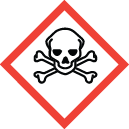
- Prompt:dangerous
- Signal Word:Danger
- Hazard Statement: H302,H314,H330
- Warning Statement: P260,P280,P284,P305+P351+P338,P310
- Hazardous Material transportation number:UN 3390 6.1/PG 1
- WGK Germany:1
- Hazard Category Code: R10;R14;R22;R26;R35
- Safety Instruction: S23-S26-S36/37/39-S45-S38-S16-S8
- FLUKA BRAND F CODES:21
- RTECS:UC3934000
-
Hazardous Material Identification:

- Packing Group:I
- Hazard Level:6.1
- Safety Term:6.1
- Packing Group:I
- Risk Phrases:R10; R14; R22; R26; R35
- HazardClass:6.1
- PackingGroup:I
- TSCA:Yes
- Explosive Limit:8.8-20.2%(V)
- Storage Condition:Flammables area
3-chloropropanoyl chloride Customs Data
- HS CODE:29159080
- Customs Data:
China Customs Code:
2915900090Overview:
2915900090. Other saturated acyclic monocarboxylic acids and their anhydrides(Acyl halide\Peroxygenation)Chemicals\Peroxy acid and its halogenation\nitrification\sulfonation\Nitrosative derivative. VAT:17.0%. Tax refund rate:9.0%. Regulatory conditions:AB(Customs clearance form for Inbound Goods,Customs clearance form for outbound goods). MFN tariff:5.5%. general tariff:30.0%
Declaration elements:
Product Name, component content, use to
Regulatory conditions:
A.Customs clearance form for Inbound Goods
B.Customs clearance form for outbound goodsInspection and quarantine category:
R.Sanitary supervision and inspection of imported food
S.Sanitary supervision and inspection of exported food
M.Import commodity inspection
N.Export commodity inspectionSummary:
2915900090 other saturated acyclic monocarboxylic acids and their anhydrides, halides, peroxides and peroxyacids; their halogenated, sulphonated, nitrated or nitrosated derivatives VAT:17.0% Tax rebate rate:9.0% Supervision conditions:AB(certificate of inspection for goods inward,certificate of inspection for goods outward) MFN tariff:5.5% General tariff:30.0%
3-chloropropanoyl chloride Pricemore >>
| Related Categories | No. | Product Name | Cas No. | Purity | Specification | Price | update time | Inquiry |
|---|---|---|---|---|---|---|---|---|
| SHANG HAI MAI KE LIN SHENG HUA Technology Co., Ltd. | C805063-2.5kg |
3-Chloropropionyl chloride |
625-36-5 | 95% | 2.5kg |
1,260.00 | 2021-05-17 | |
| SHANG HAI XIAN DING Biotechnology Co., Ltd. | C0654-25g |
3-chloropropanoyl chloride |
625-36-5 | 98.0%(T) | 25g |
¥170.0 | 2022-05-30 | |
| SHANG HAI XIAN DING Biotechnology Co., Ltd. | C0654-500g |
3-chloropropanoyl chloride |
625-36-5 | 98.0%(T) | 500g |
¥1100.0 | 2022-05-30 | |
| SHANG HAI XIAN DING Biotechnology Co., Ltd. | C0654-100g |
3-chloropropanoyl chloride |
625-36-5 | 98.0%(T) | 100g |
¥370.0 | 2022-05-30 | |
| SHANG HAI XIAN DING Biotechnology Co., Ltd. | C285A-100g |
3-chloropropanoyl chloride |
625-36-5 | 98% | 100g |
¥165.0 | 2022-05-30 | |
| SHANG HAI XIAN DING Biotechnology Co., Ltd. | C285A-500g |
3-chloropropanoyl chloride |
625-36-5 | 98% | 500g |
¥465.0 | 2022-05-30 | |
| SHANG HAI XIAN DING Biotechnology Co., Ltd. | C285A-25g |
3-chloropropanoyl chloride |
625-36-5 | 98% | 25g |
¥64.0 | 2022-05-30 | |
| SHANG HAI YI EN HUA XUE JI SHU Co., Ltd. | R014201-100g |
3-chloropropanoyl chloride |
625-36-5 | 95% | 100g |
¥95 | 2024-05-22 | |
| SHANG HAI YI EN HUA XUE JI SHU Co., Ltd. | R014201-25g |
3-chloropropanoyl chloride |
625-36-5 | 95% | 25g |
¥44 | 2024-05-22 | |
| SHANG HAI YI EN HUA XUE JI SHU Co., Ltd. | R014201-500g |
3-chloropropanoyl chloride |
625-36-5 | 95% | 500g |
¥287 | 2024-05-22 |
3-chloropropanoyl chloride Suppliers
 Audited Supplier
Audited Supplier
Audited Supplier


3-chloropropanoyl chloride Related Literature
-
Grant R. Allen,Douglas K. Russell New J. Chem. 2004 28 1107
-
Jin-Qiang Hou,Jia-Heng Tan,Xiao-Xiao Wang,Shuo-Bin Chen,Si-Yuan Huang,Jin-Wu Yan,Shu-Han Chen,Tian-Miao Ou,Hai-Bin Luo,Ding Li,Lian-Quan Gu,Zhi-Shu Huang Org. Biomol. Chem. 2011 9 6422
-
P. Madhu,P. Sivakumar,Rajendran Sribalan New J. Chem. 2019 43 14426
-
A. S. Sokolova,O. I. Yarovaya,M. D. Semenova,A. A. Shtro,I. R. Orshanskaya,V. V. Zarubaev,N. F. Salakhutdinov Med. Chem. Commun. 2017 8 960
-
Chandra Bhushan Mishra,Shruti Shalini,Siddharth Gusain,Amresh Prakash,Jyoti Kumari,Shikha Kumari,Anita Kumari Yadav,Andrew M. Lynn,Manisha Tiwari RSC Adv. 2020 10 17602
Additional information on 3-chloropropanoyl chloride
3-Chloropropanoyl Chloride (CAS No. 625-36-5): A Versatile Reagent in Modern Chemical Synthesis
The 3-chloropropanoyl chloride (CAS No. 625-36-5) is a critical organic compound widely recognized for its role in advanced chemical synthesis and material science applications. As an acyl chloride derivative, this compound exhibits unique reactivity due to its chloroalkyl substituent and electrophilic carbonyl group, enabling it to participate in a variety of nucleophilic acyl substitution reactions. Recent studies highlight its increasing relevance in the development of functional polymers, pharmaceutical intermediates, and bioconjugation strategies, positioning it as a cornerstone in modern synthetic chemistry.
Structurally, 3-chloropropanoyl chloride consists of a three-carbon chain (propane) with a chlorine atom at the third carbon position and an acyl chloride group (-COCl) attached to the adjacent carbon. This configuration imparts distinct physicochemical properties, including high reactivity toward nucleophiles such as alcohols, amines, and thiols. A 2023 study published in the Journal of Organic Chemistry demonstrated that this compound’s electrophilic character facilitates efficient esterification reactions under mild conditions, making it preferable over traditional reagents like acid anhydrides in lab-scale syntheses.
In pharmaceutical research, 3-chloropropanoyl chloride serves as an intermediate for synthesizing bioactive molecules with tailored pharmacokinetic profiles. For instance, its use in conjugating drugs to polyethylene glycol (PEG) chains has been optimized to enhance solubility and reduce immunogenicity in targeted drug delivery systems. A groundbreaking 2024 paper from the Nature Communications highlighted its role in creating stimuli-responsive prodrugs that release therapeutic agents under specific physiological conditions—a breakthrough attributed to the compound’s ability to form stable amide bonds with peptide-based carriers.
The synthesis of CAS No. 625-36-5 typically involves the chlorination of propanoyl chloride followed by alkylation or vice versa, depending on synthetic pathways prioritized for scalability or purity. Recent advancements include green chemistry approaches using heterogeneous catalysts to minimize waste production during large-scale manufacturing. Researchers at ETH Zurich reported in 2024 that employing solid-supported titanium catalysts reduced reaction times by 40% while achieving >98% purity—a significant milestone for industrial applications requiring high-throughput production.
In materials science, this compound is pivotal for designing self-healing polymers through dynamic covalent chemistry mechanisms. When incorporated into polyurethane networks via urethane linkages formed with diols or diamines, the chlorine substituent enables reversible crosslinking under controlled humidity levels. A collaborative study between MIT and BASF (published early 2024) demonstrated such materials’ ability to recover mechanical properties after physical damage without external intervention—a property revolutionizing applications like automotive coatings and biomedical implants.
Bioconjugation applications have also seen transformative progress through this compound’s use in site-specific protein labeling techniques. Unlike traditional NHS esters which lack positional control, 3-chloropropanoyl chloride-based methods allow selective modification of cysteine residues via thiol–ene click chemistry under aqueous conditions. This specificity was leveraged by a Stanford team in developing fluorescent probes for real-time tracking of intracellular signaling pathways—a technique now standard in live-cell imaging assays reported across multiple high-impact journals since late 2023.
Safety considerations remain critical despite its non-regulated status as per current global chemical inventories (excluding specific regional restrictions). Proper handling protocols emphasize inert atmosphere storage and glovebox operations due to its sensitivity toward atmospheric moisture—a characteristic shared with other acyl chlorides but mitigated through novel packaging solutions involving desiccant-lined containers developed by Sigma-Aldrich in late 2024.
Ongoing research focuses on expanding its utility within sustainable chemistry frameworks. Current investigations explore using microwave-assisted synthesis routes to reduce energy consumption during production while maintaining product quality standards set by organizations like ASTM International. Preliminary data from these studies indicate potential energy savings exceeding 60%, aligning with global initiatives for greener chemical manufacturing processes outlined in recent EU Horizon Europe grants.
In summary, 3-chloropropanoyl chloride (CAS No. 625-36-5) continues to redefine boundaries across multiple disciplines through innovations enabled by its unique reactivity profile and structural flexibility. From advancing drug delivery systems to enabling next-generation smart materials, this compound exemplifies how foundational organic molecules remain indispensable drivers of scientific progress despite decades of research activity.
625-36-5 (3-chloropropanoyl chloride) Related Products
- 4300-97-4(3-Chloropivaloyl chloride)
- 75695-44-2(Propanoyl-3,3,3-d3chloride (9CI))
- 352439-04-4(PROPIONYL-D5 CHLORIDE)
- 873839-31-7(Propanoyl chloride, 3-oxo-, ion(1-), lithium)
- 80141-50-0((R)-3-Chloro-2-methylpropionyl chloride)
- 7623-10-1(Propanoyl chloride, 3-chloro-2-methyl-)
- 80141-51-1(Propanoyl chloride,3-chloro-2-methyl-, (S)- (9CI))
- 39619-07-3(Propanedioyl dichloride, methyl-)
- 4301-04-6(Propanoyl chloride, 3-chloro-2-(chloromethyl)-2-methyl-)
- 118261-34-0

