Cas no 68-19-9 (Cyanocobalamin)

Cyanocobalamin Chemical and Physical Properties
Names and Identifiers
-
- Vitamin B12
- 5,6-dimethyl-1-(3-o-phosphono-alpha-d-ribofuranosyl)-1h-benzimidazolmonoes
- 5,6-dimethylbenzimidazolylcobamidecyanide
- 5,6-dimethylbenzimidazolyl-co-cyanocobamide
- alpha-5,6-dimethyl-1h-benzimidazolyl-cobamidcyanide
- anacobin
- berubigen
- betalin-12
- betalin12crystalline
- Cyanocobalamin
- Cyanocobalamin (B12)
- Cyanocobalamin (Vitamin B12) solution
- VB12
- VITAMIN B12(CYANOCOBALAMIN)(RG)
- Bedoz
- CN-13-epiCbl
- cn-b12
- CN-CBL
- cob(II)alamin
- cotel
- covit
- Cyanocob(III)alaMin
- cyomin
- embiol
- Usp Grade
- vibalt
- Vitamin B12, USP grade
- vitral
- α-(5,6-Dimethylbenzimidazolyl)cyanocobamide
- Cyanocobalmin
- Cyano-5,6-dimethylbenzimidazole-cobalamin
- 維生素B12
- methylcobalamin
- 422M554
-
- MDL: MFCD00151092
- Inchi: 1S/C62H90N13O14P.CH3.Co/c1-29-20-39-40(21-30(29)2)75(28-70-39)57-52(84)53(41(27-76)87-57)89-90(85,86)88-31(3)26-69-49(83)18-19-59(8)37(22-46(66)80)56-62(11)61(10,25-48(68)82)36(14-17-45(65)79)51(74-62)33(5)55-60(9,24-47(67)81)34(12-15-43(63)77)38(71-55)23-42-58(6,7)35(13-16-44(64)78)50(72-42)32(4)54(59)73-56;;/h20-21,23,28,31,34-37,41,52-53,56-57,76,84H,12-19,22,24-27H2,1-11H3,(H15,63,64,65,66,67,68,69,71,72,73,74,77,78,79,80,81,82,83,85,86);1H3;/q;-1;+2/p-1/t31?,34-,35-,36-,37+,41-,52-,53-,56-,57+,59-,60+,61+,62+;;/m1../s1
- InChI Key: QXOMMGINPOYKPR-WYVZQNDMSA-M
- SMILES: [Co+2].P(=O)(O[H])(O[C@]1([H])[C@@]([H])(C([H])([H])O[H])O[C@@]([H])([C@]1([H])O[H])N1C([H])=NC2C([H])=C(C([H])([H])[H])C(C([H])([H])[H])=C([H])C1=2)OC([H])(C([H])([H])[H])C([H])([H])N([H])C(C([H])([H])C([H])([H])[C@@]1(C([H])([H])[H])C2C(C([H])([H])[H])=C3[C@@]([H])(C([H])([H])C([H])([H])C(N([H])[H])=O)C(C([H])([H])[H])(C([H])([H])[H])C(C([H])=C4[C@@]([H])(C([H])([H])C([H])([H])C(N([H])[H])=O)[C@](C([H])([H])[H])(C([H])([H])C(N([H])[H])=O)C(C(C([H])([H])[H])=C5[C@@]([H])(C([H])([H])C([H])([H])C(N([H])[H])=O)[C@](C([H])([H])[H])(C([H])([H])C(N([H])[H])=O)[C@](C([H])([H])[H])([C@@]([H])([C@]1([H])C([H])([H])C(N([H])[H])=O)N=2)[N-]5)=N4)=N3)=O.[C-]([H])([H])[H] |t:73,99,132|
- BRN: 4122889
Computed Properties
- Exact Mass: 1354.57000
- Monoisotopic Mass: 1354.567
- Isotope Atom Count: 0
- Hydrogen Bond Donor Count: 10
- Hydrogen Bond Acceptor Count: 20
- Heavy Atom Count: 92
- Rotatable Bond Count: 26
- Complexity: 3160
- Covalently-Bonded Unit Count: 3
- Defined Atom Stereocenter Count: 12
- Undefined Atom Stereocenter Count : 2
- Defined Bond Stereocenter Count: 3
- Undefined Bond Stereocenter Count: 0
- Surface Charge: 0
- Tautomer Count: 128
- Topological Polar Surface Area: 449
- Molecular Weight: 1355.4
Experimental Properties
- Color/Form: Dark red crystal or crystalline powder. Odorless, odourless, hygroscopic, black at 210 ~ 220 ℃
- Density: 0.9450
- Melting Point: >300 oC
- Boiling Point: > 300
- Flash Point: Degrees Fahrenheit:48.2°F
Degrees Celsius:9°C - Solubility: Soluble
- Water Partition Coefficient: dissolution
- Stability/Shelf Life: Hygroscopic. Keep cold and dry.
- PSA: 479.70000
- LogP: 6.57018
- Odor: Odorless
- Merck: 10014
- Sensitiveness: Hygroscopic
- Specific Rotation: 23656 -59 ± 9° (dil aq soln)
- Color/Form: 1.0?mg/mL in methanol
- Solubility: Slightly soluble in water and ethanol, insoluble in acetone, chloroform or diethyl ether
Cyanocobalamin Security Information
-
Symbol:
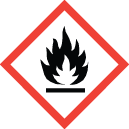
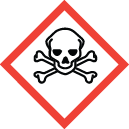

- Signal Word:Danger
- Hazard Statement: H225-H301 + H311 + H331-H370
- Warning Statement: P210-P260-P280-P301+P310-P311
- Hazardous Material transportation number:NONH for all modes of transport
- WGK Germany:1
- Hazard Category Code: 11-23/24/25-39/23/24/25
- Safety Instruction: S24/25
- FLUKA BRAND F CODES:3-8-10
- RTECS:GG3750000
-
Hazardous Material Identification:


- TSCA:Yes
- Storage Condition:4°C, protect from light
- Safety Term:S24/25
Cyanocobalamin Pricemore >>
| Related Categories | No. | Product Name | Cas No. | Purity | Specification | Price | update time | Inquiry |
|---|---|---|---|---|---|---|---|---|
| SHANG HAI A LA DING SHENG HUA KE JI GU FEN Co., Ltd. | V104141-100mg |
Cyanocobalamin |
68-19-9 | 100mg |
¥308.90 | 2023-08-31 | ||
| TI XI AI ( SHANG HAI ) HUA CHENG GONG YE FA ZHAN Co., Ltd. | C0449-1G |
Vitamin B12 |
68-19-9 | >95.0%(E) | 1g |
¥830.00 | 2024-04-15 | |
| S e l l e c k ZHONG GUO | S1902-50mg |
Vitamin B12 |
68-19-9 | 99.97% | 50mg |
¥781.72 | 2023-09-15 | |
| HE FEI BO MEI SHENG WU KE JI YOU XIAN ZE REN GONG SI | WC6281-1g |
Cyanocobalamin |
68-19-9 | ≥98% | 1g |
¥150元 | 2023-09-15 | |
| HE FEI BO MEI SHENG WU KE JI YOU XIAN ZE REN GONG SI | WC6281-25g |
Cyanocobalamin |
68-19-9 | ≥98% | 25g |
¥2300元 | 2023-09-15 | |
| HE FEI BO MEI SHENG WU KE JI YOU XIAN ZE REN GONG SI | WC6281-5g |
Cyanocobalamin |
68-19-9 | ≥98% | 5g |
¥680元 | 2023-09-15 | |
| HE FEI BO MEI SHENG WU KE JI YOU XIAN ZE REN GONG SI | WV2876-1g |
Cyanocobalamin |
68-19-9 | ≥98% | 1g |
¥650元 | 2023-09-15 | |
| HE FEI BO MEI SHENG WU KE JI YOU XIAN ZE REN GONG SI | WV2876-250mg |
Cyanocobalamin |
68-19-9 | ≥98% | 250mg |
¥245元 | 2023-09-15 | |
| HE FEI BO MEI SHENG WU KE JI YOU XIAN ZE REN GONG SI | WV2876-5g |
Cyanocobalamin |
68-19-9 | ≥98% | 5g |
¥2050元 | 2023-09-15 | |
| HE FEI BO MEI SHENG WU KE JI YOU XIAN ZE REN GONG SI | BZP1152-20mg |
Cyanocobalamin |
68-19-9 | HPLC≥98% | 20mg |
¥220元 | 2023-09-15 |
Cyanocobalamin Suppliers
 Audited Supplier
Audited Supplier
Audited Supplier
Cyanocobalamin Related Literature
-
Qiao Song,Angela Bamesberger,Lingyun Yang,Haley Houtwed,Haishi Cao Analyst, 2014,139, 3588-3592
-
J. Zagora,M. Vosla?,L. Schreiberová,I. Schreiber Phys. Chem. Chem. Phys., 2002,4, 1284-1291
-
Dhirendra K. Chaudhary,Pramendra Kumar,Lokendra Kumar RSC Adv., 2016,6, 94731-94738
-
Bo Wei,Zhenyu Liu,Chen Xie,Shu Yang,Wentao Tang,Aiwei Gu,Wing-Tak Wong,Ka-Leung Wong J. Mater. Chem. C, 2015,3, 12322-12327
-
Chen-Yu Chien,Sheng-Sheng Yu Chem. Commun., 2020,56, 11949-11952
Additional information on Cyanocobalamin
Cyanocobalamin: A Comprehensive Overview
Cyanocobalamin, also known as vitamin B12, is a water-soluble vitamin that plays a crucial role in various physiological processes. With the CAS number 68-19-9, this compound is widely recognized for its essential functions in maintaining neurological health, DNA synthesis, and energy production. Recent studies have further highlighted its potential in addressing age-related cognitive decline and metabolic disorders.
The molecular structure of Cyanocobalamin is unique, featuring a corrin ring system with a central cobalt atom. This structure enables it to act as a cofactor for enzymes involved in critical biochemical pathways. For instance, it is essential for the conversion of homocysteine to methionine, a process that prevents the accumulation of homocysteine, which is linked to cardiovascular diseases. Recent research has also explored its role in epigenetic modifications, suggesting its influence on gene expression patterns associated with aging and chronic diseases.
Cyanocobalamin is naturally present in animal-based foods such as meat, fish, eggs, and dairy products. However, individuals following vegetarian or vegan diets are at a higher risk of deficiency. This has led to an increased interest in fortified foods and dietary supplements containing Cyanocobalamin. Emerging studies are investigating the bioavailability of synthetic versus natural forms of this vitamin, with findings suggesting that synthetic forms may be equally effective when properly formulated.
The clinical applications of Cyanocobalamin extend beyond nutrition. It is used in the treatment of pernicious anemia and other conditions associated with vitamin B12 deficiency. Recent advancements have also explored its potential in neuroprotection. For example, studies indicate that adequate levels of Cyanocobalamin may slow down cognitive decline in elderly populations by supporting neuronal integrity and reducing oxidative stress.
In terms of research trends, there is growing interest in understanding the interplay between Cyanocobalamin and other nutrients such as folate and vitamin D. Collaborative studies are examining how these vitamins synergistically influence immune function and overall health. Additionally, advancements in nanotechnology are paving the way for innovative delivery systems that enhance the absorption and efficacy of Cyanocobalamin, particularly for individuals with malabsorption issues.
Moreover, the role of Cyanocobalamin in mitigating age-related conditions such as Alzheimer's disease is gaining traction. Preclinical studies suggest that it may protect against neurodegeneration by promoting myelin synthesis and reducing inflammation. These findings underscore the importance of maintaining adequate levels of this vitamin throughout the lifespan.
In conclusion, Cyanocobalamin (CAS No: 68-19-9) remains a vital nutrient with diverse applications in health and medicine. Its role in neurological health, metabolism, and disease prevention continues to be explored through cutting-edge research. As our understanding deepens, so does the potential for leveraging this compound to improve public health outcomes worldwide.

