Cas no 498-00-0 (Vanillyl alcohol)

Vanillyl alcohol Chemical and Physical Properties
Names and Identifiers
-
- 4-Hydroxy-3-methoxybenzyl alcohol
- 4-HYDROXYMETHYL-2-METHOXY-PHENOL
- A 4-DIHYDROXY-3-METHOXYTOLUENE
- FEMA 3737
- RARECHEM AL BD 0101
- VANILLYL ALCOHOL
- 4-hydroxy-3-methoxy-benzenemethano
- 4-hydroxy-3-methoxybenzyl
- 4-hydroxy-3-methoxybenzylalcohol(vanillicalcohol)
- Benzenemethanol, 4-hydroxy-3-methoxy-
- vanillol
- VANILLYL ALCOHOL MI
- Vanillyl alcohol (4-Hydroxy-3-methoxybenzyl alcohol)
- Vanillyl
- CITRONELLOL, D-(SG)
- HOMOVANILLICALCOHOL
- 4-HYDROXY-3-METHOXYBENZENEMETHANOL
- 4-HYDROXY-3-METHOXYBENZYL ALCOHOL (VANILLYL ALCOHOL)
- 4-(Hydroxymethyl)-2-methoxyphenol
- VANILLYL ALCOHOL(RG)
- Vanillicalcohol
- NSC 3993
- Vanillin alcohol
- Vanillic alcohol
- 4-hydroxy-3-methoxybenzylalcohol
- 3-Methoxy-4-hydroxybenzyl alcohol
- 4-Hydroxy-3-methoxyphenylmethanol
- 4-Hydroxy-3-methoxy-benzenemethanol
- 4-Hydroxy-3-methoxyphenyl methanol
- 4-(hydroxymethyl)-2-methoxy-phenol
- V 0018 (alcohol)
- X7EA1JUA6M
- 4-HYDROXY-3-METHOXY-BENZYL
- p-(Hydroxymethyl)guaiacol
- Vanillylalcohol
- Vanillyl alcohol
-
- MDL: MFCD00004659
- Inchi: 1S/C8H10O3/c1-11-8-4-6(5-9)2-3-7(8)10/h2-4,9-10H,5H2,1H3
- InChI Key: ZENOXNGFMSCLLL-UHFFFAOYSA-N
- SMILES: COC1C(O)=CC=C(CO)C=1
- BRN: 1910044
Computed Properties
- Exact Mass: 154.06300
- Monoisotopic Mass: 154.062994177 g/mol
- Isotope Atom Count: 0
- Hydrogen Bond Donor Count: 2
- Hydrogen Bond Acceptor Count: 3
- Heavy Atom Count: 11
- Rotatable Bond Count: 2
- Complexity: 116
- Covalently-Bonded Unit Count: 1
- Defined Atom Stereocenter Count: 0
- Undefined Atom Stereocenter Count : 0
- Defined Bond Stereocenter Count: 0
- Undefined Bond Stereocenter Count: 0
- Surface Charge: 0
- Tautomer Count: 3
- Molecular Weight: 154.16
- XLogP3: 0
- Topological Polar Surface Area: 49.7
Experimental Properties
- Color/Form: Powder
- Density: 1.1690 (rough estimate)
- Melting Point: 110-117?°C (lit.)
- Boiling Point: 313.1℃ at 760 mmHg
- Flash Point: 143.2℃
- Refractive Index: 1.4620 (estimate)
- Solubility: 2 mg/mL at 20 °C
- Water Partition Coefficient: Soluble in 95% ethanol (5 %), water, and oils.
- Stability/Shelf Life: Stable. Incompatible with strong oxidizing agents, strong acids.
- PSA: 49.69000
- LogP: 0.89310
- FEMA: 3737
- Sensitiveness: Sensitive to air
- Solubility: Not available
Vanillyl alcohol Security Information
-
Symbol:
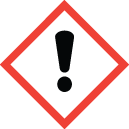
- Prompt:warning
- Signal Word:Warning
- Hazard Statement: H315,H319,H335
- Warning Statement: P261,P305+P351+P338
- Hazardous Material transportation number:NONH for all modes of transport
- WGK Germany:3
- Hazard Category Code: 36/37/38
- Safety Instruction: S26-S36
-
Hazardous Material Identification:

- Storage Condition:Inert atmosphere,Room Temperature(BD97691)
- Safety Term:S26;S36
- Risk Phrases:R36/37/38
Vanillyl alcohol Pricemore >>
| Related Categories | No. | Product Name | Cas No. | Purity | Specification | Price | update time | Inquiry |
|---|---|---|---|---|---|---|---|---|
| SHANG HAI MAI KE LIN SHENG HUA Technology Co., Ltd. | H810889-500g |
4-Hydroxy-3-methoxybenzyl alcohol |
498-00-0 | 98% | 500g |
1,179.00 | 2021-05-17 | |
| XI GE MA AO DE LI QI ( SHANG HAI ) MAO YI Co., Ltd. | 175536-50G |
Vanillyl alcohol |
498-00-0 | 50g |
¥544.72 | 2024-10-31 | ||
| XI GE MA AO DE LI QI ( SHANG HAI ) MAO YI Co., Ltd. | 175536-250G |
Vanillyl alcohol |
498-00-0 | 250g |
¥1131.22 | 2024-10-31 | ||
| XI GE MA AO DE LI QI ( SHANG HAI ) MAO YI Co., Ltd. | W373702-SAMPLE-K |
Vanillyl alcohol |
498-00-0 | ≥98%, FG | 587.6 | 2021-05-17 | ||
| XI GE MA AO DE LI QI ( SHANG HAI ) MAO YI Co., Ltd. | W373702-100G-K |
Vanillyl alcohol |
498-00-0 | ≥98%, FG | 100G |
1544.37 | 2021-05-17 | |
| XI GE MA AO DE LI QI ( SHANG HAI ) MAO YI Co., Ltd. | W373702-1KG-K |
Vanillyl alcohol |
498-00-0 | ≥98%, FG | 1KG |
5191.32 | 2021-05-17 | |
| TRC | H817510-10g |
4-Hydroxy-3-methyoxybenzyl Alcohol |
498-00-0 | 10g |
$ 59.00 | 2023-09-07 | ||
| TRC | H817510-25g |
4-Hydroxy-3-methyoxybenzyl Alcohol |
498-00-0 | 25g |
$ 50.00 | 2022-06-04 | ||
| TRC | H817510-50g |
4-Hydroxy-3-methyoxybenzyl Alcohol |
498-00-0 | 50g |
$ 70.00 | 2022-06-04 | ||
| TRC | H817510-100g |
4-Hydroxy-3-methyoxybenzyl Alcohol |
498-00-0 | 100g |
$138.00 | 2023-05-18 |
Vanillyl alcohol Suppliers
 Audited Supplier
Audited Supplier
Audited Supplier
Audited Supplier
Audited Supplier
Vanillyl alcohol Related Literature
-
Wei Fu,Lumin Yue,Xiaogang Duan,Jun Li,Guanzhong Lu Green Chem. 2016 18 6136
-
Anika Salanti,Luca Zoia,Marco Orlandi Green Chem. 2016 18 4063
-
Peng Lin,Rong Shang,Qizhao Zhang,Bang Gu,Qinghu Tang,Fangli Jing,Qiue Cao,Wenhao Fang Catal. Sci. Technol. 2022 12 4613
-
Weixiao Sun,Peng Lin,Qinghu Tang,Fangli Jing,Qiue Cao,Wenhao Fang Catal. Sci. Technol. 2021 11 7268
-
Zegang Qiu,Xiaoxia He,Zhiqin Li,Qichen Guan,Liang Ding,Yanan Zhu,Yueling Cao Catal. Sci. Technol. 2022 12 5178
Additional information on Vanillyl alcohol
Vanillyl Alcohol: A Comprehensive Overview
Vanillyl alcohol, also known as4-hydroxy-3-methoxybenzyl alcohol, is a naturally occurring aromatic compound with the CAS number 498-00-0. It is a derivative of vanillin, one of the most widely recognized aromatic compounds, and is commonly found in various plant species, particularly in the seeds of the vanilla bean (Vanilla planifolia). The compound has garnered significant attention in recent years due to its versatile applications in the food, pharmaceutical, and cosmetic industries. This article delves into the properties, applications, and latest research findings related tovanillyl alcohol.
The chemical structure ofvanillyl alcohol consists of a benzene ring with hydroxyl (-OH) and methoxy (-OCH3) groups at positions 3 and 4, respectively, along with a hydroxymethyl (-CH2OH) group attached to position 1. This unique arrangement contributes to its distinctive aroma and chemical reactivity. Recent studies have explored the stereochemistry and electronic properties ofvanillyl alcohol, shedding light on its potential for use in advanced materials science applications.
Vanillyl alcohol is renowned for its pleasant vanilla-like aroma, making it a popular ingredient in the food industry. It is often used as a flavor enhancer in beverages, desserts, and confectionery products. Beyond its sensory applications, research has highlighted its potential as a natural antioxidant and antimicrobial agent. A 2023 study published in the Journal of Food Science demonstrated thatvanillyl alcohol exhibits significant free radical scavenging activity, which could extend the shelf life of food products while maintaining their sensory quality.
In the pharmaceutical sector,vanillyl alcohol has shown promise as a bioactive compound with potential therapeutic benefits. Preclinical studies have indicated its anti-inflammatory and analgesic properties, suggesting its potential use in pain management medications. Additionally, recent research has explored its role in modulating cellular signaling pathways associated with neurodegenerative diseases such as Alzheimer's disease.
The cosmetic industry has also embracedvanillyl alcohol for its skin-soothing properties. It is frequently incorporated into skincare products due to its ability to reduce irritation and promote wound healing. A 2022 study in the Dermatology Research Journal found that topical application ofvanillyl alcohol-enriched formulations significantly reduced oxidative stress markers in human skin cells.
Vannilyl alcohol's production traditionally involves extraction from vanilla beans; however, advancements in biotechnology have enabled more sustainable production methods. Researchers have developed microbial fermentation processes using genetically engineered bacteria to producevannilyl alcohol from renewable feedstocks such as agricultural waste. This approach not only reduces environmental impact but also enhances scalability for industrial applications.
In terms of safety,vannilyl alcohol is generally recognized as safe (GRAS) by regulatory bodies when used at appropriate levels in food and cosmetic products. However, excessive consumption may lead to mild gastrointestinal discomfort in sensitive individuals.
The global market forvannilyl alcohol-based products continues to grow driven by increasing demand for natural ingredients across various industries. According to a market analysis report by Grand View Research (2023), the demand for vanillin derivatives likevannilyl alcohol-based products is expected to rise at a CAGR of 5% from 2023 to 2030.
In conclusion,vannilyl alcohol, with its unique aromatic profile and diverse functional properties, remains a valuable compound across multiple sectors. Ongoing research continues to uncover new applications and benefits of this versatile molecule while advancements in production technology ensure sustainable supply chains for future demand.
498-00-0 (Vanillyl alcohol) Related Products
- 93-03-8(Veratryl alcohol)
- 83459-29-4(3,4-Diethoxybenzyl alcohol)
- 22943-99-3(1,2-Benzenedimethanol,4,5-dimethoxy-)
- 147730-26-5((3-Ethoxy-4-methoxyphenyl)methanol)
- 530-56-3(Syringyl Alcohol)
- 61813-58-9(4-Ethoxy-3-methoxybenzyl alcohol)
- 4912-58-7(3-Ethoxy-4-hydroxybenzyl Alcohol)
- 122271-46-9(Benzenemethanol,3-hydroxy-4,5-dimethoxy-)
- 3840-31-1(3,4,5-Trimethoxybenzyl Alcohol)
- 4383-06-6(5-(hydroxymethyl)-2-methoxyphenol)

