Cas no 308847-92-9 (Zirconium,bis[1,3-diethyl 2-(hydroxy-kO)-1,2,3-propanetricarboxylato-kO2]dipropoxy- (9CI))
![Zirconium,bis[1,3-diethyl 2-(hydroxy-kO)-1,2,3-propanetricarboxylato-kO2]dipropoxy- (9CI) structure](https://ossimg.kuujia.com/scimg/309000/308847-92-9x500.png)
Zirconium,bis[1,3-diethyl 2-(hydroxy-kO)-1,2,3-propanetricarboxylato-kO2]dipropoxy- (9CI) Chemical and Physical Properties
Names and Identifiers
-
- Zirconium,bis[1,3-diethyl 2-(hydroxy-kO)-1,2,3-propanetricarboxylato-kO2]dipropoxy- (9CI)
- 4-ethoxy-2-(2-ethoxy-2-oxoethyl)-2-hydroxy-4-oxobutanoic acid,propan-1-ol,zirconium
- TYZOR(R) ZEC organic zirconate
- Zirconium(IV) bis(diethyl citrato)dipropoxide
- Tyzor(tm)zec organic zirconate
- 4-ethoxy-2-(2-ethoxy-2-oxoethyl)-2-hydroxy-4-oxobutanoic acid;propan-1-ol;zirconium
- MFCD02093685
- 308847-92-9
-
- MDL: MFCD02093685
- Inchi: 1S/2C10H16O7.2C3H8O.Zr/c2*1-3-16-7(11)5-10(15,9(13)14)6-8(12)17-4-2;2*1-2-3-4;/h2*15H,3-6H2,1-2H3,(H,13,14);2*4H,2-3H2,1H3;
- InChI Key: YBBQAMGSUBVSCT-UHFFFAOYSA-N
- SMILES: [Zr].OC(C(CC(=O)OCC)(CC(=O)OCC)O)=O.OC(C(CC(=O)OCC)(CC(=O)OCC)O)=O.OCCC.OCCC
Computed Properties
- Exact Mass: 702.16800
- Monoisotopic Mass: 706.198934g/mol
- Isotope Atom Count: 0
- Hydrogen Bond Donor Count: 6
- Hydrogen Bond Acceptor Count: 16
- Heavy Atom Count: 43
- Rotatable Bond Count: 20
- Complexity: 683
- Covalently-Bonded Unit Count: 5
- Defined Atom Stereocenter Count: 0
- Undefined Atom Stereocenter Count : 0
- Defined Bond Stereocenter Count: 0
- Undefined Bond Stereocenter Count: 0
- Surface Charge: 0
- Tautomer Count: 3
- XLogP3: nothing
- Topological Polar Surface Area: 261?2
Experimental Properties
- Color/Form: liquid
- Density: 1.14?g/mL?at 25?°C(lit.)
- Melting Point: 1.14°C
- Flash Point: Fahrenheit: 64.4 ° f < br / > Celsius: 18 ° C < br / >
- Refractive Index: n20/D 1.451(lit.)
- PSA: 216.72000
- LogP: 1.01740
- Solubility: Not determined
Zirconium,bis[1,3-diethyl 2-(hydroxy-kO)-1,2,3-propanetricarboxylato-kO2]dipropoxy- (9CI) Security Information
-
Symbol:
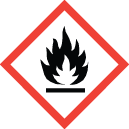
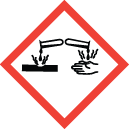
- Signal Word:Danger
- Hazard Statement: H225-H318
- Warning Statement: P210-P280-P305+P351+P338
- Hazardous Material transportation number:UN 1987 3/PG 2
- WGK Germany:3
- Hazard Category Code: 11-41
- Safety Instruction: S16; S26; S36
-
Hazardous Material Identification:


- TSCA:No
- Risk Phrases:R11; R36/37/38
Zirconium,bis[1,3-diethyl 2-(hydroxy-kO)-1,2,3-propanetricarboxylato-kO2]dipropoxy- (9CI) Pricemore >>
| Related Categories | No. | Product Name | Cas No. | Purity | Specification | Price | update time | Inquiry |
|---|---|---|---|---|---|---|---|---|
| abcr | AB130853-1 kg |
TYZOR ZEC Diethylcitrate chelated zirconate; . |
308847-92-9 | 1 kg |
€240.00 | 2023-07-20 | ||
| abcr | AB130853-1kg |
TYZOR ZEC Diethylcitrate chelated zirconate; . |
308847-92-9 | 1kg |
€208.00 | 2025-02-15 | ||
| abcr | AB130853-5kg |
TYZOR ZEC Diethylcitrate chelated zirconate; . |
308847-92-9 | 5kg |
€695.00 | 2025-02-15 |
Zirconium,bis[1,3-diethyl 2-(hydroxy-kO)-1,2,3-propanetricarboxylato-kO2]dipropoxy- (9CI) Related Literature
-
Erika A. Cobar,Paul R. Horn,Robert G. Bergman,Martin Head-Gordon Phys. Chem. Chem. Phys., 2012,14, 15328-15339
-
Guiying Zhang,Maosheng Cheng,Yanni Li,Keliang Liu,Lifeng Cai Chem. Commun., 2013,49, 11086-11088
-
Weili Dai,Guangjun Wu,Michael Hunger Chem. Commun., 2015,51, 13779-13782
-
Zhixia Liu,Tingjian Chen,Floyd E. Romesberg Chem. Sci., 2017,8, 8179-8182
-
Joseph H. Bisesi,Tara Sabo-Attwood Environ. Sci.: Nano, 2014,1, 574-583
Additional information on Zirconium,bis[1,3-diethyl 2-(hydroxy-kO)-1,2,3-propanetricarboxylato-kO2]dipropoxy- (9CI)
Introduction to Zirconium,bis[1,3-diethyl 2-(hydroxy-kO)-1,2,3-propanetricarboxylato-kO2]dipropoxy- (9CI) and Its Applications
Zirconium,bis[1,3-diethyl 2-(hydroxy-kO)-1,2,3-propanetricarboxylato-kO2]dipropoxy- (9CI) is a sophisticated compound that has garnered significant attention in the field of chemical and biomedical research. This compound, identified by its CAS number 308847-92-9, represents a novel class of zirconium-based ligands designed for applications in catalysis, material science, and potentially in pharmaceutical development. The unique structure of this compound, characterized by its 1,3-diethyl 2-(hydroxy-kO)-1,2,3-propanetricarboxylato chelating units and propoxy side groups, contributes to its remarkable stability and reactivity, making it a promising candidate for various industrial and scientific applications.
The chemical structure of Zirconium,bis[1,3-diethyl 2-(hydroxy-kO)-1,2,3-propanetricarboxylato-kO2]dipropoxy- (9CI) is meticulously designed to facilitate strong coordination with a variety of substrates. The presence of multiple carboxylate and hydroxyl groups enhances its binding affinity and selectivity, which are crucial for applications in catalytic processes. This compound has been extensively studied for its potential use in the synthesis of complex organic molecules, where its ability to stabilize reactive intermediates can significantly improve reaction yields and efficiencies.
In recent years, there has been a surge in research focusing on the development of advanced materials for energy storage and conversion. Zirconium-based compounds have emerged as key players in this domain due to their excellent thermal stability and chemical inertness. The specific formulation of Zirconium,bis[1,3-diethyl 2-(hydroxy-kO)-1,2,3-propanetricarboxylato-kO2]dipropoxy- (9CI) makes it particularly suitable for use in next-generation battery materials and catalysts. Studies have shown that this compound can enhance the performance of lithium-ion batteries by improving electrode stability and conductivity.
The pharmaceutical industry has also shown keen interest in zirconium complexes due to their potential as therapeutic agents. While the primary focus has been on zirconium-based imaging agents for medical diagnostics, there is growing evidence suggesting that certain zirconium ligands may have therapeutic applications in treating metabolic disorders. The chelating properties of 1,3-diethyl 2-(hydroxy-kO)-1,2,3-propanetricarboxylato units allow for the development of targeted drug delivery systems that can selectively bind to specific biological targets. This could pave the way for new treatments for conditions such as cancer and inflammatory diseases.
The synthesis of Zirconium,bis[1,3-diethyl 2-(hydroxy-kO)-1,2,3-propanetricarboxylato-kO2]dipropoxy- (9CI) involves a series of carefully controlled chemical reactions that ensure high purity and yield. The process typically begins with the preparation of the ligand precursor followed by its reaction with zirconium salts under inert conditions. Recent advancements in synthetic methodologies have enabled the production of this compound on an industrial scale while maintaining stringent quality control measures.
The environmental impact of using Zirconium,bis[1,3-diethyl 2-(hydroxy-kO)-1,2,3-propanetricarboxylato-kO2]dipropoxy- (9CI) has been a critical consideration in its development. Efforts have been made to design synthetic routes that minimize waste generation and reduce the use of hazardous reagents. Additionally, studies have been conducted to assess the biodegradability and toxicity profile of this compound to ensure its safe use in various applications.
The future prospects for Zirconium,bis[1,3-diethyl 2-(hydroxy-kO)-1,2,3-propanetricarboxylato-kO2]dipropoxy- (9CI) are vast and exciting. Ongoing research is exploring new applications in areas such as nanotechnology and green chemistry. The compound's unique properties make it an excellent candidate for developing novel materials with enhanced functionalities. As our understanding of its capabilities grows,so does the potential for innovation across multiple scientific disciplines.
308847-92-9 (Zirconium,bis[1,3-diethyl 2-(hydroxy-kO)-1,2,3-propanetricarboxylato-kO2]dipropoxy- (9CI)) Related Products
- 77-93-0(Triethyl citrate)
- 1323-66-6(STEARYL CITRATE)
- 51152-27-3(2-(2-ethylhexoxycarbonylmethyl)-2-hydroxy-butanedioic acid)
- 1337-33-3(Monostearyl citrate)
- 93980-60-0(Docosyl dihydrogen citrate)
- 25637-88-1(4-dodecoxy-2-(dodecoxycarbonylmethyl)-2-hydroxy-4-oxo-butanoic acid)
- 78568-45-3(Dodecyl dihydrogen 2-hydroxypropane-1,2,3-tricarboxylate)
- 90605-17-7(Isodecyl Citrate)
- 29589-99-9(CITRICACID,DIOCTADECYLESTER)
- 30306-93-5(2-(ethoxycarbonylmethyl)-2-hydroxy-butanedioic acid)
 Audited Supplier
 Audited Supplier
 Audited Supplier
 Audited Supplier
 Audited Supplier
