Cas no 1929-82-4 (Nitrapyrin)

Nitrapyrin Chemical and Physical Properties
Names and Identifiers
-
- 2-Chloro-6-(trichloromethyl)pyridine
- 2-Chloro-6-Trichloromethylpyridine
- nitrapyrin
- Nitrapyrin Solution
- 2-Chloro-6-(trichloromethyl)pyridine,CP
- CP
- N-Serve
- Pyridine, 2-chloro-6-(trichloromethyl)-
- N-Serve nitrogen stabilizer
- Caswell No. 217
- Nitrapyrine [ISO-French]
- Nitrapyrin [ANSI:BSI:ISO]
- 2-Chloro-6-trichloromethyl pyridine
- EPA Pesticide Chemical Code 069203
- 8PCE86U01W
- 2-CHLORO-6-(TRICHLOROMETHYL) PYRIDINE
- DCUJJWWUNKIJPH-UHFFFAOYSA-N
- DSSTox_CID_4216
- DSSTox_RI
- 2-\u200bChloro-\u200b6-\u200b(trichloromethyl)\u200bpyridine
- Q1993935
- 5-20-05-00500 (Beilstein Handbook Reference)
- CHEBI:81935
- NCGC00259585-01
- 2-Chloro-6-(trichloromethyl)pyridine, >=98%
- Q-101453
- Nitrapyrine
- 2-chloro-6(trichloromethyl)pyridine
- Nitrapyrin, PESTANAL(R), analytical standard
- DTXSID0024216
- alpha,alpha,alpha,6-tetrachloro-2-picoline
- NCGC00091152-05
- AC-23339
- 1929-82-4
- MLS002152872
- 2 -chloro-6-(trichloromethyl)pyridine
- AS-15459
- Dowco-163
- UNII-8PCE86U01W
- 2-chloro-6-trichloromethylpyridin
- AKOS000267961
- SCHEMBL41442
- CCRIS 4599
- NCGC00091152-02
- CHEMBL1557091
- CS-W019363
- 2-Picoline, .alpha.,.alpha.,.alpha.,6-tetrachloro-
- Tox21_300916
- NS00005534
- C18751
- NCGC00254819-01
- A4252
- Z56756147
- CAS-1929-82-4
- 2-Chloro-6-(trichloromethyl)pyridine, analytical reference material
- Tox21_202036
- SMR000777845
- NITRAPYRIN [MI]
- NCGC00091152-04
- NCGC00091152-03
- EC 217-682-2
- NCGC00091152-01
- 6-chloro-2-trichloromethyl pyridine
- BRN 1618997
- EN300-93027
- Nitrapyrin [ISO]
- FT-0633921
- AM84664
- EINECS 217-682-2
- DTXCID504216
- Dowco163
- 2,2,2,6-Tetrachloro-2-picoline
- 2-Picoline, alpha,alpha,alpha,6-tetrachloro-
- alpha,alpha,alpha-6-tetrachloro-2-picoline
- DB-240099
- A10854
- 2Chloro6trichloromethyl pyridine
- Nitrapyrine (ISO-French)
- 2-TRICHLOROMETHYL-6-CHLOROPYRIDINE
- 2-chloro-6-(trichloro-methyl)pyridine
- Nitrapyrin (ACGIH)
- NServe
- STK843145
- 6-chloro-2-(trichloromethyl)pyridine
- 2Chloro6(trichloromethyl)pyridine
- Nitrapyrin (ANSI:BSI:ISO)
- N-SERVE 24E
- a,a,a,6-Tetrachloro-2-picoline
- NServe nitrogen stabilizer
- FC55179
- Nitrapyrin
-
- MDL: MFCD00072500
- Inchi: 1S/C6H3Cl4N/c7-5-3-1-2-4(11-5)6(8,9)10/h1-3H
- InChI Key: DCUJJWWUNKIJPH-UHFFFAOYSA-N
- SMILES: ClC(C1C=CC=C(N=1)Cl)(Cl)Cl
- BRN: 1618997
Computed Properties
- Exact Mass: 228.90200
- Monoisotopic Mass: 228.902
- Isotope Atom Count: 0
- Hydrogen Bond Donor Count: 0
- Hydrogen Bond Acceptor Count: 1
- Heavy Atom Count: 11
- Rotatable Bond Count: 0
- Complexity: 133
- Covalently-Bonded Unit Count: 1
- Defined Atom Stereocenter Count: 0
- Undefined Atom Stereocenter Count : 0
- Defined Bond Stereocenter Count: 0
- Undefined Bond Stereocenter Count: 0
- XLogP3: 3.4
- Topological Polar Surface Area: 12.9
- Surface Charge: 0
- Tautomer Count: nothing
Experimental Properties
- Color/Form: solid
- Density: 1.8732 (rough estimate)
- Melting Point: 63.0 to 67.0 deg-C
- Boiling Point: 111°C/3mmHg(lit.)
- Flash Point: Fahrenheit: 212 ° f
Celsius: 100 ° c - Refractive Index: 1.6000 (estimate)
- Solubility: Soluble in 10 mg/ml ethanol.
- Water Partition Coefficient: Insoluble< 0.01 g/100 ml at 18 o C
- PSA: 12.89000
- LogP: 3.56170
- Solubility: Insoluble in water
- Merck: 6574
- Vapor Pressure: 0.0±0.5 mmHg at 25°C
Nitrapyrin Security Information
-
Symbol:

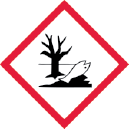
- Prompt:dangerous
- Signal Word:Warning
- Hazard Statement: H302,H411
- Warning Statement: P273
- Hazardous Material transportation number:UN 2811
- WGK Germany:2
- Hazard Category Code: 22-51/53
- Safety Instruction: S24-S61
- RTECS:US7525000
-
Hazardous Material Identification:


- Risk Phrases:R22
- Packing Group:III
- Safety Term:6.1(b)
- HazardClass:6.1(b)
- PackingGroup:III
- TSCA:Yes
- Storage Condition:Storage temperature 2-8 ℃
- Packing Group:III
- Hazard Level:6.1(b)
Nitrapyrin Customs Data
- HS CODE:2933399053
- Customs Data:
China Customs Code:
2933399053Overview:
HS:2933399053 Fluazinam ,Fluridamide,Trichloromethylpyridine VAT:17.0% Tax refund rate:9.0% Regulatory conditions:S Minimum tariff:6.5% general tariff:20.0%
Declaration elements:
Product Name, component content, use to, Please indicate the appearance of Urotropine, 6- caprolactam please indicate the appearance, Signing date
Regulatory conditions:
S.Import and Export Pesticide Registration Certificate
Summary:
HS:2933399053 2-chloro-6-(trichloromethyl)pyridine VAT:17.0% Tax rebate rate:9.0% Supervision conditions:S MFN tariff:6.5% General tariff:20.0%
Nitrapyrin Pricemore >>
| Related Categories | No. | Product Name | Cas No. | Purity | Specification | Price | update time | Inquiry |
|---|---|---|---|---|---|---|---|---|
| SHANG HAI A LA DING SHENG HUA KE JI GU FEN Co., Ltd. | N114699-100mg |
Nitrapyrin |
1929-82-4 | 100mg |
¥564.90 | 2023-09-01 | ||
| SHANG HAI A LA DING SHENG HUA KE JI GU FEN Co., Ltd. | N114699-1g |
Nitrapyrin |
1929-82-4 | 1g |
¥5,599.00 | 2021-05-21 | ||
| SHANG HAI A LA DING SHENG HUA KE JI GU FEN Co., Ltd. | N114699-5g |
Nitrapyrin |
1929-82-4 | 5g |
¥27,969.00 | 2021-05-21 | ||
| SHANG HAI XIAN DING Biotechnology Co., Ltd. | 011125-5g |
Nitrapyrin |
1929-82-4 | 97% | 5g |
942.0CNY | 2021-07-07 | |
| Chemenu | CM175588-500g |
2-Chloro-6-trichloromethylpyridine |
1929-82-4 | 98% | 500g |
$184 | 2022-06-12 | |
| Apollo Scientific | OR28122-25g |
2-Chloro-6-(trichloromethyl)pyridine |
1929-82-4 | 25g |
£16.00 | 2023-09-02 | ||
| Apollo Scientific | OR28122-100g |
2-Chloro-6-(trichloromethyl)pyridine |
1929-82-4 | 100g |
£49.00 | 2023-09-02 | ||
| Chemenu | CM175588-500g |
2-Chloro-6-trichloromethylpyridine |
1929-82-4 | 98% | 500g |
$184 | 2021-08-05 | |
| SHANG HAI YUAN YE Biotechnology Co., Ltd. | B25677-100mg |
Nitrapyrin |
1929-82-4 | ,HPLC≥98% | 100mg |
¥700.00 | 2021-09-02 | |
| TRC | C421770-1g |
2-\u200bChloro-\u200b6-\u200b(trichloromethyl)\u200bpyridine |
1929-82-4 | 1g |
$ 50.00 | 2022-06-06 |
Nitrapyrin Suppliers
 Audited Supplier
Audited Supplier
Audited Supplier
Audited Supplier
Audited Supplier


Nitrapyrin Related Literature
-
1. Contrasting reactions of 2,6-dichloro-4-trichloromethylpyridine, 2,6-dichloro-3-trichloromethylpyridine and their N-oxides with nucleophilesRonald S. Dainter,Hans Suschitzky,Basil J. Wakefield,Nigel Hughes,Anthony J. Nelson J. Chem. Soc. Perkin Trans. 1 1988 227
-
Zhongqing Zhang,Qiang Gao,Zhonglei Xie,Jingmin Yang,Jinhua Liu RSC Adv. 2021 11 114
-
3. Copper-catalyzed versatile C(sp3)–H arylation: synthetic scope and regioselectivity investigationsJiadi Zhou,Yawen Zou,Peng Zhou,Zhiwei Chen,Jianjun Li Org. Chem. Front. 2019 6 1594
-
P. A. Cawse Analyst 1967 92 311
-
Brian G. Lake Toxicol. Res. 2018 7 697
Additional information on Nitrapyrin
Professional Introduction to Nitrapyrin (CAS No. 1929-82-4)
Nitrapyrin, a compound with the chemical name 2-hydroxy-4-methyl-6-phenylpyridine, is a significant molecule in the field of pharmaceutical and agrochemical research. Its CAS number, CAS No. 1929-82-4, uniquely identifies it in scientific literature and databases. This introduction delves into the properties, applications, and recent advancements associated with Nitrapyrin, emphasizing its role in modern chemistry and biology.
The molecular structure of Nitrapyrin consists of a pyridine ring substituted with hydroxyl, methyl, and phenyl groups. This configuration contributes to its unique chemical reactivity and biological activity. The presence of the hydroxyl group enhances its solubility in polar solvents, making it suitable for various biochemical interactions. Additionally, the phenyl ring introduces aromatic stability, which is crucial for its endurance in different environmental conditions.
In recent years, Nitrapyrin has garnered attention for its potential applications in drug development. Studies have highlighted its role as a precursor in synthesizing complex pharmaceutical compounds. Researchers have explored its interactions with enzymes and receptors, uncovering promising avenues for treating neurological disorders. The compound's ability to cross the blood-brain barrier has been particularly intriguing, suggesting its potential as a neuroactive agent.
Moreover, Nitrapyrin has been investigated for its agrochemical properties. Its derivatives have shown efficacy in controlling certain plant pathogens, making it a valuable candidate for developing novel pesticides. The compound's stability under varying environmental conditions enhances its practicality in agricultural settings. Recent field trials have demonstrated its potential to improve crop yields while minimizing ecological impact.
The synthesis of Nitrapyrin involves multi-step organic reactions that require precise control over reaction conditions. Advanced catalytic methods have been developed to optimize yield and purity. These techniques not only improve the efficiency of production but also reduce waste, aligning with sustainable chemistry principles. The growing interest in green chemistry has spurred innovation in Nitrapyrin synthesis, leading to more environmentally friendly processes.
Recent research has also explored the pharmacokinetic profile of Nitrapyrin. Studies using animal models have provided insights into its absorption, distribution, metabolism, and excretion (ADME) properties. These findings are crucial for designing effective therapeutic regimes and understanding potential side effects. The compound's bioavailability has been a focal point, with researchers striving to enhance it through structural modifications.
Another area of interest is the role of Nitrapyrin in biochemical pathways related to inflammation and oxidative stress. Preliminary studies suggest that it may modulate key signaling pathways involved in these processes. This opens up possibilities for developing treatments for chronic inflammatory diseases and neurodegenerative disorders. The compound's dual functionality—both as a reactant and an active agent—makes it a versatile tool in biomedical research.
The analytical characterization of Nitrapyrin is another critical aspect of its study. High-performance liquid chromatography (HPLC), nuclear magnetic resonance (NMR) spectroscopy, and mass spectrometry are commonly employed techniques for determining its purity and structural integrity. These methods ensure that the compound meets stringent quality standards before being used in further research or applications.
Future directions in Nitrapyrin research include exploring its potential as an antimicrobial agent. The increasing prevalence of antibiotic-resistant bacteria has necessitated the search for novel antimicrobial compounds. Nitrapyrin's unique structure suggests that it may interfere with bacterial cell wall synthesis or other vital processes. Preliminary screenings have shown promising results, warranting further investigation into its antimicrobial efficacy.
In conclusion, Nitrapyrin (CAS No. 1929-82-4) is a multifaceted compound with significant implications in pharmaceuticals and agrochemicals. Its structural features enable diverse applications, from drug development to crop protection. Ongoing research continues to uncover new possibilities for harnessing its potential benefits while addressing challenges related to synthesis and bioavailability. As our understanding of this compound grows, so does its promise as a cornerstone molecule in modern chemistry.
1929-82-4 (Nitrapyrin) Related Products
- 4377-37-1(Pyridine,2-(trichloromethyl)-)
- 78846-88-5(2-Chloro-6-(chloromethyl)pyridine)
- 78152-53-1(Pyridine,2-chloro-6-(dichloromethyl)-)
- 1129-19-7(Pyridine,2,4-dichloro-6-(trichloromethyl)-)
- 7041-24-9(2,3,5-trichloro-6-(trichloromethyl)pyridine)
- 114431-95-7(3,6-dichloro-2-(dichloromethyl)pyridine)
- 1817-13-6(Pyridine,3,6-dichloro-2-(trichloromethyl)-)
- 70788-54-4(2,3,4-trichloro-6-(trichloromethyl)pyridine)
- 51492-01-4(2,3-Dichloro-6-(trichloromethyl)pyridine)
- 1197-03-1(2-(trichloromethyl)-5-chloro pyridine)