Cas no 91053-39-3 (Calcined Diatomite)

Calcined Diatomite Chemical and Physical Properties
Names and Identifiers
-
- DIATOMACEOUS EARTH
- HYFLO
- KIESELGUR
- KIESELGEL
- CELITE(R)
- CHEMIZORB
- BETZ 0247
- BETZ 0251
- KIESELGUHR
- CELITE 281
- CELITE 503
- Celite?503
- KIESELGUHR WHITE
- RADIOLITE? HP 70
- ACID RESISTANT BRICKS
- EPU-133
- EH-4360S
- Calcined kieselguhr
- Celatom FP 2
- Celatom MW 25
- Celite
- Celite 219
- Celite WPP
- Damolin K
- DiatoMite
- Dicalite 200
- Fossil fluor
- FP 2
- HP 200
- HP 70
- Infusorial earth, calcined
- Isolite CG 1
- Kieselguhr G
- KIESSLGUHR
- Kojic acid
- KS 33
- KS 33 (pigment)
- MP 79
- MP 79 (adsorbent)
- RADIOLITE®
- Siliceous earth
- Super-cel
- Tripolite, calcined
- Chromosorb? P
- Silica
- SILICON DIOXIDE
- Quartz
- Cristobalite
- Dioxosilane
- Tridymite
- Infusorial earth
- Silicic anhydride
- Aerosil
- Sand
- Diatomaceous silica
- Dicalite
- Wessalon
- Ludox
- Nyacol
- Glass
- Zorbax sil
- Crystalline silica
- Silica, amorphous
- Cab-O-sil
- Crystoballite
- Christensenite
- Silicon oxide
- QUARTZ (SIO2)
- Amorphous silica
- Silica, colloidal
- Silicon(IV) oxide
- Sillikolloid
- Siloxid
- Crysvarl
- Carplex
- Aquafil
- Vulkasil
- Siper
- Calcined Diatomite
-
- MDL: MFCD00132803
- Inchi: 1S/O2Si/c1-3-2
- InChI Key: VYPSYNLAJGMNEJ-UHFFFAOYSA-N
- SMILES: [Si](=O)=O
Computed Properties
- Exact Mass: 59.96680
- Isotope Atom Count: 0
- Hydrogen Bond Donor Count: 0
- Hydrogen Bond Acceptor Count: 2
- Heavy Atom Count: 3
- Rotatable Bond Count: 0
- Complexity: 18.3
- Covalently-Bonded Unit Count: 1
- Defined Atom Stereocenter Count: 0
- Undefined Atom Stereocenter Count : 0
- Defined Bond Stereocenter Count: 0
- Undefined Bond Stereocenter Count: 0
- Topological Polar Surface Area: 34.1
- Surface Charge: 0
- Tautomer Count: 2
- XLogP3: -1
Experimental Properties
- Color/Form: solid
- Density: 0.32-0.38?g/mL?at 25?°C
0.38?g/cm3 (loose weight)(lit.) - PH: 7.0-8.0 (25℃, 10% in aq. suspension)
- PSA: 34.14000
- LogP: -0.61840
- Sensitiveness: Sensitive to humidity
Calcined Diatomite Security Information
-
Symbol:

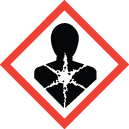
- Signal Word:Warning
- Hazard Statement: H319,H335,H373
- Warning Statement: P261,P305+P351+P338
- Hazardous Material transportation number:NONH for all modes of transport
- WGK Germany:3
- Hazard Category Code: 48/20
- Safety Instruction: 22
- RTECS:VV7311000
-
Hazardous Material Identification:

Calcined Diatomite Pricemore >>
| Related Categories | No. | Product Name | Cas No. | Purity | Specification | Price | update time | Inquiry |
|---|---|---|---|---|---|---|---|---|
| SHANG HAI XIAN DING Biotechnology Co., Ltd. | L-PC207-250g |
RADIOLITE® HP 200 |
91053-39-3 | ,,:19.6μm | 250g |
¥65.0 | 2022-09-28 | |
| SHANG HAI XIAN DING Biotechnology Co., Ltd. | L-PC207-1kg |
RADIOLITE® HP 200 |
91053-39-3 | ,,:19.6μm | 1kg |
¥193.0 | 2022-09-28 | |
| SHANG HAI XIAN DING Biotechnology Co., Ltd. | L-CY313-250g |
RADIOLITE® HP 200 |
91053-39-3 | ,,:21.8μm | 250g |
¥65.0 | 2022-09-28 | |
| SHANG HAI XIAN DING Biotechnology Co., Ltd. | L-IZ646-1kg |
RADIOLITE® HP 200 |
91053-39-3 | ,,:20.3μm | 1kg |
¥214.0 | 2022-09-28 | |
| SHANG HAI XIAN DING Biotechnology Co., Ltd. | L-OE190-25g |
RADIOLITE® HP 200 |
91053-39-3 | TLC | 25g |
¥47.0 | 2022-02-28 | |
| SHANG HAI XIAN DING Biotechnology Co., Ltd. | L-CY313-1kg |
RADIOLITE® HP 200 |
91053-39-3 | ,,:21.8μm | 1kg |
¥193.0 | 2022-09-28 | |
| SHANG HAI XIAN DING Biotechnology Co., Ltd. | L-TK694-25g |
RADIOLITE® HP 200 |
91053-39-3 | TLC | 25g |
¥48.0 | 2022-02-28 | |
| SHANG HAI XIAN DING Biotechnology Co., Ltd. | L-WM345-1kg |
RADIOLITE® HP 200 |
91053-39-3 | ,,:22.2μm | 1kg |
¥193.0 | 2022-09-28 | |
| SHANG HAI XIAN DING Biotechnology Co., Ltd. | L-WM345-250g |
RADIOLITE® HP 200 |
91053-39-3 | ,,:22.2μm | 250g |
¥65.0 | 2022-09-28 | |
| SHANG HAI XIAN DING Biotechnology Co., Ltd. | L-IZ646-250g |
RADIOLITE® HP 200 |
91053-39-3 | ,,:20.3μm | 250g |
¥110.0 | 2022-09-28 |
Calcined Diatomite Suppliers
 Audited Supplier
Calcined Diatomite Related Literature
-
Huabin Zhang,Shaowu Du CrystEngComm, 2014,16, 4059-4068
-
Robert J. Meagher,Anson V. Hatch,Ronald F. Renzi,Anup K. Singh Lab Chip, 2008,8, 2046-2053
-
Tanya Ostapenko,Peter J. Collings,Samuel N. Sprunt,J. T. Gleeson Soft Matter, 2013,9, 9487-9498
-
Siquan Zhang,Shengyao Wang,Liping Guo,Hao Chen,Bien Tan,Shangbin Jin J. Mater. Chem. C, 2020,8, 192-200
Additional information on Calcined Diatomite
Calcined Diatomite: Properties, Applications, and Recent Research
Calcined Diatomite, also known by its CAS No. 91053-39-3, is a highly porous and lightweight material derived from the thermal treatment of raw diatomite. This natural silica-based substance has garnered significant attention in various industrial and environmental applications due to its unique physical and chemical properties. Recent advancements in material science have further enhanced our understanding of its potential uses, making it a subject of interest for researchers and industry professionals alike.
The process of calcination involves heating raw diatomite to high temperatures, typically between 600°C and 1000°C, to remove organic matter and water content. This treatment results in a material with a highly developed pore structure, high surface area, and improved thermal stability. These characteristics make Calcined Diatomite an ideal candidate for applications requiring filtration, adsorption, and catalytic support. For instance, in the field of environmental science, researchers have explored its use as an efficient adsorbent for heavy metals and organic pollutants in wastewater treatment systems.
One of the most notable recent studies on Calcined Diatomite focuses on its role as a support material for heterogeneous catalysts. Scientists have demonstrated that its high surface area and porous structure can significantly enhance the performance of catalysts in various chemical reactions. For example, in petrochemical processes, Calcined Diatomite has been used as a support for catalysts in cracking and reforming reactions, leading to improved reaction efficiency and product yield.
In addition to its industrial applications, Calcined Diatomite has also found use in construction materials. Its lightweight nature and excellent insulating properties make it an attractive option for use in thermal insulation panels and lightweight concrete. Recent research has explored the incorporation of Calcined Diatomite into geopolymer-based materials, which offer sustainable alternatives to traditional cement-based products.
The environmental benefits of Calcined Diatomite are another area of active research. Its ability to adsorb pollutants such as oil spills and heavy metals has been extensively studied. For instance, researchers have developed modified Calcined Diatomite composites that exhibit enhanced adsorption capacities by incorporating nanoparticles or functional groups onto the surface of the material.
Furthermore, the use of Calcined Diatomite in agriculture has gained traction due to its ability to improve soil structure and retain moisture. Recent studies have shown that incorporating Calcined Diatomite into soil can enhance crop yields by improving water retention and nutrient availability. This application aligns with the growing demand for sustainable agricultural practices.
In conclusion, Calcined Diatomite (CAS No. 91053-39-3) is a versatile material with a wide range of applications across industries. Its unique properties make it an invaluable resource for researchers and industry professionals seeking innovative solutions to modern challenges. As advancements in material science continue to unfold, the potential uses of Calcined Diatomite are expected to expand further, solidifying its position as a key material in various sectors.
91053-39-3 (Calcined Diatomite) Related Products
- 60676-86-0(Silicon dioxide)
- 112926-00-8(Silica gel)
- 7631-86-9(Silicon dioxide)
- 8008-53-5(Ethiodized oil)
- 112945-52-5(Synthetic Amorphous Silica)
- 14808-60-7(Quartz Screw Vials 1.5mL)
- 15468-32-3(Tridymite (SiO2) (9CI))
- 61790-53-2(Celatom)
- 14464-46-1(Cristobalite)
- 14832-85-0(Lechatelierite (SiO2)(9CI))
