Cas no 617-35-6 (Ethyl pyruvate)
Ethyl pyruvate Chemical and Physical Properties
Names and Identifiers
-
- Ethyl pyruvate
- Ethyl 2-oxopropionate
- Pyruvic acid ethyl ester
- Brenztraubensaeure-ethylester
- 2-Oxo-propionic acid ethyl ester
- ethyl 2-oxopropanoate
- Pyruvic Acid-13C Eth
- Pyruvic acid, ethyl ester
- Propanoic acid, 2-oxo-, ethyl ester
- Ethyl pyroracemate
- Ethyl acetylformate
- Ethyl alpha-ketopropionate
- Ethyl pyruvate (natural)
- FEMA No. 2457
- Ethyl pyruvate, 98%
- C5H8O3
- 2-oxopropanoic acid ethyl ester
- XXRCUYVCPSWGCC-UHFFFAOYSA-N
- Pyruvic acid, ethyl ester (8CI)
- 03O9
- Ethyl pyruvate,98%
-
- MDL: MFCD00009123
- Inchi: 1S/2C5H8O3/c2*1-3-8-5(7)4(2)6/h3H2,1-2H3;6H,2-3H2,1H3
- InChI Key: OHEVUKMTGUFMPU-UHFFFAOYSA-N
- SMILES: CCOC(C(=O)C)=O.CCOC(C(=C)O)=O
- BRN: 1071466
Computed Properties
- Exact Mass: 116.04700
- Monoisotopic Mass: 116.047344
- Isotope Atom Count: 0
- Hydrogen Bond Donor Count: 0
- Hydrogen Bond Acceptor Count: 3
- Heavy Atom Count: 8
- Rotatable Bond Count: 3
- Complexity: 106
- Covalently-Bonded Unit Count: 1
- Defined Atom Stereocenter Count: 0
- Undefined Atom Stereocenter Count : 0
- Defined Bond Stereocenter Count: 0
- Undefined Bond Stereocenter Count: 0
- Isotope Atom Count: 0
- Surface Charge: 0
- Tautomer Count: 2
- XLogP3: 0.4
- Topological Polar Surface Area: 43.4
Experimental Properties
- Color/Form: Yellow transparent liquid
- Density: 1.045?g/mL?at 25?°C(lit.)
- Melting Point: -58°C
- Boiling Point: 144?°C(lit.)
- Flash Point: Fahrenheit: 114.8 ° f
Celsius: 46 ° c - Refractive Index: n20/D 1.404(lit.)
- Solubility: 10g/l
- Water Partition Coefficient: Miscible with water, ethanol and ether.
- PSA: 43.37000
- LogP: 0.13850
- Merck: 8021
- FEMA: 2457
- Solubility: Soluble in ethanol, ether, acetone, slightly soluble in water
Ethyl pyruvate Security Information
-
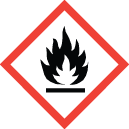
Symbol:
- Prompt:warning
- Signal Word:Warning
- Hazard Statement: H226
- Warning Statement: P210-P233-P240-P241+P242+P243-P280-P303+P361+P353-P370+P378-P403+P235-P501
- Hazardous Material transportation number:UN 3272 3/PG 3
- WGK Germany:3
- Hazard Category Code: 10
- Safety Instruction: S16
-
Hazardous Material Identification:
- Hazard Level:3
- HazardClass:3
- PackingGroup:III
- TSCA:Yes
- Storage Condition:2-8°C
- Packing Group:III
- Risk Phrases:R10
Ethyl pyruvate Customs Data
- HS CODE:29183000
- Customs Data:
China Customs Code:
2918300090Overview:
2918300090 Other aldehydes or ketones without other oxy carboxylic acids(Including anhydrides\Acyl halide\Peroxides, peroxyacids and derivatives of this tax number). VAT:17.0% Tax refund rate:9.0% Regulatory conditions:nothing MFN tariff:6.5% general tariff:30.0%
Declaration elements:
Product Name, component content, use to
Summary:
2918300090 other carboxylic acids with aldehyde or ketone function but without other oxygen function, their anhydrides, halides, peroxides, peroxyacids and their derivatives.Supervision conditions:None.VAT:17.0%.Tax rebate rate:9.0%.MFN tariff:6.5%.General tariff:30.0%
Ethyl pyruvate Pricemore >>
| Related Categories | No. | Product Name | Cas No. | Purity | Specification | Price | update time | Inquiry |
|---|---|---|---|---|---|---|---|---|
| XI GE MA AO DE LI QI ( SHANG HAI ) MAO YI Co., Ltd. | E47808-25G |
Ethyl pyruvate |
617-35-6 | 25g |
¥667.23 | 2023-11-09 | ||
| XI GE MA AO DE LI QI ( SHANG HAI ) MAO YI Co., Ltd. | E47808-100G |
Ethyl pyruvate |
617-35-6 | 100g |
¥1539.87 | 2023-11-09 | ||
| XI GE MA AO DE LI QI ( SHANG HAI ) MAO YI Co., Ltd. | W245712-SAMPLE-K |
Ethyl pyruvate |
617-35-6 | natural, FG | 587.6 | 2021-05-17 | ||
| XI GE MA AO DE LI QI ( SHANG HAI ) MAO YI Co., Ltd. | W245712-100G-K |
Ethyl pyruvate |
617-35-6 | natural, FG | 100G |
1441.44 | 2021-05-17 | |
| XI GE MA AO DE LI QI ( SHANG HAI ) MAO YI Co., Ltd. | W245712-1KG-K |
Ethyl pyruvate |
617-35-6 | natural, FG | 1KG |
7044.57 | 2021-05-17 | |
| XI GE MA AO DE LI QI ( SHANG HAI ) MAO YI Co., Ltd. | W245712-5KG-K |
Ethyl pyruvate |
617-35-6 | natural, FG | 5KG |
28399.37 | 2021-05-17 | |
| XI GE MA AO DE LI QI ( SHANG HAI ) MAO YI Co., Ltd. | W245735-SAMPLE-K |
Ethyl pyruvate |
617-35-6 | ≥97%, FG | 587.6 | 2021-05-17 | ||
| XI GE MA AO DE LI QI ( SHANG HAI ) MAO YI Co., Ltd. | W245735-250G-K |
Ethyl pyruvate |
617-35-6 | ≥97%, FG | 250G |
1250.76 | 2021-05-17 | |
| XI GE MA AO DE LI QI ( SHANG HAI ) MAO YI Co., Ltd. | W245735-1KG-K |
Ethyl pyruvate |
617-35-6 | ≥97%, FG | 1KG |
2456.98 | 2021-05-17 | |
| XI GE MA AO DE LI QI ( SHANG HAI ) MAO YI Co., Ltd. | W245735-10KG-K |
Ethyl pyruvate |
617-35-6 | ≥97%, FG | 10KG |
15442.82 | 2021-05-17 |
Ethyl pyruvate Production Method
Production Method 1
Ethyl pyruvate Raw materials
Ethyl pyruvate Preparation Products
Ethyl pyruvate Suppliers
Ethyl pyruvate Related Literature
-
Saeed Babaee,Hassan Sepehrmansourie,Mahmoud Zarei,Mohammad Ali Zolfigol,Mojtaba Hosseinifard RSC Adv. 2023 13 22503
-
Poonam Sharma,Rakesh K. Sharma New J. Chem. 2016 40 9038
-
Megha N. Palange,Rajesh G. Gonnade,Ravindar Kontham Org. Biomol. Chem. 2019 17 5749
-
Luis R. Domingo,José A. Sáez,Manuel Arnó Org. Biomol. Chem. 2014 12 895
-
Ahmed El-Harairy,Mennatallah Shaheen,Jun Li,Yuzhou Wu,Minghao Li,Yanlong Gu RSC Adv. 2020 10 13507
Additional information on Ethyl pyruvate
Ethyl pyruvate (CAS No. 617-35-6): A Versatile Compound in Modern Chemical and Pharmaceutical Research
Ethyl pyruvate, with the chemical formula C?H?O? and CAS number 617-35-6, is an ester derivative of pyruvic acid. This compound has garnered significant attention in the fields of chemical biology and pharmaceutical research due to its diverse biological activities and potential therapeutic applications. Its molecular structure, featuring a carboxylate ester group, makes it a valuable intermediate in synthetic chemistry and a promising candidate for drug development.
The ethyl pyruvate molecule is characterized by its high reactivity, which stems from the presence of both a polar carboxyl group and a nonpolar ethyl moiety. This dual functionality allows it to interact with various biological targets, making it a versatile tool in medicinal chemistry. Recent studies have highlighted its role in modulating cellular processes, particularly in the context of inflammation, neuroprotection, and metabolic disorders.
In recent years, research on ethyl pyruvate has expanded significantly, driven by its potential as an anti-inflammatory agent. Studies have demonstrated that ethyl pyruvate can inhibit the production of pro-inflammatory cytokines such as tumor necrosis factor-alpha (TNF-α) and interleukin-1β (IL-1β). This effect is attributed to its ability to modulate signaling pathways involved in inflammation, such as the nuclear factor kappa B (NF-κB) pathway. These findings have opened new avenues for the development of novel anti-inflammatory therapies.
Beyond its anti-inflammatory properties, ethyl pyruvate has shown promise in neuroprotective applications. Preclinical studies have indicated that it can protect against neuronal damage caused by oxidative stress and excitotoxicity. The compound's ability to scavenge reactive oxygen species (ROS) and reduce oxidative stress makes it a potential candidate for treating neurodegenerative diseases such as Alzheimer's and Parkinson's disease. Furthermore, its role in enhancing mitochondrial function has been observed, which could be beneficial in maintaining neuronal health.
The metabolic profile of ethyl pyruvate is another area of active investigation. Pyruvate itself is a key intermediate in cellular respiration, and ethyl pyruvate can be metabolized to produce energy or incorporated into other metabolic pathways. Research has suggested that ethyl pyruvate can influence glucose homeostasis and improve insulin sensitivity, making it a potential therapeutic agent for diabetes mellitus. These findings highlight the compound's significance in metabolic research and its potential applications in managing metabolic disorders.
Synthetic chemistry approaches have also been explored to utilize ethyl pyruvate as a building block for more complex molecules. Its reactivity allows for facile modifications through esterification, hydrolysis, and condensation reactions. These synthetic strategies have enabled the development of novel derivatives with enhanced biological activity. For instance, modifications of the ethyl group or the carboxylate moiety have led to compounds with improved efficacy in various pharmacological assays.
The pharmacokinetic properties of ethyl pyruvate have been studied to optimize its delivery and efficacy. Research has shown that the compound exhibits good oral bioavailability and can cross the blood-brain barrier, making it suitable for central nervous system (CNS) applications. Additionally, its stability under physiological conditions ensures prolonged activity within biological systems. These characteristics make ethyl pyruvate an attractive candidate for clinical translation.
In conclusion, ethyl pyruvate (CAS No. 617-35-6) is a multifaceted compound with significant potential in chemical biology and pharmaceutical research. Its diverse biological activities, coupled with its synthetic versatility, make it a valuable tool for drug discovery and development. Ongoing research continues to uncover new applications for this compound, particularly in the areas of inflammation, neuroprotection, and metabolic disorders. As our understanding of its mechanisms of action evolves, ethyl pyruvate is poised to play an increasingly important role in modern medicine.
617-35-6 (Ethyl pyruvate) Related Products
- 20279-44-1(Butyl 2-oxopropanoate)
- 99419-43-9(Propanoic acid, 2-oxo-,2-hydroxyethyl ester)
- 76849-54-2(tert-butyl 2-oxopropanoate)
- 53939-79-0(Propanoic acid, 2-oxo-, hexyl ester)
- 147506-78-3(Propanoic acid, 2-oxo-,1-methylpropyl ester)
- 108899-52-1(Propanoic acid, 2-oxo-, anhydride with acetic acid (9CI))
- 609-09-6(1,3-diethyl 2-oxopropanedioate)
- 923-11-5(Isopropyl 2-oxopropanoate)
- 79951-02-3((Pyruvoyloxy)acetic acid)
- 13051-48-4(Isobutyl pyruvate)