Cas no 16753-62-1 (Dimethoxymethylvinylsilane)

Dimethoxymethylvinylsilane Chemical and Physical Properties
Names and Identifiers
-
- Dimethoxymethylvinylsilane
- Vinylmethyldimethoxysilane
- Dimethoxy(methyl)(vinyl)silane
- Silquest? A-2171
- Methylvinyldimethoxysilane
- ethenyldimethoxymethyl-silan
- ethenyldimethoxymethyl-Silane
- Ethenylmethyldimethoxysilane
- Methyldimethoxyvinylsilane
- Silane,ethenyldimethoxymethyl
- Silquest A-2171
- vinyldimethoxymethylsilane
- Silane, ethenyldimethoxymethyl-
- Dimethoxymethylvinylsilane 97%
-
- MDL: MFCD00129170
- Inchi: 1S/C5H12O2Si/c1-5-8(4,6-2)7-3/h5H,1H2,2-4H3
- InChI Key: ZLNAFSPCNATQPQ-UHFFFAOYSA-N
- SMILES: [Si](C=C)(C)(OC)OC
- BRN: 3043765
Computed Properties
- Exact Mass: 132.06100
- Monoisotopic Mass: 132.061
- Isotope Atom Count: 0
- Hydrogen Bond Donor Count: 0
- Hydrogen Bond Acceptor Count: 2
- Heavy Atom Count: 8
- Rotatable Bond Count: 3
- Complexity: 78.5
- Covalently-Bonded Unit Count: 1
- Defined Atom Stereocenter Count: 0
- Undefined Atom Stereocenter Count : 0
- Defined Bond Stereocenter Count: 0
- Undefined Bond Stereocenter Count: 0
- Surface Charge: 0
- Topological Polar Surface Area: 18.5
Experimental Properties
- Color/Form: Not determined
- Density: 0.884?g/mL?at 25?°C(lit.)
- Melting Point: <0°C
- Boiling Point: 104°C(lit.)
- Flash Point: Fahrenheit: 37.4 ° f
Celsius: 3 ° c - Refractive Index: n20/D 1.395(lit.)
- PSA: 18.46000
- LogP: 1.07640
- Sensitiveness: Moisture Sensitive
- Solubility: Not determined
Dimethoxymethylvinylsilane Security Information
-
Symbol:
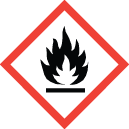
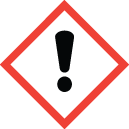
- Prompt:dangerous
- Signal Word:Danger
- Hazard Statement: H225-H315-H319
- Warning Statement: P210-P233-P240-P241+P242+P243-P264-P280-P302+P352+P332+P313+P362+P364-P305+P351+P338+P337+P313-P370+P378-P403+P235-P501
- Hazardous Material transportation number:UN 1993 3/PG 2
- WGK Germany:3
- Hazard Category Code: 11-36/37/38
- Safety Instruction: S16-S26-S36
-
Hazardous Material Identification:


- Packing Group:II
- Hazard Level:3
- HazardClass:3
- PackingGroup:II
- TSCA:Yes
- Risk Phrases:R11; R36/37/38
- Packing Group:II
- Safety Term:3
- Storage Condition:Keep away from high temperature, sparks, flames and fire sources. Store in tightly closed containers. Store in a cool, dry, well ventilated area away from incompatible substances.
Dimethoxymethylvinylsilane Pricemore >>
| Related Categories | No. | Product Name | Cas No. | Purity | Specification | Price | update time | Inquiry |
|---|---|---|---|---|---|---|---|---|
| SHANG HAI XIAN DING Biotechnology Co., Ltd. | D3386-25g |
Dimethoxymethylvinylsilane |
16753-62-1 | 94.0%(GC) | 25g |
¥190.0 | 2022-05-30 | |
| SHANG HAI XIAN DING Biotechnology Co., Ltd. | D3386-250g |
Dimethoxymethylvinylsilane |
16753-62-1 | 94.0%(GC) | 250g |
¥1130.0 | 2022-05-30 | |
| SHANG HAI XIAN DING Biotechnology Co., Ltd. | DP210-100ml |
Dimethoxymethylvinylsilane |
16753-62-1 | 98% | 100ml |
¥197.0 | 2022-05-30 | |
| SHANG HAI XIAN DING Biotechnology Co., Ltd. | DP210-500ml |
Dimethoxymethylvinylsilane |
16753-62-1 | 98% | 500ml |
¥765.0 | 2022-05-30 | |
| SHANG HAI XIAN DING Biotechnology Co., Ltd. | DP210-25ml |
Dimethoxymethylvinylsilane |
16753-62-1 | 98% | 25ml |
¥84.0 | 2022-05-30 | |
| SHANG HAI A LA DING SHENG HUA KE JI GU FEN Co., Ltd. | D131923-100g |
Dimethoxymethylvinylsilane |
16753-62-1 | 97% | 100g |
¥179.90 | 2023-09-03 | |
| SHANG HAI A LA DING SHENG HUA KE JI GU FEN Co., Ltd. | D131923-250g |
Dimethoxymethylvinylsilane |
16753-62-1 | 97% | 250g |
¥391.90 | 2023-09-03 | |
| SHANG HAI A LA DING SHENG HUA KE JI GU FEN Co., Ltd. | D131923-25g |
Dimethoxymethylvinylsilane |
16753-62-1 | 97% | 25g |
¥67.90 | 2023-09-03 | |
| SHANG HAI A LA DING SHENG HUA KE JI GU FEN Co., Ltd. | D131923-5g |
Dimethoxymethylvinylsilane |
16753-62-1 | 97% | 5g |
¥44.90 | 2023-09-03 | |
| SHANG HAI YI EN HUA XUE JI SHU Co., Ltd. | R024408-100g |
Dimethoxymethylvinylsilane |
16753-62-1 | 97% | 100g |
¥165 | 2024-05-25 |
Dimethoxymethylvinylsilane Suppliers
 Audited Supplier
Audited Supplier
Audited Supplier
Dimethoxymethylvinylsilane Related Literature
-
Erika A. Cobar,Paul R. Horn,Robert G. Bergman,Martin Head-Gordon Phys. Chem. Chem. Phys., 2012,14, 15328-15339
-
2. Estimating and correcting interference fringes in infrared spectra in infrared hyperspectral imagingGhazal Azarfar,Ebrahim Aboualizadeh,Nicholas M. Walter,Simona Ratti,Camilla Olivieri,Alessandra Norici,Michael Nasse,Achim Kohler,Mario Giordano Analyst, 2018,143, 4674-4683
-
Long Deng,Qian Zou,Biao Liu,Wenhui Ye,Chengfei Zhuo,Li Chen,Ze-Yuan Deng,Ya-Wei Fan,Jing Li Food Funct., 2018,9, 4234-4245
-
Guiying Zhang,Maosheng Cheng,Yanni Li,Keliang Liu,Lifeng Cai Chem. Commun., 2013,49, 11086-11088
Additional information on Dimethoxymethylvinylsilane
Dimethoxymethylvinylsilane (CAS No. 16753-62-1): A Versatile Silane Derivative in Modern Biomedical Applications
Dimethoxymethylvinylsilane, identified by its chemical identifier CAS No. 16753-62-1, represents a significant advancement in the field of silane chemistry. This compound, a derivative of vinylsilane, is characterized by its unique molecular structure, which features two methoxy groups attached to a methylvinylsilane backbone. Its chemical formula, C6H14O2Si, underscores its potential for functionalization in various industrial and biomedical contexts. Recent studies have highlighted its role in the development of advanced materials, particularly in applications requiring surface modification and enhanced biocompatibility.
The Dimethoxymethylvinylsilane molecule is notable for its ability to act as a coupling agent, facilitating the formation of covalent bonds between organic and inorganic materials. This property has made it a valuable component in the synthesis of hybrid materials, such as silica-based composites used in drug delivery systems. Researchers have increasingly focused on its application in creating biocompatible coatings for medical devices, where its chemical inertness and reactivity contribute to the stability and functionality of these surfaces.
In the realm of biomedical research, the Dimethoxymethylvinylsilane has shown promise in the development of nanocarriers for targeted drug delivery. A 2023 study published in Advanced Materials demonstrated its utility in the synthesis of polymeric nanoparticles capable of encapsulating therapeutic agents. These nanoparticles exhibited enhanced stability in biological environments, reducing the risk of premature drug release and improving the efficacy of treatment regimens. This application aligns with the growing trend of personalized medicine, where precise delivery mechanisms are critical for therapeutic success.
Recent advancements in surface modification techniques have further expanded the potential of Dimethoxymethylvinylsilane. In 2024, a team of scientists from the University of Tokyo reported the successful use of this compound to create ultra-thin films with tunable hydrophobicity. These films, when applied to implantable devices, demonstrated improved resistance to biofouling, a significant challenge in long-term medical applications. The study emphasized the importance of controlling the surface chemistry of biomedical materials to enhance their performance and longevity.
The Dimethoxymethylvinylsilane also finds application in the development of smart materials that respond to external stimuli. For instance, researchers at the Max Planck Institute have explored its use in creating pH-responsive hydrogels. These hydrogels, when exposed to specific pH levels, undergo structural changes that release encapsulated drugs. This property is particularly valuable in the treatment of conditions such as cancer, where localized drug delivery can minimize systemic side effects and improve patient outcomes.
Another emerging area of research involves the integration of Dimethoxymethylvinylsilane into biomimetic materials that replicate the properties of natural tissues. A 2025 study in Biomaterials Science highlighted its role in the fabrication of scaffolds for tissue engineering. These scaffolds, designed to support cell growth and tissue regeneration, exhibited excellent mechanical properties and biocompatibility, making them suitable for applications in bone and cartilage repair.
Despite its promising applications, the Dimethoxymethylvinylsilane requires careful consideration in terms of its synthesis and handling. While it is not classified as a hazardous substance, proper storage conditions are essential to maintain its chemical integrity. Researchers emphasize the importance of using controlled environments during the synthesis process to ensure the purity and consistency of the final product, which is critical for its application in sensitive biomedical contexts.
Looking ahead, the Dimethoxymethylvinylsilane is poised to play a pivotal role in the next generation of biomedical technologies. Its unique chemical properties, combined with ongoing advancements in materials science, are expected to drive innovations in drug delivery, tissue engineering, and medical device development. As the field continues to evolve, the Dimethoxymethylvinylsilane will likely remain a key component in the quest for more effective and sustainable biomedical solutions.
16753-62-1 (Dimethoxymethylvinylsilane) Related Products
- 53998-34-8(3,6-Dimethoxy-3,6-dimethyl-2,7-dioxa-3,6-disilaoct-4-ene)
- 5507-44-8(Diethoxymethylvinylsilane)
- 61707-14-0(2,10-Dioxa-3,6,9-trisilaundeca-4,7-diene, 3,6,9-trimethoxy-3,6,9-trimethyl-)
- 67892-60-8(diethoxydivinylsilane)
- 129762-81-8(Silane, diethenyldimethoxy-)
- 61707-17-3(2,7-Dioxa-3,6-disilaoct-4-ene, 3,3,6-trimethoxy-6-methyl-)
- 2098070-20-1(2-(3-(Pyridin-3-yl)-1H-pyrazol-1-yl)acetimidamide)
- 2680771-01-9(4-cyclopentyl-3-{(prop-2-en-1-yloxy)carbonylamino}butanoic acid)
- 1444113-98-7(N-(3-cyanothiolan-3-yl)-2-[(2,2,2-trifluoroethyl)sulfanyl]pyridine-4-carboxamide)
- 332062-08-5(Fmoc-S-3-amino-4,4-diphenyl-butyric acid)

