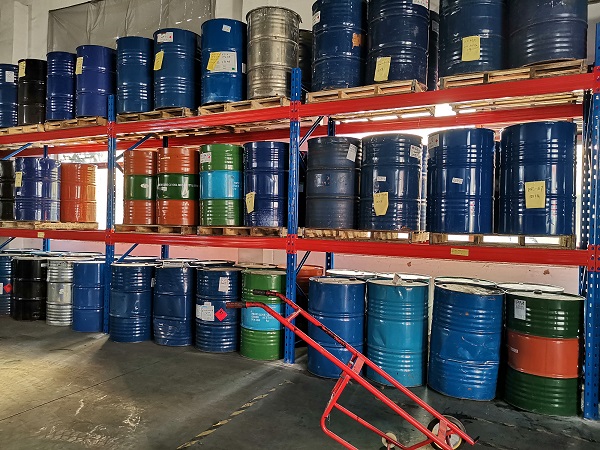
Cas no 1194-65-6 (2,6-Dichlorobenzonitrile)

2,6-Dichlorobenzonitrile Chemical and Physical Properties
Names and Identifiers
-
- 2,6-Dichlorobenzonitrile
- Dichlobenil
- 2,6-Dichlorobenzonitrile Solution
- 2,5-DICHLORO-3,4,6-TRIFLUOROBENZENETHIOL
- 2,6-Dichlor-benzoesaeure-aethylester
- 2,6-DICHLOROBENZNITRILE
- 2,6-dichloro-benzoic acid ethyl ester
- 2,6-dichloro-benzonitrile
- 2,6-Dichlorobenzonitrile,Dichlobenil
- 2,6-Dichlorobenzonitrile100μg
- Ethyl-2,6-dichlorbenzoat
- Dichlobanil
- Casoron
- Benzonitrile, 2,6-dichloro-
- Casaron
- Prefix D
- DU-Sprex
- Surfassol
- Decabane
- Casoron 133
- DBN (the herbicide)
- 2,6-Dichlorophenyl cyanide
- 2,6-DBN
- Niagara 5,996
- DBN (pesticide)
- Code H 133
- Norosac
- Cyclomec
- Dyclomec
- Casoron gsr
- Nia 5996
- Casoron G-4
- Casoron G20 SR
- Caswell No. 297
- Carsoron
- 2,6-Dichlorbenzonitril
- 2,6-Dichlorobenzoic acid nitrile
- H 133
- Dichlobenil [A
-
- MDL: MFCD00001781
- Inchi: 1S/C7H3Cl2N/c8-6-2-1-3-7(9)5(6)4-10/h1-3H
- InChI Key: YOYAIZYFCNQIRF-UHFFFAOYSA-N
- SMILES: ClC1C([H])=C([H])C([H])=C(C=1C#N)Cl
- BRN: 1909167
Computed Properties
- Exact Mass: 170.96400
- Monoisotopic Mass: 170.964255
- Isotope Atom Count: 0
- Hydrogen Bond Donor Count: 0
- Hydrogen Bond Acceptor Count: 1
- Heavy Atom Count: 10
- Rotatable Bond Count: 0
- Complexity: 150
- Covalently-Bonded Unit Count: 1
- Defined Atom Stereocenter Count: 0
- Undefined Atom Stereocenter Count : 0
- Defined Bond Stereocenter Count: 0
- Undefined Bond Stereocenter Count: 0
- Surface Charge: 0
- Tautomer Count: nothing
- XLogP3: 2.7
- Topological Polar Surface Area: 23.8
Experimental Properties
- Color/Form: Colorless crystal with slightly aromatic smell
- Density: 1.4980 (rough estimate)
- Melting Point: 143-146?°C (lit.)
- Boiling Point: 270-275 oC
- Flash Point: 270°C
- Refractive Index: 1.6000 (estimate)
- Water Partition Coefficient: 25 mg/L (25 oC)
- PSA: 23.79000
- LogP: 2.86508
- Merck: 3042
- Solubility: dissolve in water
2,6-Dichlorobenzonitrile Security Information
-
Symbol:


- Prompt:warning
- Signal Word:Warning
- Hazard Statement: H312,H411
- Warning Statement: P273,P280
- Hazardous Material transportation number:UN 3077 9/PG 3
- WGK Germany:2
- Hazard Category Code: 21-51/53
- Safety Instruction: S36/37-S61
- RTECS:DI3500000
-
Hazardous Material Identification:


- HazardClass:9
- PackingGroup:III
- Toxicity:LD50 in rats, mice (mg/kg): 2710, 6800 orally (Bailey, White)
- Storage Condition:Sealed in dry,Room Temperature
- Risk Phrases:R21; R51/53
- Packing Group:III
- Safety Term:9
- Packing Group:III
- Hazard Level:9
2,6-Dichlorobenzonitrile Customs Data
- HS CODE:2926909090
- Customs Data:
China Customs Code:
2926909090Overview:
2926909090 Other nitrile based compounds. VAT:17.0% Tax refund rate:9.0% Regulatory conditions:nothing MFN tariff:6.5% general tariff:30.0%
Declaration elements:
Product Name, component content, use to
Summary:
HS:2926909090 other nitrile-function compounds VAT:17.0% Tax rebate rate:9.0% Supervision conditions:none MFN tariff:6.5% General tariff:30.0%
2,6-Dichlorobenzonitrile Pricemore >>
| Related Categories | No. | Product Name | Cas No. | Purity | Specification | Price | update time | Inquiry |
|---|---|---|---|---|---|---|---|---|
| SHANG HAI XIAN DING Biotechnology Co., Ltd. | D1137-25g |
2,6-Dichlorobenzonitrile |
1194-65-6 | 99.0%(GC) | 25g |
¥250.0 | 2022-05-30 | |
| SHANG HAI XIAN DING Biotechnology Co., Ltd. | D415A-25g |
2,6-Dichlorobenzonitrile |
1194-65-6 | 98% | 25g |
¥68.0 | 2022-05-30 | |
| SHANG HAI XIAN DING Biotechnology Co., Ltd. | D415A-100g |
2,6-Dichlorobenzonitrile |
1194-65-6 | 98% | 100g |
¥168.0 | 2022-05-30 | |
| SHANG HAI XIAN DING Biotechnology Co., Ltd. | D415A-500g |
2,6-Dichlorobenzonitrile |
1194-65-6 | 98% | 500g |
¥625.0 | 2022-05-30 | |
| SHANG HAI A LA DING SHENG HUA KE JI GU FEN Co., Ltd. | D119419-250mg |
2,6-Dichlorobenzonitrile |
1194-65-6 | 250mg |
¥387.90 | 2023-09-03 | ||
| SHANG HAI A LA DING SHENG HUA KE JI GU FEN Co., Ltd. | D102511-100g |
2,6-Dichlorobenzonitrile |
1194-65-6 | 98% | 100g |
¥150.90 | 2023-09-03 | |
| SHANG HAI A LA DING SHENG HUA KE JI GU FEN Co., Ltd. | D102511-25g |
2,6-Dichlorobenzonitrile |
1194-65-6 | 98% | 25g |
¥56.90 | 2023-09-03 | |
| SHANG HAI A LA DING SHENG HUA KE JI GU FEN Co., Ltd. | D102511-500g |
2,6-Dichlorobenzonitrile |
1194-65-6 | 98% | 500g |
¥593.90 | 2023-09-03 | |
| Chemenu | CM160455-500g |
2,6-dichlorobenzonitrile |
1194-65-6 | 95+% | 500g |
$102 | 2021-06-16 | |
| Chemenu | CM160455-1000g |
2,6-dichlorobenzonitrile |
1194-65-6 | 95+% | 1000g |
$153 | 2021-06-16 |
2,6-Dichlorobenzonitrile Suppliers
 Audited Supplier
Audited Supplier
Audited Supplier
Audited Supplier
Audited Supplier


2,6-Dichlorobenzonitrile Related Literature
-
Ross Harder,David C. Dunand,Ian McNulty Nanoscale, 2017,9, 5686-5693
-
Jing Yu,Yu-Qi Lyu,Jiapeng Liu,Mohammed B. Effat,Junxiong Wu J. Mater. Chem. A, 2019,7, 17995-18002
-
Jacob S. Jordan,Evan R. Williams Analyst, 2021,146, 2617-2625
-
Xingqun Zheng,Lele Song,Xin Feng,Li Li,Zidong Wei J. Mater. Chem. A, 2020,8, 14145-14151
-
Eunju Nam,Jiyeon Han,Sunhee Choi,Mi Hee Lim Chem. Commun., 2021,57, 7637-7640
Related Categories
- Solvents and Organic Chemicals Organic Compounds Benzenoids Benzene and substituted derivatives Chlorobenzenes
- Solvents and Organic Chemicals Organic Compounds Benzenoids Benzene and substituted derivatives Halobenzenes Chlorobenzenes
- Solvents and Organic Chemicals Organic Compounds cyanides/Cyanides
Additional information on 2,6-Dichlorobenzonitrile
Introduction to 2,6-Dichlorobenzonitrile (CAS No. 1194-65-6)
2,6-Dichlorobenzonitrile, with the chemical formula C?H?Cl?N and CAS number 1194-65-6, is a significant intermediate in organic synthesis and pharmaceutical chemistry. This compound, characterized by its dichlorinated benzene ring substituted with a nitrile group at the 2- and 6-positions, has garnered attention due to its versatile reactivity and utility in the development of various chemical products. Its structural features make it a valuable precursor in the synthesis of agrochemicals, dyes, and pharmaceuticals, reflecting its broad applicability in industrial and research settings.
The nitrile group in 2,6-Dichlorobenzonitrile is a key functional moiety that participates in various chemical transformations, including hydrolysis to carboxylic acids, reduction to primary amines, and condensation reactions. These properties have made it a preferred building block in medicinal chemistry for constructing complex molecular architectures. The presence of two chlorine atoms at the ortho positions enhances electrophilic aromatic substitution reactions, allowing for further functionalization at other sites on the benzene ring. This feature is particularly useful in designing molecules with specific biological activities.
In recent years, 2,6-Dichlorobenzonitrile has been extensively studied for its role in the development of novel therapeutic agents. One notable area of research involves its application in the synthesis of kinase inhibitors, which are critical for treating cancers and inflammatory diseases. For instance, derivatives of 2,6-Dichlorobenzonitrile have been explored as inhibitors of tyrosine kinases, where the nitrile group serves as a hinge-binding moiety interacting with key residues in the enzyme's active site. Such studies highlight the compound's potential as a scaffold for drug discovery efforts.
Moreover, advancements in green chemistry have prompted investigations into sustainable synthetic routes for 2,6-Dichlorobenzonitrile. Researchers have reported methods that minimize waste and energy consumption while maintaining high yields. For example, catalytic chlorination processes using transition metal complexes have been optimized to produce 2,6-Dichlorobenzonitrile with reduced byproducts. These innovations align with global efforts to promote environmentally friendly practices in chemical manufacturing.
The pharmaceutical industry has also leveraged 2,6-Dichlorobenzonitrile in the development of antimicrobial agents. Structural modifications of this compound have led to compounds exhibiting potent activity against resistant bacterial strains. The dichloro substituents enhance binding affinity to bacterial enzymes involved in DNA replication and metabolism. Such findings underscore the importance of 2,6-Dichlorobenzonitrile as a versatile intermediate in addressing antimicrobial resistance challenges.
Another emerging application of 2,6-Dichlorobenzonitrile is in materials science, particularly in the synthesis of advanced polymers and coatings. The nitrile group imparts thermal stability and chemical resistance to polymers derived from this compound. Researchers are exploring its use in producing high-performance materials for electronics and aerospace industries where durability under extreme conditions is essential.
The synthesis of 2,6-Dichlorobenzonitrile typically involves chlorination followed by cyanation of chlorobenzene derivatives or direct functionalization of benzene under controlled conditions. Recent methodologies have focused on improving selectivity and yield through tailored catalyst systems and reaction conditions. For example, photoredox catalysis has been employed to achieve regioselective chlorination at specific positions on the benzene ring.
In conclusion, 2 , 6 - Dich lor o benz on i tr ile ( C A S N o . 1 1 9 4 - 6 5 - 6 ) remains a cornerstone compound in synthetic chemistry due to its structural versatility and functional reactivity. Its role as an intermediate in pharmaceuticals continues to evolve with ongoing research into new applications and sustainable production methods. As scientists uncover novel ways to harness its potential, 2 , 6 - Dich lor o benz on i tr ile is poised to remain integral to advancements across multiple scientific disciplines.
1194-65-6 (2,6-Dichlorobenzonitrile) Related Products
- 1897-41-2(Tetrachloroterephthalonitrile)
- 36245-95-1(2,3,4,5-Tetrachlorobenzonitrile)
- 4387-32-0(2-Chloro-5-methylbenzonitrile)
- 6574-98-7(2,4-Dichlorobenzonitrile)
- 15013-71-5(2-Chloro-3-methylbenzonitrile)
- 23039-03-4(2,4,5-Trichloro-1,3-benzenedicarbonitrile)
- 28442-78-6(2-Chloroisophthalonitrile)
- 20925-85-3(2,3,4,5,6-Pentachlorobenzonitrile)
- 6575-05-9(2,4,6-Trichlorobenzonitrile)
- 104809-79-2(Benzonitrile,2,6-dichloro-, labeled with carbon-14 (9CI))