Multi-color inkless UV printing using angle-independent structural color paper?
Journal of Materials Chemistry C Pub Date: 2022-10-12 DOI: 10.1039/D2TC03370D
Abstract
Inkless photonic paper has shown great potential as an alternative to traditional paper due to its unique structural color, which is dye-free and non-photobleaching. However, it is still highly challenging to produce large-area photonic crystal paper, and its angle dependence, complicated printing procedure, and difficulty of high-resolution printing have greatly limited its applications. To address these challenges, we developed a new UV printing strategy using amorphous structured inverse opal PEGDA photonic paper. The photonic paper is prepared using an amorphous assembly of colloidal SiO2 particles as templates, which are fabricated by spray coating dispersions of SiO2 particles with the addition of carbon black. The photonic paper possesses structural color with low angle independency when the observation angle varies from 0° to 40°, and the unvivid structural color can be tuned in the whole visible region by exposure to UV radiation for different amounts of time, providing a fast, convenient and high-resolution printing technique. Through a chromatic-printing-like method using a series of different masks, multi-color printing is also realized. The printed images can be further protected from UV irradiation using a layer of PET film, which provides a method to store the printings for a longer time in a harsh environment.

Recommended Literature
- [1] An insight into the role of side chains in the microstructure and carrier mobility of high-performance conjugated polymers? Jianyao Huang,Dong Gao,Zhihui Chen,Weifeng ZhangPolym. Chem., 2021,12, 2471-2480 10.1039/D1PY00105A
- [2] An astrophysically-relevant mechanism for amino acid enantiomer enrichment Stephen P. Fletcher,Richard B. C. Jagt,Ben L. FeringaChem. Commun., 2007, 2578-2580 10.1039/B702882B
- [3] An autoreduction method to prepare plasmonic gold-embedded polypeptide micelles for synergistic chemo-photothermal therapy? Xingjie Wu,Linzhu Zhou,Yue Su,Chang-Ming DongJ. Mater. Chem. B, 2016,4, 2142-2152 10.1039/C6TB00198J
- [4] An arsenic trioxide nanoparticle prodrug (ATONP) potentiates a therapeutic effect on an aggressive hepatocellular carcinoma model via enhancement of intratumoral arsenic accumulation and disturbance of the tumor microenvironment? Xin Fu,Qing-rong Liang,Rong-guang Luo,Yan-shu Li,Xiao-ping Xiao,Lu-lu Yu,Wen-zhe Shan,Guang-qin FanJ. Mater. Chem. B, 2019,7, 3088-3099 10.1039/C9TB00349E
- [5] Achieving molecular stability of racemic 4-O-benzyl-myo-inositol-1,3,5-orthoformate through crystal formation? Richa Sardessai,Shobhana Krishnaswamy,Mysore S. ShashidharCrystEngComm, 2012,14, 8010-8016 10.1039/C2CE26199E
- [6] An asymmetric supercapacitor based on controllable WO3 nanorod bundle and alfalfa-derived porous carbon? Kanjun Sun,Fengting Hua,Shuzhen Cui,Yanrong Zhu,Hui Peng,Guofu MaRSC Adv., 2021,11, 37631-37642 10.1039/D1RA04788D
- [7] Always a matter of interpretation: inferring student knowledge and understanding from research data Chem. Educ. Res. Pract., 2017,18, 7-12 10.1039/C6RP90012G
- [8] Aggregation, pretransitional behavior, and optical properties in the isotropic phase of lyotropic chromonic liquid crystals studied in high magnetic fields Tanya Ostapenko,Peter J. Collings,Samuel N. Sprunt,J. T. GleesonSoft Matter, 2013,9, 9487-9498 10.1039/C3SM51819A
- [9] An analyte-triggered artificial peroxidase system based on dimanganese complex for a versatile enzyme assay? Suji Lee,Min Su HanChem. Commun., 2021,57, 9450-9453 10.1039/D1CC03638F
- [10] Ambient electrochemical NH3 synthesis from N2 and water enabled by ZrO2 nanoparticles? Tong Xu,Dongwei Ma,Chengbo Li,Qian Liu,Siyu Lu,Abdullah M. Asiri,Chun Yang,Xuping SunChem. Commun., 2020,56, 3673-3676 10.1039/C9CC10087C
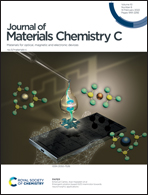
Journal Name:Journal of Materials Chemistry C
research_products
-

CAS no.: 89640-58-4

![1,2,3,4,5,6-Hexahydro-[2,3]bipyridinyl-6-ol](https://ossimg.kuujia.com/scimg/1271000/1270529-38-8x500.png)


![N-(3-cyanothiolan-3-yl)-2-[(2,2,2-trifluoroethyl)sulfanyl]pyridine-4-carboxamide](https://ossimg.kuujia.com/scimg/1444500/1444113-98-7x500.png)

![2,2-Difluoro-3-[methyl(2-methylbutyl)amino]propanoic acid](https://ossimg.kuujia.com/scimg/2138500/2138166-62-6x500.png)

![2-(1H-indol-3-yl)-N-{[6-(thiophen-2-yl)-[1,2,4]triazolo[4,3-b]pyridazin-3-yl]methyl}acetamide](https://ossimg.kuujia.com/scimg/2034500/2034271-14-0x500.png)