Manipulation of peptide-fatty acid bioconjugates on graphene: effects of fatty acid chain length and attachment point?
Journal of Materials Chemistry B Pub Date: 2022-07-21 DOI: 10.1039/D2TB01104B
Abstract
The non-destructive functionalisation of graphene in aqueous media is a critical process with the potential to enhance the versatility of the 2D nanosheet material as a technological enabler. This could also unlock strategies for a wider uptake of graphene in bio-related applications. Graphene functionalisation can be achieved using peptides that specifically recognise the carbon-based material, resulting in persistent non-covalent adsorption without damaging the nanosheet. Bio-conjugation of non-natural moieties with these peptides can incorporate multifunctionality, further extending the applicability of these interfaces. Here, bio-conjugates comprising a graphene-binding peptide with a fatty acid chain of varying length are investigated for their binding affinity and adsorbed structures at the aqueous graphene interface. Through an integration of quartz crystal microbalance and atomic force microscopy data with advanced sampling molecular simulations, variations in the binding of these bio-conjugates is determined. Conjugation at either terminus led to good interfacial contact, and for a given attachment point, the changes in the fatty acid length did not substantially disrupt the conformations of the adsorbed peptide domain. These findings provide a solid foundation for designing multi-functional bio-interfaces for sensing and healthcare.

Recommended Literature
- [1] Fate of nitrogen-15 in the subsequent growing season of greenhouse tomato plants (Lycopersicon esculentum Mill) as influenced by alternate partial root-zone irrigation Maomao Hou,Fenglin Zhong,Qiu Jin,Enjiang Liu,Jie Feng,Tengyun Wang,Yue GaoRSC Adv., 2017,7, 34392-34400 10.1039/C7RA05271E
- [2] Excited-state proton-coupled electron transfer within ion pairs? Gerald J. Meyer,Leif Hammarstr?mChem. Sci., 2020,11, 3460-3473 10.1039/C9SC04941J
- [3] Fe/S-Catalyzed synthesis of 2-benzoylbenzoxazoles and 2-quinolylbenzoxazoles via redox condensation of o-nitrophenols with acetophenones and methylquinolines? Thi Thu Tram Nguyen,Thanh Binh NguyenOrg. Biomol. Chem., 2021,19, 6015-6020 10.1039/D1OB00976A
- [4] Excited state potential energy surfaces and their interactions in FeIVO active sites Shaun D. Wong,Edward I. SolomonDalton Trans., 2014,43, 17567-17577 10.1039/C4DT01366B
- [5] Evolutionary approaches in protein engineering towards biomaterial construction Brindha J.,Balamurali M. M.,Kaushik ChandaRSC Adv., 2019,9, 34720-34734 10.1039/C9RA06807D
- [6] Fatty acid positional distribution in colostrum and mature milk of women living in Inner Mongolia, North Jiangsu and Guangxi of China? Long Deng,Qian Zou,Biao Liu,Wenhui Ye,Chengfei Zhuo,Li Chen,Ze-Yuan Deng,Ya-Wei Fan,Jing LiFood Funct., 2018,9, 4234-4245 10.1039/C8FO00787J
- [7] Fatty acid eutectic mixtures and derivatives from non-edible animal fat as phase change materials? Pau Gallart-Sirvent,Marc Martín,Gemma Villorbina,Mercè Balcells,Aran Solé,Luisa F. Cabeza,Ramon Canela-GarayoaRSC Adv., 2017,7, 24133-24139 10.1039/C7RA03845C
- [8] Evidence of rutile-to-anatase photo-induced electron transfer in mixed-phase TiO2 by solid-state NMR spectroscopy? Weili Dai,Guangjun Wu,Michael HungerChem. Commun., 2015,51, 13779-13782 10.1039/C5CC04971G
- [9] Evolution study of photo-synthesized gold nanoparticles by spectral deconvolution model: a quantitative approach Chung-Sung Yang,Mong-Shian Shih,Fang-Yi ChangNew J. Chem., 2006,30, 729-735 10.1039/B516465F
- [10] Dissociative electron attachment to HGaF4 Lewis–Br?nsted superacid Marcin Czapla,Jack SimonsPhys. Chem. Chem. Phys., 2018,20, 21739-21745 10.1039/C8CP04007A
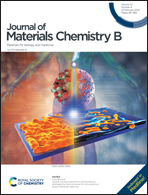
Journal Name:Journal of Materials Chemistry B
research_products
-

CAS no.: 89640-58-4

![1,2,3,4,5,6-Hexahydro-[2,3]bipyridinyl-6-ol](https://ossimg.kuujia.com/scimg/1271000/1270529-38-8x500.png)


![N-(3-cyanothiolan-3-yl)-2-[(2,2,2-trifluoroethyl)sulfanyl]pyridine-4-carboxamide](https://ossimg.kuujia.com/scimg/1444500/1444113-98-7x500.png)

![2,2-Difluoro-3-[methyl(2-methylbutyl)amino]propanoic acid](https://ossimg.kuujia.com/scimg/2138500/2138166-62-6x500.png)

![2-(1H-indol-3-yl)-N-{[6-(thiophen-2-yl)-[1,2,4]triazolo[4,3-b]pyridazin-3-yl]methyl}acetamide](https://ossimg.kuujia.com/scimg/2034500/2034271-14-0x500.png)