Step-by-step dual stimuli-responsive nanoparticles for efficient bacterial biofilm eradication
Biomaterials Science Pub Date: 2021-09-01 DOI: 10.1039/D1BM01038G
Abstract
Biofilm-related bacterial infections are extremely resistant to antibiotics, mainly due to the impermeability of the intensive matrices, which allow the bacteria to survive antibiotic treatment. Herein, step-by-step dual stimuli-responsive azithromycin-loaded nanoparticles (CM/AZM@Tyr) was constructed for efficient biofilm eradication. CM/AZM@Tyr was prepared by the self-assembly of poly(ε-caprolactone)-polyethylene glycol-polyethylenimine (PCL-PEG-PEI) into cationic micelles and simultaneously encapsulated AZM into the hydrophobic core, which is further bound with cis-aconityl-D-tyrosine (CA-Tyr) through electrostatic interaction. Upon initial penetration, CM/AZM@Tyr could show step-by-step dual-response to the microenvironment of biofilms. Firstly, the CA-Tyr shell rapidly responded to the acidic microenvironment and released D-Tyr to disassemble the biofilm mass. Then, the exposed cationic CM/AZM micelles could bind firmly to the negatively-charged bacteria cell membrane. With the enzymolysis of the PCL core, the rapidly releasing AZM could kill the bacteria over the depth of biofilms. Massive accumulation was observed in the infected lungs of biofilms-associated lung infection mice after the i.v. injection of CM/Cy5.5@Tyr under the 3D mode of the in vivo Imaging System. Reduced bacterial burden and alleviated fibrosis in the infected lungs were also obtained after treatment with CM/AZM@Tyr mainly due to its intensive penetration in the biofilm and the orderly release of the biofilm dispersant and antimicrobial agents. In summary, this research developed an effective strategy for the treatment of blood-accessible biofilm-induced infections.

Recommended Literature
- [1] Evolutionary approaches in protein engineering towards biomaterial construction Brindha J.,Balamurali M. M.,Kaushik ChandaRSC Adv., 2019,9, 34720-34734 10.1039/C9RA06807D
- [2] Empowering microfluidics by micro-3D printing and solution-based mineral coating? Hongxia Li,Aikifa Raza,Qiaoyu Ge,Jin-You Lu,TieJun ZhangSoft Matter, 2020,16, 6841-6849 10.1039/D0SM00958J
- [3] Excitation dependent bidirectional electron transfer in phthalocyanine-functionalised MoS2 nanosheets? Christopher J. Harrison,Kyle J. Berean,Enrico Della Gaspera,Jian Zhen Ou,Richard B. Kaner,Kourosh Kalantar-zadeh,Torben DaenekeNanoscale, 2016,8, 16276-16283 10.1039/C6NR04326G
- [4] Fe(iii)-mediated isomerization of α,α-diarylallylic alcohols to ketones via radical 1,2-aryl migration? Ziyang Deng,Changwei Chen,Sunliang CuiRSC Adv., 2016,6, 93753-93755 10.1039/C6RA20007A
- [5] Evolution study of photo-synthesized gold nanoparticles by spectral deconvolution model: a quantitative approach Chung-Sung Yang,Mong-Shian Shih,Fang-Yi ChangNew J. Chem., 2006,30, 729-735 10.1039/B516465F
- [6] Excitation energies from ground-state density-functionals by means of generator coordinates A. B. F. da Silva,K. CapellePhys. Chem. Chem. Phys., 2009,11, 4564-4569 10.1039/B902529D
- [7] Establishing plasmon contribution to chemical reactions: alkoxyamines as a thermal probe? Olga Guselnikova,Gérard Audran,Jean-Patrick Joly,Andrii Trelin,Evgeny V. Tretyakov,Vaclav Svorcik,Oleksiy Lyutakov,Sylvain R. A. MarqueChem. Sci., 2021,12, 4154-4161 10.1039/D0SC06470J
- [8] Dissociation of aryl sulfonyl phthalimide radical anions: relevance to the biological activity of arylsulfonyl amides? Abdelaziz Houmam,Emad M. HamedChem. Commun., 2012,48, 11328-11330 10.1039/C2CC36835H
- [9] Excellent kinetics of single-phase Gd-doped ceria fuel electrodes in solid oxide cells? Andreas Nenning,Manuel Holzmann,Jürgen Fleig,Alexander K. OpitzMater. Adv., 2021,2, 5422-5431 10.1039/D1MA00202C
- [10] Fe/Fe3C@C nanoparticles encapsulated in N-doped graphene–CNTs framework as an efficient bifunctional oxygen electrocatalyst for robust rechargeable Zn–air batteries? Zhiyan Chen,Nan Wu,Yaobing Wang,Bing Wang,Yingde WangJ. Mater. Chem. A, 2018,6, 516-526 10.1039/C7TA08423D
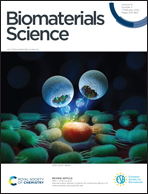
Journal Name:Biomaterials Science
research_products
-

CAS no.: 89640-58-4

![1,2,3,4,5,6-Hexahydro-[2,3]bipyridinyl-6-ol](https://ossimg.kuujia.com/scimg/1271000/1270529-38-8x500.png)


![N-(3-cyanothiolan-3-yl)-2-[(2,2,2-trifluoroethyl)sulfanyl]pyridine-4-carboxamide](https://ossimg.kuujia.com/scimg/1444500/1444113-98-7x500.png)

![2,2-Difluoro-3-[methyl(2-methylbutyl)amino]propanoic acid](https://ossimg.kuujia.com/scimg/2138500/2138166-62-6x500.png)

![2-(1H-indol-3-yl)-N-{[6-(thiophen-2-yl)-[1,2,4]triazolo[4,3-b]pyridazin-3-yl]methyl}acetamide](https://ossimg.kuujia.com/scimg/2034500/2034271-14-0x500.png)