Ecotoxicology of persistent organic pollutants in birds?
Environmental Science: Processes & Impacts Pub Date: 2021-01-18 DOI: 10.1039/D0EM00451K
Abstract
Considering the explosive growth of the list of persistent organic pollutants (POPs), the scientific community is combatting increasing challenges to protect humans and wildlife from the potentially negative consequences of POPs. Herein, we characterize the main aspects and progress in the ecotoxicology of POPs in avian species since 2000. The majority of previous efforts has revealed the global occurrence of high levels of various POPs in birds. Laboratory research and epidemiological studies imply that POPs exert a broad-spectrum of side-effects on birds by interfering with their endocrine, immune and neural system, reproduction, and development, and growth. However, inconsistent results suggest that the potential effects of POP exposure on the physiological parameters in birds are multifactorial, involving a multitude of biological processes, species-specific differences, gender, age and types of compounds. Great progress has been achieved in identifying the species-specific sensitivity to dioxin-like compounds, which is attributed to different amino acid residues in the ligand-binding domain of the aryl hydrocarbon receptor. Besides the conventional concentration additivity, several studies have suggested that different classes of POPs possibly act synergistically or antagonistically based on their concentration. However, ecotoxicology information is still recorded in a scattered and inadequate manner, including lack of enough avian species, limited number of POPs investigated, and insufficient geographical representation, and thus our understanding of the effects of POPs on birds remains rudimentary, although mechanistic understanding of their mode of action is progressing. Particularly, research on what happens to wild bird populations and their ecosystems under POP stress is still unavailable. Thus, our aim is to predict and trace the effects POPs at different biological organization levels, especially from the molecular, cellular and individual levels to the population, community and ecosystem levels because of the limited and scattered information, as mentioned above.

Recommended Literature
- [1] Emergence of microfluidic wearable technologies Joo Chuan Yeo,KenryLab Chip, 2016,16, 4082-4090 10.1039/C6LC00926C
- [2] Evolutionary approaches in protein engineering towards biomaterial construction Brindha J.,Balamurali M. M.,Kaushik ChandaRSC Adv., 2019,9, 34720-34734 10.1039/C9RA06807D
- [3] Excited state dynamics of symmetric and asymmetric Cr3(dpa)4Cl2 measured using femtosecond transient absorption spectroscopy? Chao-Han Cheng,Wen-Zhen Wang,Shie-Ming Peng,I-Chia ChenPhys. Chem. Chem. Phys., 2017,19, 25471-25477 10.1039/C7CP03968A
- [4] Evidence for the intrinsic nature of band-gap states electrochemically observed on atomically flat TiO2(110) surfaces? Shintaro Takata,Yoshihiro MiuraPhys. Chem. Chem. Phys., 2014,16, 24784-24789 10.1039/C4CP03280B
- [5] Fe(iii)-mediated isomerization of α,α-diarylallylic alcohols to ketones via radical 1,2-aryl migration? Ziyang Deng,Changwei Chen,Sunliang CuiRSC Adv., 2016,6, 93753-93755 10.1039/C6RA20007A
- [6] Elusive 2-aminofuran Diels–Alder substrates for a straightforward synthesis of polysubstituted anilines? Ana G. Neo,Ana Bornadiego,Jesús Díaz,Stefano Marcaccini,Carlos F. MarcosOrg. Biomol. Chem., 2013,11, 6546-6555 10.1039/C3OB41411F
- [7] Establishing empirical design rules of nucleic acid templates for the synthesis of silver nanoclusters with tunable photoluminescence and functionalities towards targeted bioimaging applications? Jason Y. C. Lim,Yong Yu,Guorui Jin,Kai Li,Yi Lu,Jianping XieNanoscale Adv., 2020,2, 3921-3932 10.1039/D0NA00381F
- [8] Fe(ii)-Assisted one-pot synthesis of ultra-small core–shell Au–Pt nanoparticles as superior catalysts towards the HER and ORR? Yi Cao,Yujiao Xiahou,Lixiang Xing,Xiang Zhang,Hong Li,ChenShou Wu,Haibing XiaNanoscale, 2020,12, 20456-20466 10.1039/D0NR04995F
- [9] Essential effect of the electrolyte on the mechanical and chemical degradation of LiNi0.8Co0.15Al0.05O2 cathodes upon long-term cycling?? Xiaoming Liu,Zachary D. Hood,Wangda Li,Donovan N. Leonard,Arumugam Manthiram,Miaofang ChiJ. Mater. Chem. A, 2021,9, 2111-2119 10.1039/D0TA07814J
- [10] Evidence of CO2 molecule acting as an electron acceptor on a nanoporous metal–organic-framework MIL-53 or Cr3+(OH)(O2C–C6H4–CO2)? Alexandre Vimont,Arnaud Travert,Philippe Bazin,Jean-Claude Lavalley,Marco Daturi,Christian Serre,Gérard Férey,Sandrine Bourrelly,Philip L. LlewellynChem. Commun., 2007, 3291-3293 10.1039/B703468G
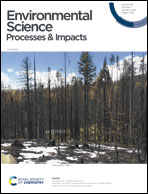
Journal Name:Environmental Science: Processes & Impacts
research_products
-

CAS no.: 89640-58-4


![N-(3-cyanothiolan-3-yl)-2-[(2,2,2-trifluoroethyl)sulfanyl]pyridine-4-carboxamide](https://ossimg.kuujia.com/scimg/1444500/1444113-98-7x500.png)

![1,2,3,4,5,6-Hexahydro-[2,3]bipyridinyl-6-ol](https://ossimg.kuujia.com/scimg/1271000/1270529-38-8x500.png)

![2,2-Difluoro-3-[methyl(2-methylbutyl)amino]propanoic acid](https://ossimg.kuujia.com/scimg/2138500/2138166-62-6x500.png)

![2-(1H-indol-3-yl)-N-{[6-(thiophen-2-yl)-[1,2,4]triazolo[4,3-b]pyridazin-3-yl]methyl}acetamide](https://ossimg.kuujia.com/scimg/2034500/2034271-14-0x500.png)