Cas no 614-60-8 (2-Hydroxycinnamic acid)

2-Hydroxycinnamic acid Chemical and Physical Properties
Names and Identifiers
-
- (E)-o-Hydroxycinnamic acid
- o-Coumaric acid
- (E)-2-Hydroxycinnamic acid,predominantly trans
- 2-Hydroxycinnamic acid, (o-Coumaric acid)
- (E)-2-Hydroxycinnamic acid
- trans-o-Coumaric Acid
- trans-2-Hydroxycinnamic acid
- (E)-3-(2-hydroxyphenyl)prop-2-enoic acid
- 2-Coumaric acid
- 2-Hydroxycinnamicacid
- COUMARIC ACID, 2-(RG)
- 2-HydroxycinnaMic acid, predoMinantly trans
- 2-Hydroxycinnamic acid
- trans-o-Hydroxycinnamic acid
- 2-Coumarate
- 2-Hydroxycinnamate
- (2E)-3-(2-hydroxyphenyl)prop-2-enoic acid
- trans-2-Hydroxycinnamate
- o-Hydroxy-trans-cinnamic acid
- 3-(2-hydroxyphenyl)acrylic acid
- (2E)-3-(2-HYDROXYPHENYL)ACRYLIC ACID
- (E)-3-(2-Hydroxyphenyl)-2-propenoic acid
- 2-Hydroxycinamic acid
- 2-Hydroxycinnamic acid, (E)-
- CINNAMIC ACID, o-HYDROXY-, (E)-
- 2-Hydroxycinnamic acid(trans-o-Coumaric Acid)
- 2-Hydroxycinnamic acid,predominantly trans
-
- MDL: MFCD00004379
- Inchi: 1S/C9H8O3/c10-8-4-2-1-3-7(8)5-6-9(11)12/h1-6,10H,(H,11,12)/b6-5+
- InChI Key: PMOWTIHVNWZYFI-AATRIKPKSA-N
- SMILES: OC1C=CC=CC=1/C=C/C(=O)O
- BRN: 1100900
Computed Properties
- Exact Mass: 164.04700
- Monoisotopic Mass: 164.047
- Isotope Atom Count: 0
- Hydrogen Bond Donor Count: 2
- Hydrogen Bond Acceptor Count: 3
- Heavy Atom Count: 12
- Rotatable Bond Count: 2
- Complexity: 186
- Covalently-Bonded Unit Count: 1
- Defined Atom Stereocenter Count: 0
- Undefined Atom Stereocenter Count : 0
- Defined Bond Stereocenter Count: 1
- Undefined Bond Stereocenter Count: 0
- Surface Charge: 0
- Tautomer Count: 6
- XLogP3: 1.5
- Topological Polar Surface Area: 57.5
Experimental Properties
- Color/Form: White powder
- Density: 1.1403 (rough estimate)
- Melting Point: 217?°C (dec.) (lit.)
- Boiling Point: 231.61°C (rough estimate)
- Flash Point: 178.5oC
- Refractive Index: 1.4500 (estimate)
- PSA: 57.53000
- LogP: 1.49000
- FEMA: 4700 | O-TRANS-COUMARIC ACID
2-Hydroxycinnamic acid Security Information
-
Symbol:
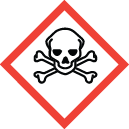
- Prompt:warning
- Signal Word:Danger
- Hazard Statement: H301,H315,H319,H335
- Warning Statement: P261,P301+P310,P305+P351+P338
- Hazardous Material transportation number:UN 2811
- WGK Germany:3
- Hazard Category Code: 22-36/37/38
- Safety Instruction: S26-S24/25-S36
- RTECS:GD9090000
-
Hazardous Material Identification:

- TSCA:Yes
- Storage Condition:Store at room temperature
- Risk Phrases:R22; R36/37/38
- Safety Term:S26;S24/25;S36
2-Hydroxycinnamic acid Pricemore >>
| Related Categories | No. | Product Name | Cas No. | Purity | Specification | Price | update time | Inquiry |
|---|---|---|---|---|---|---|---|---|
| HE FEI BO MEI SHENG WU KE JI YOU XIAN ZE REN GONG SI | LH6912-25g |
2-Hydroxycinnamic acid |
614-60-8 | ≥98% | 25g |
¥580元 | 2023-09-15 | |
| HE FEI BO MEI SHENG WU KE JI YOU XIAN ZE REN GONG SI | LH6912-5g |
2-Hydroxycinnamic acid |
614-60-8 | ≥98% | 5g |
¥150元 | 2023-09-15 | |
| SHANG HAI A LA DING SHENG HUA KE JI GU FEN Co., Ltd. | H113425-100g |
2-Hydroxycinnamic acid |
614-60-8 | 97% | 100g |
¥786.90 | 2023-09-02 | |
| SHANG HAI A LA DING SHENG HUA KE JI GU FEN Co., Ltd. | H113425-25g |
2-Hydroxycinnamic acid |
614-60-8 | 97% | 25g |
¥272.90 | 2023-09-02 | |
| SHANG HAI A LA DING SHENG HUA KE JI GU FEN Co., Ltd. | H113425-5g |
2-Hydroxycinnamic acid |
614-60-8 | 97% | 5g |
¥171.90 | 2023-09-02 | |
| Chemenu | CM186633-500g |
(E)-3-(2-Hydroxyphenyl)acrylic acid |
614-60-8 | 95% | 500g |
$386 | 2021-06-16 | |
| Alichem | A019117726-100g |
(E)-3-(2-Hydroxyphenyl)acrylic acid |
614-60-8 | 95% | 100g |
$156.42 | 2023-09-01 | |
| Alichem | A019117726-500g |
(E)-3-(2-Hydroxyphenyl)acrylic acid |
614-60-8 | 95% | 500g |
$413.00 | 2023-09-01 | |
| SHANG HAI YI EN HUA XUE JI SHU Co., Ltd. | R025698-25g |
2-Hydroxycinnamic acid |
614-60-8 | 97% | 25g |
¥328 | 2024-05-22 | |
| SHANG HAI YI EN HUA XUE JI SHU Co., Ltd. | R025698-5g |
2-Hydroxycinnamic acid |
614-60-8 | 97% | 5g |
¥162 | 2024-05-22 |
2-Hydroxycinnamic acid Suppliers
 Audited Supplier
Audited Supplier
Audited Supplier
2-Hydroxycinnamic acid Related Literature
-
Christian Heiss,Geoffrey Istas,Rodrigo P. Feliciano,Timon Weber,Brian Wang,Claudia Favari,Pedro Mena,Daniele Del Rio,Ana Rodriguez-Mateos Food Funct. 2022 13 3812
-
Rafaela Silva Lamarca,Renato Camargo Matos,Maria Auxiliadora Costa Matos Anal. Methods 2018 10 4535
-
Tayfun Arslan,Zekeriya Biyiklioglu,Murat ?entürk RSC Adv. 2018 8 10172
-
Ravi Sakthivel,Samuthirapandi Muniasamy,Govindaraju Archunan,Kasi Pandima Devi Food Funct. 2016 7 1155
-
Jing Li,Howard A. Chase Nat. Prod. Rep. 2010 27 1493
Related Categories
- Solvents and Organic Chemicals Organic Compounds Phenylpropanoids and polyketides Cinnamic acids and derivatives Hydroxycinnamic acids
- Solvents and Organic Chemicals Organic Compounds Phenylpropanoids and polyketides Cinnamic acids and derivatives Hydroxycinnamic acids and derivatives Hydroxycinnamic acids
- Solvents and Organic Chemicals Organic Compounds Acids/Esters
Additional information on 2-Hydroxycinnamic acid
Recent Advances in the Study of 2-Hydroxycinnamic Acid (CAS: 614-60-8) in Chemical Biology and Medicine
2-Hydroxycinnamic acid (CAS: 614-60-8), a derivative of cinnamic acid, has garnered significant attention in recent years due to its diverse biological activities and potential therapeutic applications. This compound, characterized by a phenolic hydroxyl group at the ortho position of the cinnamic acid backbone, exhibits unique chemical properties that make it a promising candidate for drug development and biomedical research. Recent studies have explored its roles in antioxidant, anti-inflammatory, and anticancer activities, shedding light on its molecular mechanisms and potential clinical applications.
One of the most notable advancements in the study of 2-hydroxycinnamic acid is its role in modulating oxidative stress. A 2023 study published in the Journal of Medicinal Chemistry demonstrated that 2-hydroxycinnamic acid effectively scavenges reactive oxygen species (ROS) and upregulates endogenous antioxidant enzymes such as superoxide dismutase (SOD) and glutathione peroxidase (GPx). These findings suggest its potential as a therapeutic agent for diseases associated with oxidative stress, including neurodegenerative disorders and cardiovascular diseases.
In addition to its antioxidant properties, 2-hydroxycinnamic acid has shown promising anti-inflammatory effects. Research published in Bioorganic & Medicinal Chemistry Letters in 2024 revealed that this compound inhibits the NF-κB signaling pathway, a key regulator of inflammatory responses. By suppressing the production of pro-inflammatory cytokines such as TNF-α and IL-6, 2-hydroxycinnamic acid may offer a novel approach to treating chronic inflammatory conditions like rheumatoid arthritis and inflammatory bowel disease.
The anticancer potential of 2-hydroxycinnamic acid has also been a focal point of recent investigations. A 2023 study in Molecular Cancer Therapeutics reported that this compound induces apoptosis in various cancer cell lines, including breast and colon cancer, by activating the intrinsic mitochondrial pathway. Furthermore, it was found to synergize with conventional chemotherapeutic agents, enhancing their efficacy while reducing side effects. These findings highlight its potential as an adjunct therapy in oncology.
From a chemical perspective, the structural versatility of 2-hydroxycinnamic acid allows for the synthesis of various derivatives with enhanced bioactivity. Recent work published in European Journal of Medicinal Chemistry (2024) explored the modification of its phenolic hydroxyl group to improve pharmacokinetic properties, such as solubility and bioavailability. These efforts have led to the development of novel analogs with improved therapeutic profiles, paving the way for future drug discovery.
In conclusion, the growing body of research on 2-hydroxycinnamic acid (CAS: 614-60-8) underscores its multifaceted biological activities and therapeutic potential. Its applications in combating oxidative stress, inflammation, and cancer, coupled with its chemical adaptability, make it a compelling subject for further investigation. Future studies should focus on translational research to bridge the gap between laboratory findings and clinical applications, ultimately unlocking its full potential in medicine.
614-60-8 (2-Hydroxycinnamic acid) Related Products
- 614-86-8((2E)-3-(2,4-Dihydroxyphenyl)acrylic Acid)
- 113170-66-4(2-Propenoic acid, 3-(2-hydroxyphenyl)-, copper(2+) salt (2:1))
- 7733-57-5(3,5-Dimethyl-4-hydroxycinnamic Acid)
- 38489-67-7(3-(2,5-dihydroxyphenyl)prop-2-enoic acid)
- 54951-70-1(2-Propenoic acid, 3-(hydroxyphenyl)-, (Z)-)
- 583-17-5(3-(2-Hydroxyphenyl)acrylic acid)
- 495-79-4(2-hydroxy cinnamic acid)
- 38094-41-6(2-Propenoic acid, 3-(hydroxyphenyl)-, (2E)-)
- 89311-95-5(2-Propenoic acid, 3-(2-hydroxyphenyl)-, monopotassium salt)
- 636-01-1((2E)-3-(2,5-Dihydroxyphenyl)acrylic Acid)

