Cas no 5804-85-3 (Aluminum, (cyano-kC)diethyl-)

Aluminum, (cyano-kC)diethyl- Chemical and Physical Properties
Names and Identifiers
-
- Aluminum, (cyano-kC)diethyl-
- (Cyano-κC)(diethyl)aluminium
- DIETHYLALUMINUM CYANIDE SOLUTION
- AC1L2ROB
- AC1Q2C5W
- AG-H-03227
- Aluminum, bromodiethyl-
- bromo-diethylalumane
- Bromodiethylaluminium
- BROMODIETHYLALUMINUM
- CTK2H9346
- Diaethyl-aluminium(1+), Bromid
- diethyl aluminium (1+), bromide
- diethyl aluminium cyanide
- diethyl aluminum bromide
- diethylaluminiumbromide
- diethylaluminum cyanide
- Nagata's reagent
- Aluminum,(cyano-C)diethyl-
- Aluminum, cyanodiethyl- (7CI,8CI)
- Cyanodiethylalane
- Cyanodiethylaluminum
- AKOS015916206
- DTXSID301046472
- Et2AlCN
- Q5275147
- (Cyano-C)diethylaluminium
- 5804-85-3
- SCHEMBL114671
- KWMUAEYVIFJZEB-UHFFFAOYSA-N
- NS00082079
- Diethylaluminium cyanide
- EINECS 227-359-8
- diethylalumanylformonitrile
-
- MDL: MFCD00001764
- Inchi: 1S/2C2H5.CN.Al/c3*1-2;/h2*1H2,2H3;;
- InChI Key: KWMUAEYVIFJZEB-UHFFFAOYSA-N
- SMILES: [Al](C#N)(CC)CC
Computed Properties
- Exact Mass: 111.0628627g/mol
- Monoisotopic Mass: 111.0628627g/mol
- Isotope Atom Count: 0
- Hydrogen Bond Donor Count: 0
- Hydrogen Bond Acceptor Count: 1
- Heavy Atom Count: 7
- Rotatable Bond Count: 2
- Complexity: 77.3
- Covalently-Bonded Unit Count: 1
- Defined Atom Stereocenter Count: 0
- Undefined Atom Stereocenter Count : 0
- Defined Bond Stereocenter Count: 0
- Undefined Bond Stereocenter Count: 0
- Surface Charge: 0
- Topological Polar Surface Area: 23.8
Experimental Properties
- Color/Form: Yellowish viscous oil
- Density: 0.864?g/mL?at 25?°C
- Flash Point: Fahrenheit: 44.6 ° f
Celsius: 7 ° c - Solubility: Soluble in benzene \ toluene \ hexane or isopropyl ether
- Color/Form: 1.0?M in toluene
Aluminum, (cyano-kC)diethyl- Security Information
-
Symbol:
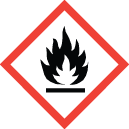
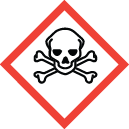


- Signal Word:Danger
- Hazard Statement: H225-H300 + H330-H304-H311-H315-H336-H361d-H373-H400
- Warning Statement: P210-P260-P273-P280-P301+P310+P330-P304+P340+P310-P331-P370+P378-P391-P403+P233
- Hazardous Material transportation number:UN 3123 6.1/PG 1
- WGK Germany:3
- Hazard Category Code: 63-11-26/27/28-32-38-48/20-50/53-65
- Safety Instruction: 16-28-36/37-45-61-62
- FLUKA BRAND F CODES:10
-
Hazardous Material Identification:


- Risk Phrases:11-26/27/28-32-38-48/20-50/53-63-65-67
Aluminum, (cyano-kC)diethyl- Pricemore >>
| Related Categories | No. | Product Name | Cas No. | Purity | Specification | Price | update time | Inquiry |
|---|---|---|---|---|---|---|---|---|
| XI GE MA AO DE LI QI ( SHANG HAI ) MAO YI Co., Ltd. | 276863-800ML |
Aluminum, (cyano-kC)diethyl- |
5804-85-3 | 800ml |
¥13341.92 | 2023-12-09 | ||
| SHANG HAI JI ZHI SHENG HUA Technology Co., Ltd. | SA02951-800ml |
Aluminum, (cyano-kC)diethyl- |
5804-85-3 | - | 800ml |
¥16058.0 | 2024-07-19 | |
| SHANG HAI MAI KE LIN SHENG HUA Technology Co., Ltd. | D921925-500ml |
Diethylaluminum cyanide |
5804-85-3 | 1.0mol/l in Toluene,Energyseal | 500ml |
¥5,130.00 | 2022-01-11 | |
| AN HUI DUN MAO XIN CAI LIAO Technology Co., Ltd. | H53733-100mL |
5804-85-3 | 1.0 M solution in toluene, SpcSeal | 100ml |
¥1561.0 | 2023-03-29 | ||
| AN HUI DUN MAO XIN CAI LIAO Technology Co., Ltd. | H53733-500mL |
5804-85-3 | 1.0 M solution in toluene, SpcSeal | 500ml |
¥5461.0 | 2023-03-29 |
Aluminum, (cyano-kC)diethyl- Related Literature
-
1. Exclusive enantioselective recognition of glucopyranosides by inherently chiral hemicryptophanes?Olivier Perraud,Alexandre Martinez,Jean-Pierre Dutasta Chem. Commun., 2011,47, 5861-5863
-
Shun-Ze Zhan,Mian Li,Xiao-Ping Zhou,Dan Li,Seik Weng Ng RSC Adv., 2011,1, 1457-1459
-
Maomao Hou,Fenglin Zhong,Qiu Jin,Enjiang Liu,Jie Feng,Tengyun Wang,Yue Gao RSC Adv., 2017,7, 34392-34400
-
Goonay Yousefalizadeh,Shideh Ahmadi,Nicholas J. Mosey,Kevin G. Stamplecoskie Nanoscale, 2021,13, 242-252
-
Zhizhen Lai,Mo Zhang,Jinyu Zhou,Tianjing Chen,Dan Li,Xuejing Shen,Jia Liu,Jiang Zhou,Zhili Li Analyst, 2021,146, 4261-4267
Additional information on Aluminum, (cyano-kC)diethyl-
Research Briefing on Aluminum, (cyano-kC)diethyl- (CAS: 5804-85-3) in Chemical Biomedicine
Aluminum, (cyano-kC)diethyl- (CAS: 5804-85-3) is an organoaluminum compound that has garnered increasing attention in the field of chemical biomedicine due to its unique chemical properties and potential applications in drug development and catalysis. Recent studies have explored its role as a precursor in the synthesis of novel pharmaceutical agents and its utility in catalytic processes that are critical for the production of bioactive molecules. This briefing synthesizes the latest research findings on this compound, focusing on its chemical behavior, biological interactions, and emerging applications in biomedicine.
One of the most significant advancements in the study of Aluminum, (cyano-kC)diethyl- is its application in the synthesis of metal-organic frameworks (MOFs) and other nanostructured materials. Researchers have demonstrated that this compound can serve as a versatile building block for constructing MOFs with high porosity and tunable chemical properties, which are highly desirable for drug delivery systems. A 2023 study published in the Journal of Medicinal Chemistry highlighted its use in developing MOFs capable of encapsulating and releasing anticancer drugs with enhanced precision, thereby minimizing systemic toxicity.
In addition to its role in drug delivery, Aluminum, (cyano-kC)diethyl- has been investigated for its catalytic properties in organic transformations. A recent publication in ACS Catalysis reported that this compound exhibits remarkable efficiency in catalyzing cyanohydrin formation, a key step in the synthesis of various pharmaceuticals, including beta-blockers and anti-inflammatory agents. The study underscored the compound's ability to operate under mild conditions, offering a greener alternative to traditional catalysts that often require harsh reagents and high temperatures.
Despite these promising developments, challenges remain in the safe handling and application of Aluminum, (cyano-kC)diethyl-. Its reactivity with moisture and air necessitates stringent storage conditions, and its potential toxicity profiles require further elucidation. Ongoing research aims to address these issues by developing stabilized derivatives and exploring its biocompatibility through in vitro and in vivo studies. Preliminary results from a 2024 investigation suggest that encapsulation within polymeric matrices could mitigate its reactivity while preserving its catalytic and therapeutic efficacy.
In conclusion, Aluminum, (cyano-kC)diethyl- (CAS: 5804-85-3) represents a compelling area of research in chemical biomedicine, with applications spanning drug delivery, catalysis, and materials science. Future studies should focus on optimizing its stability and safety to fully harness its potential in clinical and industrial settings. The integration of computational modeling and high-throughput screening techniques may further accelerate the discovery of new applications for this versatile compound.
5804-85-3 (Aluminum, (cyano-kC)diethyl-) Related Products
- 2098070-20-1(2-(3-(Pyridin-3-yl)-1H-pyrazol-1-yl)acetimidamide)
- 2680771-01-9(4-cyclopentyl-3-{(prop-2-en-1-yloxy)carbonylamino}butanoic acid)
- 1444113-98-7(N-(3-cyanothiolan-3-yl)-2-[(2,2,2-trifluoroethyl)sulfanyl]pyridine-4-carboxamide)
- 332062-08-5(Fmoc-S-3-amino-4,4-diphenyl-butyric acid)
- 1270529-38-8(1,2,3,4,5,6-Hexahydro-[2,3]bipyridinyl-6-ol)
- 941977-17-9(N'-(3-chloro-2-methylphenyl)-N-2-(dimethylamino)-2-(naphthalen-1-yl)ethylethanediamide)
- 2138166-62-6(2,2-Difluoro-3-[methyl(2-methylbutyl)amino]propanoic acid)
- 89640-58-4(2-Iodo-4-nitrophenylhydrazine)
- 1449132-38-0(3-Fluoro-5-(2-fluoro-5-methylbenzylcarbamoyl)benzeneboronic acid)
- 2034271-14-0(2-(1H-indol-3-yl)-N-{[6-(thiophen-2-yl)-[1,2,4]triazolo[4,3-b]pyridazin-3-yl]methyl}acetamide)
 Audited Supplier
 Audited Supplier
Audited Supplier
Audited Supplier
Audited Supplier
Audited Supplier
 Audited Supplier
