Cas no 51543-40-9 (Tarenflurbil)

Tarenflurbil Chemical and Physical Properties
Names and Identifiers
-
- (2R)-2-(3-fluoro-4-phenyl-phenyl)propanoic acid
- Flurbiprofen
- (2R)-2-(2-fluorobiphenyl-4-yl)propanoic acid
- [1,1'-biphenyl]-4-acetic acid, 2-fluoro-alpha-methyl-, (alphaR)-
- (R)-(-)-2-Fluoro-alpha-methyl-4-biphenylacetic acid
- (R)-(?)-2-Fluoro-α-methyl-4-biphenylacetic acid
- (R)-2-Flurbiprofen
- (R)-Flurbiprofen
- Flurizan
- R-(-)-Flurbiprofen
- (2R)-2-(3-fluoro-4-phenylphenyl)propanoic acid
- E7869
- E-7869
- MPC7869
- MPC-7869
- tarenflurbil
- UNII-501W00OOWA
- (R)-2-Fluoro-alpha-methyl[1,1'-biphenyl]-4-acetic acid
- HMS3649K13
- NCGC00025287-01
- BDBM50172473
- 501W00OOWA
- NSC685699
- NCGC00016654-01
- Stayban
- DB05289
- NCGC00018157-06
- HY-10291
- SR-01000946580
- Tocris-1769
- Q849769
- AB01274714-01
- (R)-2-Flubiprofen
- (R)-2-(2-fluorobiphenyl-4-yl)propanoic acid
- FLP
- (r)-2-(2-fluoro-biphenyl-4-yl)-propionic acid
- 2-Fluoro-alpha-methyl-4-biphenylacetic acid
- SFPP
- (-)-Flurbiprofen
- (R)-Flurbiprofen;MPC7869
- 51543-40-9
- (R)-2-(2-Fluoro-[1,1'-biphenyl]-4-yl)propanoicacid
- (1,1'-Biphenyl)-4-acetic acid, 2-fluoro-alpha-methyl-, (alphaR)-
- SCHEMBL26131
- AB01274714_02
- NSC-685699
- (R)-()-2-Fluoro-alpha-methyl-4-biphenylacetic acid
- AKOS015891228
- Tarenflurbil [USAN]
- Flurbiprofen (Ansaid)
- (2R)-2-(2-fluoro-[1,1'-biphenyl-4-yl])propanoic acid
- TARENFLURBIL [INN]
- (R)-(-)-2-Fluoro-alpha-methyl-4-biphenylacetic acid, 97%
- Zepolas
- AS-44113
- DTXSID40199508
- CHEBI:38666
- (-)-(2R)-2-(2-fluorobiphenyl-4-yl)propanoic acid
- (R)-2-Fluoro-alpha-methyl(1,1'-biphenyl)-4-acetic acid
- MFCD00869714
- Furbiprofen
- Flurbirprofen
- TARENFLURBIL [MI]
- NS00068141
- A828652
- SR-01000946580-1
- NCGC00018157-02
- 2-Fluoro-alpha-methyl[1,1'-biphenyl]-4-acetic acid
- D09010
- NCGC00016654-03
- (2R)-2-(2-fluoro-[1,1''-biphenyl-4-yl])propanoic acid
- flurbiprofen-(+/-)
- (2R)-2-(2-Fluoro-1,1'-biphenyl-4-yl)propanoic acid
- (R)-(-)-2-Fluoro-a-methyl-4-biphenylacetic acid
- CHEMBL190083
- GTPL7340
- Flurbiprofen, (r)-
- (R)-2-(2-Fluoro-[1,1'-biphenyl]-4-yl)propanoic acid
- NCGC00018157-01
- R-Flurbiprofen
- EINECS 257-264-7
- [1, 2-fluoro-.alpha.-methyl-, (R)-
- Adfeed
- Tarenflurbil (USAN/INN)
- CAS-5104-49-4
- NCGC00018157-07
- (2R)-2-(3-fluoranyl-4-phenyl-phenyl)propanoic acid
- (R)-2-(2-fluorobiphenyl-4-yl)propionic acid
- Tarenflurbil [USAN:INN]
- TruNoc
- (R)-2-(3-Fluoro-4-phenylphenyl)propanoic acid
- (R)-2-fluoro-alpha-methyl(1,1''-biphenyl)-4-acetic acid
- R-form
- CS-6056
- Tarenflurbil
-
- MDL: MFCD00869714
- Inchi: 1S/C15H13FO2/c1-10(15(17)18)12-7-8-13(14(16)9-12)11-5-3-2-4-6-11/h2-10H,1H3,(H,17,18)/t10-/m1/s1
- InChI Key: SYTBZMRGLBWNTM-SNVBAGLBSA-N
- SMILES: O=C(O)[C@H](C)C1=CC=C(C2=CC=CC=C2)C(F)=C1
Computed Properties
- Exact Mass: 244.09000
- Monoisotopic Mass: 244.09
- Isotope Atom Count: 0
- Hydrogen Bond Donor Count: 1
- Hydrogen Bond Acceptor Count: 2
- Heavy Atom Count: 18
- Rotatable Bond Count: 3
- Complexity: 286
- Covalently-Bonded Unit Count: 1
- Defined Atom Stereocenter Count: 1
- Undefined Atom Stereocenter Count : 0
- Defined Bond Stereocenter Count: 0
- Undefined Bond Stereocenter Count: 0
- Surface Charge: 0
- Tautomer Count: nothing
- XLogP3: nothing
- Topological Polar Surface Area: 37.3A^2
Experimental Properties
- Color/Form: Powder
- Density: 1.2±0.1 g/cm3
- Melting Point: 110-113?°C (lit.)
- Boiling Point: 376.2±30.0 °C at 760 mmHg
- Flash Point: 181.3±24.6 °C
- Refractive Index: 1.34
- Solubility: In vitro: DMSO solubility ≥ 50 mg/ml (204.70 mm) * "≥" means soluble, but saturation unknown
- PSA: 37.30000
- LogP: 3.68080
- Solubility: Not available
- Vapor Pressure: 0.0±0.9 mmHg at 25°C
Tarenflurbil Security Information
-
Symbol:
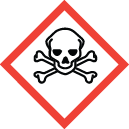
- Signal Word:Danger
- Hazard Statement: H301
- Warning Statement: P301+P310
- Hazardous Material transportation number:UN 2811
- WGK Germany:3
- Hazard Category Code: 25
- Safety Instruction: S26-S36/37/39-S45
-
Hazardous Material Identification:

- Risk Phrases:R25
- HazardClass:6.1
- PackingGroup:Ⅲ
- Storage Condition:Powder -20°C 3 years ? 4°C 2 years In solvent -80°C 6 months ? -20°C 1 month
Tarenflurbil Customs Data
- HS CODE:2916399090
- Customs Data:
China Customs Code:
2916399090Overview:
2916399090 Other aromatic monocarboxylic acids. VAT:17.0% Tax refund rate:9.0% Regulatory conditions:nothing MFN tariff:6.5% general tariff:30.0%
Declaration elements:
Product Name, component content, use to, Acrylic acid\Acrylates or esters shall be packaged clearly
Summary:
2916399090 other aromatic monocarboxylic acids, their anhydrides, halides, peroxides, peroxyacids and their derivatives VAT:17.0% Tax rebate rate:9.0% Supervision conditions:none MFN tariff:6.5% General tariff:30.0%
Tarenflurbil Pricemore >>
| Related Categories | No. | Product Name | Cas No. | Purity | Specification | Price | update time | Inquiry |
|---|---|---|---|---|---|---|---|---|
| TRC | F598730-250mg |
(R)-Flurbiprofen |
51543-40-9 | 250mg |
$ 161.00 | 2023-09-07 | ||
| TRC | F598730-1g |
(R)-Flurbiprofen |
51543-40-9 | 1g |
$ 232.00 | 2023-09-07 | ||
| TRC | F598730-5g |
(R)-Flurbiprofen |
51543-40-9 | 5g |
$ 931.00 | 2023-09-07 | ||
| SHANG HAI TAO SHU Biotechnology Co., Ltd. | T5843-25 mg |
R-flurbiprofen |
51543-40-9 | 98.00% | 25mg |
¥257.00 | 2022-04-26 | |
| SHANG HAI TAO SHU Biotechnology Co., Ltd. | T5843-100 mg |
R-flurbiprofen |
51543-40-9 | 98.00% | 100MG |
¥397.00 | 2022-04-26 | |
| WU HAN AN JIE KAI Biomedical Technology Co., Ltd. | ajci4370-50mg |
Flurizan |
51543-40-9 | 98% | 50mg |
¥905.00 | 2021-09-16 | |
| ChemScence | CS-6056-100mg |
Tarenflurbil |
51543-40-9 | 99.96% | 100mg |
$60.0 | 2022-04-27 | |
| SHANG HAI JI ZHI SHENG HUA Technology Co., Ltd. | R35341-100mg |
(R)-Flurbiprofen |
51543-40-9 | 100mg |
¥622.0 | 2021-09-08 | ||
| SHANG HAI JI ZHI SHENG HUA Technology Co., Ltd. | R35341-500mg |
(R)-Flurbiprofen |
51543-40-9 | 500mg |
¥1002.0 | 2021-09-08 | ||
| SHANG HAI JI ZHI SHENG HUA Technology Co., Ltd. | R35341-1g |
(R)-Flurbiprofen |
51543-40-9 | 1g |
¥1502.0 | 2021-09-08 |
Tarenflurbil Suppliers
 Audited Supplier
Tarenflurbil Related Literature
-
Yong Ping Huang,Tao Tao,Zheng Chen,Wei Han,Ying Wu,Chunjiang Kuang,Shaoxiong Zhou,Ying Chen J. Mater. Chem. A, 2014,2, 18831-18837
-
Ross Harder,David C. Dunand,Ian McNulty Nanoscale, 2017,9, 5686-5693
-
Denis V. Korchagin,Elena A. Yureva,Alexander V. Akimov,Eugenii Ya. Misochko,Gennady V. Shilov,Artem D. Talantsev,Roman B. Morgunov,Alexander A. Shakin,Sergey M. Aldoshin,Boris S. Tsukerblat Dalton Trans., 2017,46, 7540-7548
-
Zhiyan Chen,Nan Wu,Yaobing Wang,Bing Wang,Yingde Wang J. Mater. Chem. A, 2018,6, 516-526
-
Aloke Das,K. K. Mahato,Chayan K. Nandi,Tapas Chakraborty,Shridhar R. Gadre,Nikhil A. Gokhale Phys. Chem. Chem. Phys., 2002,4, 2162-2168
Additional information on Tarenflurbil
Tarenflurbil (CAS No. 51543-40-9): A Comprehensive Overview of Its Mechanism, Applications, and Research Advancements
Tarenflurbil, also known by its CAS No. 51543-40-9, is a small-molecule compound that has garnered significant attention in the field of neurodegenerative disease research. Originally developed as a selective amyloid-beta 42 (Aβ42) modulator, this compound has been extensively studied for its potential therapeutic effects in Alzheimer's disease (AD). The growing global burden of neurodegenerative disorders, coupled with the lack of effective treatments, has made Tarenflurbil a subject of intense scientific and clinical interest.
One of the most frequently searched questions about Tarenflurbil is: "How does Tarenflurbil work in Alzheimer's disease?" The compound functions by modulating the production of Aβ42, a peptide implicated in the formation of amyloid plaques, a hallmark of AD pathology. By reducing the levels of this toxic peptide, Tarenflurbil aims to slow disease progression. This mechanism aligns with the current focus on disease-modifying therapies, a hot topic in neurology and geriatric medicine.
Recent advancements in Tarenflurbil research have explored its potential beyond Alzheimer's disease. Studies suggest it may have applications in other neuroinflammatory conditions, such as Parkinson's disease and multiple sclerosis. This broader therapeutic potential has sparked debates in the scientific community, particularly regarding its pharmacokinetic properties and optimal dosing regimens. Researchers are also investigating whether Tarenflurbil could synergize with emerging immunotherapy approaches for neurodegenerative diseases.
The synthetic pathway of Tarenflurbil (CAS No. 51543-40-9) involves a series of carefully controlled chemical reactions to ensure high purity and bioactivity. Analytical techniques like HPLC and mass spectrometry are crucial for quality control during production. These technical aspects are often queried by pharmaceutical professionals searching for "Tarenflurbil synthesis protocol" or "CAS 51543-40-9 analytical methods".
From a clinical perspective, Tarenflurbil has undergone several phase II and III trials, with mixed results that continue to generate discussion. While initial studies showed promise in mild AD patients, later trials faced challenges in demonstrating significant cognitive benefits. These outcomes have led to important conversations about biomarker selection and patient stratification in neurodegenerative drug development—topics frequently searched by clinicians and researchers alike.
The future of Tarenflurbil research may lie in combination therapies and precision medicine approaches. With increasing interest in personalized treatment for neurodegenerative diseases, scientists are examining whether genetic factors influence response to Tarenflurbil. This aligns with current trends in searching for "personalized Alzheimer's treatments" and "biomarkers for drug response" in medical literature and AI-powered search platforms.
From a pharmaceutical chemistry standpoint, the structure-activity relationship (SAR) of Tarenflurbil continues to be refined. Medicinal chemists are particularly interested in modifications that might enhance its blood-brain barrier penetration or reduce potential off-target effects. These aspects are crucial for researchers querying "Tarenflurbil derivatives" or "CAS 51543-40-9 structural analogs" in scientific databases.
In conclusion, Tarenflurbil (CAS No. 51543-40-9) represents an important case study in neurodegenerative drug development. Its journey from bench to bedside—and the lessons learned along the way—continue to inform current research strategies. As the scientific community seeks answers to pressing questions about disease modification in Alzheimer's and related disorders, Tarenflurbil remains a valuable compound for understanding both the challenges and opportunities in this critical therapeutic area.
51543-40-9 (Tarenflurbil) Related Products
- 75852-60-7([1,1'-Biphenyl]-3-aceticacid, 5-fluoro-a-methyl-)
- 80685-20-7([1,1'-Biphenyl]-4-aceticacid, 2-fluoro-4'-hydroxy-a-methyl-)
- 51543-39-6((S)-Flurbiprofen)
- 5104-49-4(Flurbiprofen)
- 17692-38-5(2-(3'-Fluoro-[1,1'-biphenyl]-4-yl)propanoic acid)
- 133214-12-7([1,1'-Biphenyl]-4-aceticacid, 2-fluoro-a-methyl-,copper(2+) salt (2:1))
- 51543-38-5(()-2-fluoro-α-methyl[1,1'-biphenyl]-4-acetic acid)
- 56767-76-1(Flurbiprofen Sodium)
- 5001-96-7((2-Fluoro-4-biphenyl)acetic Acid)
- 1185133-81-6(Flurbiprofen-d)
