Cas no 43040-76-2 (Bansyl Chloride)

Bansyl Chloride Chemical and Physical Properties
Names and Identifiers
-
- 1-Naphthalenesulfonylchloride, 5-(dibutylamino)-
- Bansyl Chloride [N-Protecting Agent for Peptide Research]
- 5-(dibutylamino)naphthalene-1-sulfonyl chloride
- Bansyl Chloride
- 5-(N,N-Dibutylamino)naphthalene-1-sulfonyl Chloride (10% in Hexane)
- Bansyl compound
- 5-Dibutylamino-naphthalene-1-sulfonyl chloride
- BANSYLCHLORIDE
- BANS
- 5-Di-n-butylaminonaphthalene-1-sulfonyl chloride
- PIZHBGYIKYGXBV-UHFFFAOYSA-N
- VZ30279
- B0994
- 5-(dibutylamino)-1-naphthalenesulfonyl chloride
- 1-Naphthalenesulfonylchloride,5-(dibutylamino)-
- 5-(dibutylamino)-1-naphthalenesulfonyl
- MFCD00059134
- 5-(Dibutylamino)naphthalene-1-sulfonylChloride
- 5-(Dibutylamino)-1-naphthalenesulfonyl chloride, AldrichCPR
- A826117
- B1122
- T70915
- FT-0639827
- 5-(N,N-Dibutylamino)naphthalene-1-sulfonyl Chloride
- 43040-76-2
- DTXSID10195658
- SB83670
- CS-0452461
- 1-Naphthalenesulfonyl chloride, 5-(dibutylamino)-
- SCHEMBL4008678
- DB-051015
- DTXCID50118149
-
- MDL: MFCD00059134
- Inchi: 1S/C18H24ClNO2S/c1-3-5-13-20(14-6-4-2)17-11-7-10-16-15(17)9-8-12-18(16)23(19,21)22/h7-12H,3-6,13-14H2,1-2H3
- InChI Key: PIZHBGYIKYGXBV-UHFFFAOYSA-N
- SMILES: ClS(C1=CC=CC2C1=CC=CC=2N(CCCC)CCCC)(=O)=O
Computed Properties
- Exact Mass: 353.12200
- Monoisotopic Mass: 353.121627
- Isotope Atom Count: 0
- Hydrogen Bond Donor Count: 0
- Hydrogen Bond Acceptor Count: 3
- Heavy Atom Count: 23
- Rotatable Bond Count: 8
- Complexity: 440
- Covalently-Bonded Unit Count: 1
- Defined Atom Stereocenter Count: 0
- Undefined Atom Stereocenter Count : 0
- Defined Bond Stereocenter Count: 0
- Undefined Bond Stereocenter Count: 0
- Surface Charge: 0
- Tautomer Count: nothing
- XLogP3: 6
- Topological Polar Surface Area: 45.8
Experimental Properties
- Color/Form: Not determined
- Density: 1.19
- Boiling Point: 449.2°Cat760mmHg
- Flash Point: 225.4°C
- Refractive Index: 1.579
- PSA: 45.76000
- LogP: 6.25470
- Solubility: Not determined
Bansyl Chloride Security Information
-
Symbol:
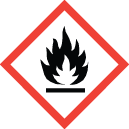



- Prompt:dangerous
- Hazard Statement: H225-H304-H314-H335+H336-H361-H372-H401
- Warning Statement: P201-P202-P210-P233-P240-P241+P242+P243-P260-P264-P270-P271-P273-P280-P301+P330+P331+P310-P303+P361+P353+P310+P363-P304+P340+P310-P305+P351+P338+P310-P308+P313-P370+P378-P403+P233-P405-P501
- Hazardous Material transportation number:3261
- Hazard Category Code: 34-22
- Safety Instruction: S26; S36/37/39
-
Hazardous Material Identification:

- Risk Phrases:R34
- HazardClass:8
- PackingGroup:II
- Storage Condition:0-10°C
Bansyl Chloride Customs Data
- HS CODE:2921199090
- Customs Data:
China Customs Code:
2921199090Overview:
2921199090 Other acyclic monoamines and their derivatives and salts.Regulatory conditions:nothing.VAT:17.0%.Tax refund rate:9.0%.MFN tariff:6.5%.general tariff:30.0%
Declaration elements:
Product Name, component content, use to
Summary:
2921199090 other acyclic monoamines and their derivatives; salts thereof VAT:17.0% Tax rebate rate:9.0% Supervision conditions:none MFN tariff:6.5% General tariff:30.0%
Bansyl Chloride Pricemore >>
| Related Categories | No. | Product Name | Cas No. | Purity | Specification | Price | update time | Inquiry |
|---|---|---|---|---|---|---|---|---|
| XI GE MA AO DE LI QI ( SHANG HAI ) MAO YI Co., Ltd. | CDS000136-250MG |
5-(Dibutylamino)-1-naphthalenesulfonyl chloride |
43040-76-2 | 250mg |
¥1393.87 | 2023-11-10 | ||
| SHANG HAI XIAN DING Biotechnology Co., Ltd. | B0994-1g |
Bansyl Chloride |
43040-76-2 | 98.0%(LC) | 1g |
¥2490.0 | 2022-05-30 | |
| SHANG HAI XIAN DING Biotechnology Co., Ltd. | XW955-100mg |
Bansyl Chloride |
43040-76-2 | 98.0%(LC) | 100mg |
¥386.0 | 2022-05-30 | |
| Chemenu | CM266253-5g |
5-(Dibutylamino)naphthalene-1-sulfonyl chloride |
43040-76-2 | 97% | 5g |
$229 | 2021-08-18 | |
| TRC | B129298-50mg |
Bansyl Chloride |
43040-76-2 | 50mg |
$ 50.00 | 2022-06-07 | ||
| TRC | B129298-100mg |
Bansyl Chloride |
43040-76-2 | 100mg |
$ 65.00 | 2022-06-07 | ||
| TRC | B129298-500mg |
Bansyl Chloride |
43040-76-2 | 500mg |
$ 115.00 | 2022-06-07 | ||
| SHANG HAI A LA DING SHENG HUA KE JI GU FEN Co., Ltd. | B151911-1G |
Bansyl Chloride |
43040-76-2 | >98.0%(HPLC) | 1g |
¥1306.90 | 2023-09-04 | |
| Fluorochem | 015073-1ml |
5-Dibutylamino-naphthalene-1-sulfonyl chloride (10% in Hexane) |
43040-76-2 | 1ml |
£38.00 | 2022-03-01 | ||
| Fluorochem | 015073-5ml |
5-Dibutylamino-naphthalene-1-sulfonyl chloride (10% in Hexane) |
43040-76-2 | 5ml |
£117.00 | 2022-03-01 |
Bansyl Chloride Related Literature
-
Craig A. Kelly,David R. Rosseinsky Phys. Chem. Chem. Phys., 2001,3, 2086-2090
-
Gaurav J. Shah,Eric P.-Y. Chiou,Ming C. Wu,Chang-Jin “CJ” Kim Lab Chip, 2009,9, 1732-1739
-
Ross Harder,David C. Dunand,Ian McNulty Nanoscale, 2017,9, 5686-5693
-
Jacob S. Jordan,Evan R. Williams Analyst, 2021,146, 2617-2625
-
5. Excimer emission and magnetoluminescence of radical-based zinc(ii) complexes doped in host crystals?Shojiro Kimura,Tetsuro Kusamoto Chem. Commun., 2020,56, 11195-11198
Additional information on Bansyl Chloride
Bansyl Chloride (CAS No. 43040-76-2): A Comprehensive Overview in Modern Chemical and Pharmaceutical Research
Bansyl Chloride, with the chemical abstracts service number CAS No. 43040-76-2, is a compound of significant interest in the realm of chemical and pharmaceutical research. This introduction delves into the compound's structural characteristics, pharmacological properties, and its emerging applications in contemporary medicinal chemistry, emphasizing its role in the development of novel therapeutic agents.
The molecular structure of Bansyl Chloride (CAS No. 43040-76-2) consists of a benzyl group attached to a chlorine substituent, forming an aromatic chloro compound. This configuration imparts unique reactivity and binding properties, making it a valuable intermediate in synthetic organic chemistry. The benzyl chloride moiety is particularly noteworthy for its ability to participate in various nucleophilic substitution reactions, which are pivotal in the synthesis of complex organic molecules.
In recent years, Bansyl Chloride has garnered attention for its potential applications in drug discovery and development. Its reactivity allows for the facile introduction of benzyl groups into pharmaceutical intermediates, which is crucial for constructing biaryl structures prevalent in many bioactive compounds. The compound's ability to undergo cross-coupling reactions, such as Suzuki-Miyaura and Heck couplings, has opened new avenues for the synthesis of heterocyclic compounds with therapeutic relevance.
One of the most compelling aspects of Bansyl Chloride (CAS No. 43040-76-2) is its utility in the preparation of protease inhibitors. Proteases play a critical role in numerous biological pathways, and their inhibition is a key strategy in the treatment of diseases such as cancer, HIV, and inflammation-related disorders. The benzyl group introduced by Bansyl Chloride can be further functionalized to create potent protease inhibitors with improved selectivity and efficacy. Recent studies have demonstrated its use in synthesizing benzylamino acid derivatives that exhibit significant inhibitory activity against various proteases.
Furthermore, Bansyl Chloride has been explored in the development of antiviral agents. The compound's structural framework allows for modifications that can target viral proteases and polymerases, disrupting viral replication cycles. For instance, derivatives of benzyl chloride have been investigated for their potential to inhibit HIV protease, a critical enzyme for viral maturation. These findings highlight the compound's versatility and its potential as a building block for antiviral drug candidates.
The role of Bansyl Chloride (CAS No. 43040-76-2) extends beyond protease inhibition and antiviral applications. It has also been utilized in the synthesis of kinase inhibitors, which are essential in targeted cancer therapies. Kinases are enzymes that play a central role in cell signaling pathways, and their overactivity is often associated with cancer progression. By incorporating benzyl chloride into kinase inhibitor molecules, researchers can enhance binding affinity and reduce off-target effects, leading to more effective treatments.
In addition to its pharmaceutical applications, Bansyl Chloride finds utility in materials science and agrochemical research. Its ability to participate in polymerization reactions makes it a valuable precursor for synthesizing novel polymers with tailored properties. These polymers can find applications in coatings, adhesives, and specialty materials where specific chemical functionalities are required.
The agrochemical sector has also benefited from the use of Bansyl Chloride (CAS No. 43040-76-2). Derivatives of benzyl chloride have been incorporated into herbicides and fungicides due to their ability to interact with biological targets in plants, providing effective crop protection solutions. The compound's reactivity allows for the design of molecules that disrupt pathogenic fungi or inhibit weed growth while maintaining environmental safety.
From a synthetic chemistry perspective, Bansyl Chloride is valued for its simplicity and efficiency in introducing functional groups into target molecules. Its use in palladium-catalyzed cross-coupling reactions has streamlined many synthetic routes, reducing reaction times and improving yields. This efficiency is particularly important in industrial settings where cost-effectiveness and scalability are paramount.
The safety profile of Bansyl Chloride (CAS No. 43040-76-2) is another critical consideration. While it is a reactive intermediate, proper handling protocols ensure that it can be used safely in laboratory settings without significant risks. Its stability under standard storage conditions further enhances its practicality as a research chemical.
In conclusion, Bansyl Chloride, identified by its CAS number 43040-76-2, is a multifaceted compound with broad applications across chemical research and pharmaceutical development. Its role as an intermediate in synthesizing biologically active molecules underscores its importance in modern drug discovery efforts. As research continues to uncover new therapeutic targets and synthetic methodologies, the utility of Bansyl Chloride is expected to grow even further.
43040-76-2 (Bansyl Chloride) Related Products
- 69037-87-2(1-Naphthalenesulfonylchloride, 6-(dimethylamino)-)
- 605-65-2(Dansyl chloride)
- 60151-27-1(2-Naphthalenesulfonylchloride, 6-(dimethylamino)-)
- 274250-28-1(Ginsenoside Rc)
- 947498-96-6(3-(Pyrrolidin-1-yl)benzene-1-sulfonyl chloride)
- 728864-89-9(5-(N-Acetyl-N-ethyl-amino)-naphthalene-1-sulfonyl chloride)
- 96090-00-5(1-Naphthalenesulfonylchloride, 5-[[2-(1-piperidinyl)ethyl]amino]-)
- 929618-07-5(2-Naphthalenesulfonyl chloride, 8-(dimethylamino)-)
- 1276379-68-0(Dansyl Chloride-d6)
- 1669-16-5(Benzenesulfonyl chloride, 4-[bis(2-chloroethyl)amino]-)
 Audited Supplier
 Audited Supplier
 Audited Supplier
 Audited Supplier
 Audited Supplier
