Cas no 1974-04-5 (2-Bromoheptane)

2-Bromoheptane Chemical and Physical Properties
Names and Identifiers
-
- 2-Bromoheptane
- 2-BROMOHEPTANE, TECH.
- 1-Methylhexyl bromide
- 2-bromanylheptane
- 2-Brom-heptan
- 2-heptyl bromide
- d,l-2-bromoheptane
- Heptane,2-bromo
- (?à)-2-Bromoheptane
- NSC 11768
- AKOS009157870
- (1-methyl) hexylbromide
- DTXSID40870921
- Heptane, 2-bromo-
- A813910
- EINECS 217-824-3
- SCHEMBL1896962
- (1-methyl)hexylbromide
- FT-0611326
- 2-Bromoheptane, technical grade
- 6-bromoheptane
- NS00045381
- J-508521
- NSC-11768
- MFCD00000164
- NSC11768
- 1974-04-5
- DB-044953
- DTXCID00818602
-
- MDL: MFCD00000164
- Inchi: 1S/C7H15Br/c1-3-4-5-6-7(2)8/h7H,3-6H2,1-2H3
- InChI Key: HLAUCEOFCOXKNF-UHFFFAOYSA-N
- SMILES: BrC(C)CCCCC
Computed Properties
- Exact Mass: 178.03600
- Monoisotopic Mass: 178.036
- Isotope Atom Count: 0
- Hydrogen Bond Donor Count: 0
- Hydrogen Bond Acceptor Count: 0
- Heavy Atom Count: 8
- Rotatable Bond Count: 4
- Complexity: 43.7
- Covalently-Bonded Unit Count: 1
- Defined Atom Stereocenter Count: 0
- Undefined Atom Stereocenter Count : 1
- Defined Bond Stereocenter Count: 0
- Undefined Bond Stereocenter Count: 0
- Surface Charge: 0
- XLogP3: 3.8
- Topological Polar Surface Area: 0
Experimental Properties
- Color/Form: colorless liquid
- Density: 1.142?g/mL?at 25?°C(lit.)
- Melting Point: 47°C
- Boiling Point: 64-66?°C/21?mmHg(lit.)
- Flash Point: Fahrenheit: 129.2 ° f
Celsius: 54 ° c - Refractive Index: n20/D 1.447(lit.)
- PSA: 0.00000
- LogP: 3.35010
- Solubility: Insoluble in water I
2-Bromoheptane Security Information
-
Symbol:
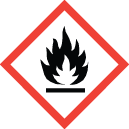

- Signal Word:Warning
- Hazard Statement: H226-H315-H319-H335
- Warning Statement: P261-P305+P351+P338
- Hazardous Material transportation number:UN 1993 3/PG 3
- WGK Germany:3
- Hazard Category Code: 10-36/37/38
- Safety Instruction: S16; S26; S36/37/39
-
Hazardous Material Identification:

- Packing Group:III
- Hazard Level:3.2
- Safety Term:3.2
- Packing Group:III
- Risk Phrases:R10; R36/37/38
- HazardClass:3.2
- PackingGroup:III
- Storage Condition:LOGP:3.35010
2-Bromoheptane Pricemore >>
| Related Categories | No. | Product Name | Cas No. | Purity | Specification | Price | update time | Inquiry |
|---|---|---|---|---|---|---|---|---|
| XI GE MA AO DE LI QI ( SHANG HAI ) MAO YI Co., Ltd. | 292389-25G |
2-Bromoheptane |
1974-04-5 | 25g |
¥789.68 | 2023-12-09 | ||
| XI GE MA AO DE LI QI ( SHANG HAI ) MAO YI Co., Ltd. | 292389-100G |
2-Bromoheptane |
1974-04-5 | 100g |
¥2494.46 | 2023-12-09 | ||
| Aaron | AR002BIF-25g |
Heptane, 2-bromo- |
1974-04-5 | 25g |
$162.00 | 2025-01-21 | ||
| eNovation Chemicals LLC | D113158-200g |
2-BROMOHEPTANE |
1974-04-5 | 95% | 200g |
$1890 | 2025-02-20 | |
| eNovation Chemicals LLC | D113158-1kg |
2-BROMOHEPTANE |
1974-04-5 | 95% | 1kg |
$2580 | 2025-02-20 | |
| A2B Chem LLC | AB07131-25g |
Heptane, 2-bromo- |
1974-04-5 | technical grade | 25g |
$255.00 | 2024-04-20 | |
| A2B Chem LLC | AB07131-100g |
Heptane, 2-bromo- |
1974-04-5 | technical grade | 100g |
$748.00 | 2024-04-20 | |
| abcr | AB465781-25 g |
2-Bromoheptane; . |
1974-04-5 | 25g |
€182.90 | 2023-04-21 | ||
| abcr | AB465781-100 g |
2-Bromoheptane; . |
1974-04-5 | 100g |
€407.70 | 2023-04-21 | ||
| abcr | AB465781-25g |
2-Bromoheptane; . |
1974-04-5 | 25g |
€203.10 | 2025-02-16 |
2-Bromoheptane Related Literature
-
Vladimir Yu. Gus’kov,Darya A. Allayarova,Gulnaz Z. Garipova,Irina N. Pavlova New J. Chem. 2020 44 17769
-
3. Computational investigation of host–guest chiral recognition in incommensurate 2-bromoalkane/urea inclusion compoundsLily Yeo,Kenneth D. M. Harris J. Chem. Soc. Faraday Trans. 1998 94 1633
-
Bin Zhao,Lasse Greiner,Walter Leitner Chem. Commun. 2011 47 2973
-
Yingzhen Wang,Meiling Qi,Ruonong Fu RSC Adv. 2015 5 76007
Additional information on 2-Bromoheptane
Chemical Profile of 2-Bromoheptane (CAS No. 1974-04-5)
2-Bromoheptane, with the chemical formula C7H15Br, is a brominated aliphatic hydrocarbon belonging to the class of haloalkanes. This compound, identified by its CAS number 1974-04-5, is widely utilized in organic synthesis and pharmaceutical research due to its versatile reactivity and structural properties. Its molecular structure consists of a seven-carbon chain substituted with a bromine atom at the second carbon position, making it a valuable intermediate in the synthesis of more complex molecules.
The applications of 2-bromoheptane span across multiple domains, particularly in the field of medicinal chemistry. Its unique bromine substituent allows for further functionalization via nucleophilic substitution reactions, enabling the construction of carbon-carbon bonds essential for drug development. Recent advancements in synthetic methodologies have highlighted its role in constructing biaryl structures, which are prevalent in many pharmacologically active compounds. For instance, studies have demonstrated its utility in the preparation of substituted biphenyls through cross-coupling reactions, underscoring its importance as a building block in modern medicinal chemistry.
In the realm of pharmaceutical research, 2-bromoheptane has been explored as a precursor for the synthesis of novel therapeutic agents. Its structural motif is found in several compounds under investigation for their potential antimicrobial and anti-inflammatory properties. The bromine atom's position on the heptane chain facilitates selective modifications, allowing chemists to tailor molecular properties such as solubility and bioavailability. This adaptability has made it a subject of interest in high-throughput screening programs aimed at identifying lead compounds for drug discovery.
The industrial significance of CAS No 1974-04-5, or 2-bromoheptane, extends beyond pharmaceuticals into agrochemicals and specialty chemicals. In agrochemical research, it serves as a key intermediate in the synthesis of brominated pesticides and herbicides, where its reactivity contributes to the development of compounds that exhibit enhanced efficacy against pests while maintaining environmental safety profiles. Additionally, its use in polymer chemistry has been explored, particularly in the production of flame-retardant materials where brominated compounds are known to improve fire resistance.
From an environmental perspective, the handling and disposal of 2-bromoheptane must be conducted with adherence to stringent safety protocols to ensure minimal ecological impact. While it is not classified as a hazardous material under standard regulatory frameworks, proper ventilation and personal protective equipment are recommended during laboratory or industrial-scale operations to mitigate any potential health risks associated with prolonged exposure. Research into greener synthetic routes for brominated compounds continues to evolve, with efforts focused on reducing waste and improving energy efficiency in their production.
The future prospects for 2-Bromoheptane (CAS No 1974-04-5) are promising, particularly as advancements in synthetic chemistry enable more efficient and sustainable methods for its preparation and utilization. Collaborative efforts between academia and industry are likely to drive innovation in its applications, further solidifying its role as a cornerstone compound in chemical research and development. As new methodologies emerge, such as transition-metal-catalyzed reactions and biocatalysis, the versatility of 2-bromoheptane is expected to expand into novel areas yet unexplored.
In summary, 2-bromoheptane stands as a testament to the importance of intermediates in advancing chemical science. Its widespread use across pharmaceuticals, agrochemicals, and specialty chemicals underscores its significance as a building block for innovation. As research progresses, continued exploration into its applications will undoubtedly yield further breakthroughs that benefit society through improved health outcomes and sustainable industrial practices.
 Audited Supplier
 Audited Supplier
 Audited Supplier
 Audited Supplier
 Audited Supplier
