Cas no 1709-71-3 (3-(Acryloyloxy)-2-hydroxypropyl methacrylate)

3-(Acryloyloxy)-2-hydroxypropyl methacrylate Chemical and Physical Properties
Names and Identifiers
-
- 1-(Acryloyloxy)-3-(methacryloyloxy)-2-propanol (stabilized with MEHQ)
- 2-Propenoic acid,2-methyl-, 2-hydroxy-3-[(1-oxo-2-propen-1-yl)oxy]propyl ester
- (2-hydroxy-3-prop-2-enoyloxypropyl) 2-methylprop-2-enoate
- 1-(Acryloyloxy)-3-(methacryloyloxy)-2-propanol
- 3-(Acryloyloxy)-2-hydroxypropyl Methacrylate (stabilized with MEHQ)
- 3-(acryloyloxy)-2-hydroxypropyl meth-acrylate
- 2-HYDROXY-3-ACRYLOXY PROPYL METHACRYLATE
- 2-HYDROXY-3-ACRYLOYLOXY PROPYL METHACRYLATE
- 3-(ACRYLOYLOXY)-2-HYDROXYPROPYL METHACRYLATE
- 2-Propenoicacid,2-hydroxy-1,3-propanediylester
- 1-Acryloyloxy-2-hydroxy-3-methacryoyloxypropane
- 1-(Acryloyloxy)-3-(Methacryloyloxy)-2-propanol 1-(Acryloyloxy)-3-(methacryloyloxy)-2-propanol (stabilized with MEHQ)
- 2-Propenoic acid, 2-methyl-, 2-hydroxy-3-(1-oxo-2-propenyl)oxypropyl ester
- 3-(Acryloyloxy)-2-hydroxypropyl methacrylate, 80%, stabilized with 200 ppm MEHQ
- AK120391
- ZODNDDPVCIAZIQ-UHFFFAOYSA-N
- Glycerol 1-acrylate 3-methacrylate
- 8790AA
- 2-hydroxy-3-methacryloyloxypropyl acrylate
- ST2417379
- AX8245807
- A1988
- 2-HYDROXY-3-(PROP-2-ENOYLOXY)PROPYL 2-METHYLP
- 3-(Acryloyloxy)-2-hydroxypropyl methacrylate
-
- MDL: MFCD00274303
- Inchi: 1S/C10H14O5/c1-4-9(12)14-5-8(11)6-15-10(13)7(2)3/h4,8,11H,1-2,5-6H2,3H3
- InChI Key: ZODNDDPVCIAZIQ-UHFFFAOYSA-N
- SMILES: O(C(C(=C([H])[H])C([H])([H])[H])=O)C([H])([H])C([H])(C([H])([H])OC(C([H])=C([H])[H])=O)O[H]
Computed Properties
- Exact Mass: 214.08400
- Isotope Atom Count: 0
- Hydrogen Bond Donor Count: 1
- Hydrogen Bond Acceptor Count: 5
- Heavy Atom Count: 15
- Rotatable Bond Count: 8
- Complexity: 269
- Covalently-Bonded Unit Count: 1
- Defined Atom Stereocenter Count: 0
- Undefined Atom Stereocenter Count : 1
- Defined Bond Stereocenter Count: 0
- Undefined Bond Stereocenter Count: 0
- Surface Charge: 0
- Tautomer Count: nothing
- XLogP3: 1.1
- Topological Polar Surface Area: 72.8
Experimental Properties
- Color/Form: Not determined
- Density: 1.14?g/mL?at 25?°C(lit.)
- Flash Point: >230?°F
- Refractive Index: n20/D 1.473(lit.)
- PSA: 72.83000
- LogP: 0.19580
- Solubility: Not determined
3-(Acryloyloxy)-2-hydroxypropyl methacrylate Security Information
-
Symbol:
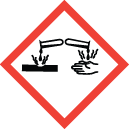
- Prompt:dangerous
- Hazard Statement: H315-H318
- Warning Statement: P264-P280-P302+P352+P332+P313+P362+P364-P305+P351+P338+P310
- WGK Germany:3
- Hazard Category Code: 38-41-43
- Safety Instruction: S26; S36
-
Hazardous Material Identification:

- Risk Phrases:R38; R41; R43
3-(Acryloyloxy)-2-hydroxypropyl methacrylate Customs Data
- HS CODE:2916140000
- Customs Data:
China Customs Code:
2916140000Overview:
2916140000. Methacrylate. VAT:17.0%. Tax refund rate:13.0%. Regulatory conditions:nothing. MFN tariff:6.5%. general tariff:80.0%
Declaration elements:
Product Name, component content, use to, Acrylic acid\Acrylates or esters shall be packaged clearly
Summary:
2916140000. other esters of methacrylic acid. VAT:17.0%. Tax rebate rate:13.0%. . MFN tariff:6.5%. General tariff:80.0%
3-(Acryloyloxy)-2-hydroxypropyl methacrylate Pricemore >>
| Related Categories | No. | Product Name | Cas No. | Purity | Specification | Price | update time | Inquiry |
|---|---|---|---|---|---|---|---|---|
| TRC | A191480-250mg |
3-(Acryloyloxy)-2-hydroxypropyl Methacrylate |
1709-71-3 | 250mg |
$ 50.00 | 2022-06-08 | ||
| TRC | A191480-500mg |
3-(Acryloyloxy)-2-hydroxypropyl Methacrylate |
1709-71-3 | 500mg |
$ 65.00 | 2022-06-08 | ||
| TRC | A191480-2.5g |
3-(Acryloyloxy)-2-hydroxypropyl Methacrylate |
1709-71-3 | 2.5g |
$ 80.00 | 2022-06-08 | ||
| BAI LING WEI Technology Co., Ltd. | 260045-25G |
3-(Acryloyloxy)-2-hydroxypropyl methacrylate, 80%, stabilized with 200 ppm MEHQ |
1709-71-3 | 80% | 25G |
¥ 91 | 2022-04-26 | |
| BAI LING WEI Technology Co., Ltd. | 260045-100G |
3-(Acryloyloxy)-2-hydroxypropyl methacrylate, 80%, stabilized with 200 ppm MEHQ |
1709-71-3 | 80% | 100G |
¥ 299 | 2022-04-26 | |
| SHANG HAI MAI KE LIN SHENG HUA Technology Co., Ltd. | A838626-100g |
3-(Acryloyloxy)-2-hydroxypropyl methacrylate |
1709-71-3 | 80% | 100g |
460.00 | 2021-05-17 | |
| SHANG HAI XIAN DING Biotechnology Co., Ltd. | A1988-25g |
3-(Acryloyloxy)-2-hydroxypropyl methacrylate |
1709-71-3 | 80.0%(GC),stabilized with MEHQ | 25g |
¥180.0 | 2022-05-30 | |
| SHANG HAI XIAN DING Biotechnology Co., Ltd. | A1988-500g |
3-(Acryloyloxy)-2-hydroxypropyl methacrylate |
1709-71-3 | 80.0%(GC),stabilized with MEHQ | 500g |
¥830.0 | 2022-05-30 | |
| abcr | AB249582-25 g |
1-(Acryloyloxy)-3-(methacryloyloxy)-2-propanol (stabilized with MEHQ), 80%; . |
1709-71-3 | 80% | 25g |
€43.60 | 2023-04-27 | |
| abcr | AB249582-500 g |
1-(Acryloyloxy)-3-(methacryloyloxy)-2-propanol (stabilized with MEHQ), 80%; . |
1709-71-3 | 80% | 500g |
€132.70 | 2023-04-27 |
3-(Acryloyloxy)-2-hydroxypropyl methacrylate Suppliers
 Audited Supplier
Audited Supplier
Audited Supplier
Audited Supplier
Audited Supplier
3-(Acryloyloxy)-2-hydroxypropyl methacrylate Related Literature
-
1. One-pot synthesis of poly(vinylidene fluoride) methacrylate macromonomers via thia-Michael additionMarc Guerre,Bruno Ameduri,Vincent Ladmiral Polym. Chem. 2016 7 441
-
Vincent Ladmiral,Alexandre Charlot,Mona Semsarilar,Steven. P. Armes Polym. Chem. 2015 6 1805
-
Jér?me Mazzolini,Olivier Boyron,Vincent Monteil,Franck D’Agosto,Christophe Boisson,Gemma C. Sanders,Johan P. A. Heuts,Rob Duchateau,Didier Gigmes,Denis Bertin Polym. Chem. 2012 3 2383
-
Aaron Priester,Jimmy Yeng,Krista Hilmas,Anthony J. Convertine Polym. Chem. 2023 14 1085
-
Teppei Shirakura,Aniruddha Ray,Raoul Kopelman RSC Adv. 2016 6 48016
Additional information on 3-(Acryloyloxy)-2-hydroxypropyl methacrylate
Professional Introduction to 3-(Acryloyloxy)-2-hydroxypropyl Methacrylate (CAS No. 1709-71-3)
3-(Acryloyloxy-2-hydroxypropyl methacrylate) is a versatile monomer widely utilized in the field of polymer chemistry and material science. With the CAS number 1709-71-3, this compound has garnered significant attention due to its unique chemical properties and broad range of applications. This introduction aims to provide a comprehensive overview of the compound, its synthesis, applications, and recent advancements in research.
The molecular structure of 3-(Acryloyloxy-2-hydroxypropyl methacrylate) consists of an acrylate group attached to a hydroxyl-functionalized propyl chain. This bifunctional nature makes it an excellent candidate for the creation of crosslinked networks, hydrogels, and functional polymers. The presence of both the acrylate double bond and the hydroxyl group allows for a wide range of chemical reactions, including radical polymerization, esterification, and hydrogen bonding.
In recent years, 3-(Acryloyloxy-2-hydroxypropyl methacrylate) has been extensively studied for its potential in biomedical applications. Its ability to form biocompatible hydrogels has made it a popular choice for drug delivery systems, tissue engineering scaffolds, and wound healing materials. Researchers have demonstrated its efficacy in creating hydrogels with tunable mechanical properties and degradation rates, which are critical for various biomedical applications.
One of the most notable applications of 3-(Acryloyloxy-2-hydroxypropyl methacrylate) is in the development of smart materials that can respond to external stimuli such as temperature, pH, or light. These stimuli-responsive hydrogels have been explored for their potential in creating controlled-release drug delivery systems. For instance, studies have shown that these hydrogels can be designed to release therapeutic agents in response to specific physiological conditions, thereby improving treatment efficacy and reducing side effects.
The synthesis of 3-(Acryloyloxy-2-hydroxypropyl methacrylate) typically involves the reaction between methacrylic acid and 2-hydroxypropyl alcohol under controlled conditions. This reaction is often catalyzed by acid or base catalysts to ensure high yield and purity. The process requires careful optimization to minimize side reactions and ensure the formation of the desired product. Advances in synthetic methodologies have enabled the production of high-purity grades of this monomer, which are essential for high-performance applications.
In addition to its biomedical applications, 3-(Acryloyloxy-2-hydroxypropyl methacrylate) has found utility in industrial applications such as coatings, adhesives, and composites. Its ability to form strong covalent bonds makes it an excellent crosslinking agent for creating durable and flexible polymers. Recent research has also explored its use in creating environmentally friendly materials by incorporating renewable resources into its structure.
The compound's unique properties have also led to its use in advanced material science research. For example, researchers have utilized 3-(Acryloyloxy-2-hydroxypropyl methacrylate) to create novel polymers with enhanced mechanical strength and thermal stability. These polymers have potential applications in aerospace, automotive industries, and electronics where high performance is critical. The ability to tailor the properties of these polymers by modifying their molecular structure has opened up new avenues for innovation.
In conclusion, 3-(Acryloyloxy-2-hydroxypropyl methacrylate) (CAS No. 1709-71-3) is a multifunctional monomer with a wide range of applications in both biomedical and industrial sectors. Its unique chemical properties make it an excellent candidate for creating advanced materials with tailored functionalities. As research continues to uncover new applications and synthetic methodologies, the importance of this compound is expected to grow even further.
1709-71-3 (3-(Acryloyloxy)-2-hydroxypropyl methacrylate) Related Products
- 62149-40-0(2-Propenoic acid, 2-methyl-, 2-hydroxy-3-propoxypropyl ester)
- 201594-54-9(2,4-dihydroxypropyl Methacrylate)
- 68856-43-9(ethylenebis[oxy(2-hydroxypropane-1,3-diyl)] dimethacrylate)
- 98104-93-9(EINECS 203-441-9)
- 62732-26-7(2-Propenoic acid, 2-methyl-, 2-hydroxy-3-[2-[(2-methyl-1-oxo-2-propen-1-yl)oxy]ethoxy]propyl ester)
- 1830-78-0(Glycerol Dimethacrylate (Mixture of 1,2- And 1,3-Form))
- 28497-59-8(Blemmer GMR)
- 28474-30-8(2-Propenoic acid,2-methyl-, 2,3-dihydroxypropyl ester, homopolymer)
- 7401-88-9(glyceryl trimethacrylate)
- 5919-74-4(2,3-Dihydroxypropyl methacrylate)

