Cas no 164226-32-8 (tert-Butyl (2-(hydroxymethyl)phenyl)carbamate)

tert-Butyl (2-(hydroxymethyl)phenyl)carbamate Chemical and Physical Properties
Names and Identifiers
-
- tert-Butyl (2-(hydroxymethyl)phenyl)carbamate
- BOC-2-AMINOBENZYLALCOHOL
- Tert-butyl N-[2-(hydroxymethyl)phenyl]carbamate
- tert-Butyl 2-(hydroxymethyl)phenylcarbamate
- N-Boc-2-aminobenzyl alcohol
- 2-(Boc-aMino)benzyl alcohol
- (2-HydroxyMethyl-phenyl)-carbaMic acid tert-butyl ester
- SB34115
- BS-21645
- tert-Butyl [2-(hydroxymethyl)phenyl]carbamate
- SCHEMBL646870
- N-Boc-o-amino benzyl alcohol
- MFCD04974267
- (2-Hydroxymethylphenyl)-carbamic acid tert-butyl ester
- 164226-32-8
- 2-(t-butoxy)carbonylaminobenzyl alcohol
- AKOS010758800
- N-(Tert-butoxycarbonyl)-2-(hydroxymethyl)aniline
- DTXSID90571072
- Carbamic acid, N-[2-(hydroxymethyl)phenyl]-, 1,1-dimethylethyl ester
- tert-Butyl(2-(hydroxymethyl)phenyl)carbamate
- N-Boc-2-aminobenzyl alcohol, 97%
- tert-butyl (2-hydroxymethylphenyl)carbamate
- EN300-320848
- QQAMZZFIHGASEX-UHFFFAOYSA-N
-
- MDL: MFCD04974267
- Inchi: 1S/C12H17NO3/c1-12(2,3)16-11(15)13-10-7-5-4-6-9(10)8-14/h4-7,14H,8H2,1-3H3,(H,13,15)
- InChI Key: QQAMZZFIHGASEX-UHFFFAOYSA-N
- SMILES: O(C(NC1C=CC=CC=1CO)=O)C(C)(C)C
Computed Properties
- Exact Mass: 223.12084340g/mol
- Monoisotopic Mass: 223.12084340g/mol
- Isotope Atom Count: 0
- Hydrogen Bond Donor Count: 2
- Hydrogen Bond Acceptor Count: 4
- Heavy Atom Count: 16
- Rotatable Bond Count: 5
- Complexity: 235
- Covalently-Bonded Unit Count: 1
- Defined Atom Stereocenter Count: 0
- Undefined Atom Stereocenter Count : 0
- Defined Bond Stereocenter Count: 0
- Undefined Bond Stereocenter Count: 0
- XLogP3: 2.2
- Topological Polar Surface Area: 58.6?2
Experimental Properties
- Density: 1.094?g/mL?at 25?°C
- Flash Point: Fahrenheit: >446 ° f
Celsius: >230 ° c - Refractive Index: n20/D 1.527
- PSA: 62.05000
- LogP: 2.53950
tert-Butyl (2-(hydroxymethyl)phenyl)carbamate Security Information
-
Symbol:
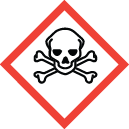
- Signal Word:Danger
- Hazard Statement: H301-H317
- Warning Statement: P280-P301+P310
- Hazardous Material transportation number:UN 2810 6.1 / PGIII
- WGK Germany:3
- Hazard Category Code: 22-43
- Safety Instruction: 36/37
-
Hazardous Material Identification:

- Storage Condition:storage at -4℃ (1-2weeks), longer storage period at -20℃ (1-2years)
tert-Butyl (2-(hydroxymethyl)phenyl)carbamate Pricemore >>
| Related Categories | No. | Product Name | Cas No. | Purity | Specification | Price | update time | Inquiry |
|---|---|---|---|---|---|---|---|---|
| SHANG HAI A LA DING SHENG HUA KE JI GU FEN Co., Ltd. | I167743-1g |
tert-Butyl (2-(hydroxymethyl)phenyl)carbamate |
164226-32-8 | 96% | 1g |
¥267.90 | 2023-09-02 | |
| SHANG HAI A LA DING SHENG HUA KE JI GU FEN Co., Ltd. | I167743-250mg |
tert-Butyl (2-(hydroxymethyl)phenyl)carbamate |
164226-32-8 | 96% | 250mg |
¥115.90 | 2023-09-02 | |
| Chemenu | CM277157-25g |
tert-Butyl (2-(hydroxymethyl)phenyl)carbamate |
164226-32-8 | 95% | 25g |
$378 | 2021-06-16 | |
| Alichem | A019115286-10g |
tert-Butyl (2-(hydroxymethyl)phenyl)carbamate |
164226-32-8 | 95% | 10g |
201.96 USD | 2021-06-17 | |
| Alichem | A019115286-25g |
tert-Butyl (2-(hydroxymethyl)phenyl)carbamate |
164226-32-8 | 95% | 25g |
404.00 USD | 2021-06-17 | |
| TRC | B810163-10mg |
tert-Butyl (2-(Hydroxymethyl)phenyl)carbamate |
164226-32-8 | 10mg |
$ 50.00 | 2022-06-06 | ||
| TRC | B810163-50mg |
tert-Butyl (2-(Hydroxymethyl)phenyl)carbamate |
164226-32-8 | 50mg |
$ 65.00 | 2022-06-06 | ||
| TRC | B810163-100mg |
tert-Butyl (2-(Hydroxymethyl)phenyl)carbamate |
164226-32-8 | 100mg |
$ 80.00 | 2022-06-06 | ||
| XI GE MA AO DE LI QI ( SHANG HAI ) MAO YI Co., Ltd. | 776475-1G |
tert-Butyl (2-(hydroxymethyl)phenyl)carbamate |
164226-32-8 | 97% | 1G |
¥511.37 | 2022-02-24 | |
| JIE DA WEI ( SHANG HAI ) YI YAO KE JI FA ZHAN Co., Ltd. | 20R1744-5g |
(2-Hydroxymethyl-phenyl)-carbamic acid tert-butyl ester |
164226-32-8 | 96% | 5g |
1017.65CNY | 2021-05-08 |
tert-Butyl (2-(hydroxymethyl)phenyl)carbamate Related Literature
-
Min Kim,Jae-Joon Lee,Tengling Ye,Panagiotis E. Keivanidis,Kilwon Cho J. Mater. Chem. C, 2020,8, 1686-1696
-
Peiyuan Zeng,Xiaoxiao Wang,Ming Ye,Qiuyang Ma,Jianwen Li,Wanwan Wang,Baoyou Geng,Zhen Fang RSC Adv., 2016,6, 23074-23084
-
Jason Y. C. Lim,Yong Yu,Guorui Jin,Kai Li,Yi Lu,Jianping Xie Nanoscale Adv., 2020,2, 3921-3932
Additional information on tert-Butyl (2-(hydroxymethyl)phenyl)carbamate
Comprehensive Overview of tert-Butyl (2-(hydroxymethyl)phenyl)carbamate (CAS No. 164226-32-8): Properties, Applications, and Industry Insights
tert-Butyl (2-(hydroxymethyl)phenyl)carbamate (CAS No. 164226-32-8) is a specialized organic compound widely utilized in pharmaceutical intermediates, agrochemical synthesis, and advanced material research. Its molecular structure, featuring both a carbamate group and a hydroxymethyl moiety, makes it a versatile building block for drug discovery and fine chemical manufacturing. With the growing demand for high-purity intermediates in the life sciences sector, this compound has garnered significant attention from researchers and industry professionals alike.
One of the key reasons for the popularity of tert-Butyl (2-(hydroxymethyl)phenyl)carbamate lies in its role as a protective group in organic synthesis. The tert-butyloxycarbonyl (Boc) group is particularly valuable in peptide synthesis, where it safeguards amine functionalities during multi-step reactions. Recent trends in green chemistry have also highlighted its potential as a sustainable intermediate, with studies focusing on optimizing its synthesis to reduce environmental impact—a topic frequently searched in AI-driven chemical research databases.
From a technical perspective, the compound's physicochemical properties—including its solubility profile (soluble in common organic solvents like dichloromethane and tetrahydrofuran) and thermal stability—make it particularly suitable for high-temperature reactions. Analytical techniques such as HPLC, NMR spectroscopy, and mass spectrometry are typically employed for quality control, addressing another common search query among quality assurance specialists in the pharmaceutical supply chain.
The application spectrum of CAS 164226-32-8 extends to catalyst development and polymer chemistry. Recent patent literature reveals its incorporation into photoactive materials and biodegradable polymers, aligning with the global push toward eco-friendly material science. Industry reports indicate a compound annual growth rate (CAGR) of 6.2% for similar carbamate derivatives between 2023-2030, driven by expanding applications in electronic materials and controlled-release formulations.
Quality standards for tert-Butyl (2-(hydroxymethyl)phenyl)carbamate typically require ≥98% purity, with stringent controls on residual solvents and heavy metal content—a critical consideration for GMP-compliant manufacturing. Storage recommendations emphasize protection from moisture at 2-8°C, reflecting best practices for chemical stability that many laboratory managers frequently search for in chemical handling guidelines.
Emerging research directions include computational studies of its molecular interactions using density functional theory (DFT) calculations, particularly in enzyme inhibition applications. This aligns with the pharmaceutical industry's focus on structure-activity relationships (SAR) and computer-aided drug design (CADD)—topics generating substantial interest in scientific search engines and academic databases.
From a regulatory standpoint, proper documentation of safety data sheets (SDS) and REACH compliance remains essential for international trade. The compound's handling precautions (standard personal protective equipment including nitrile gloves and safety goggles) represent another frequently searched aspect by laboratory personnel and EHS managers worldwide.
The synthesis of 164226-32-8 typically involves carbamate formation reactions between 2-aminobenzyl alcohol and di-tert-butyl dicarbonate, with recent methodological improvements focusing on catalytic efficiency and atom economy. These process optimization strategies respond to the chemical industry's search for cost-effective synthesis methods—a persistent theme in process chemistry forums and publications.
Market analysis indicates that suppliers of tert-Butyl (2-(hydroxymethyl)phenyl)carbamate are increasingly adopting blockchain technology for supply chain transparency, addressing another hot topic in chemical procurement. The compound's global distribution network spans major pharmaceutical hubs in North America, Europe, and Asia, with particular growth in contract manufacturing organizations (CMOs) specializing in custom synthesis services.
Future prospects for this compound include potential applications in bioconjugation chemistry and prodrug development, areas generating substantial research interest as evidenced by publication trends in ACS journals and RSC advances. Its structural features make it a candidate for developing targeted drug delivery systems—another rapidly growing field frequently queried in scientific literature searches.
164226-32-8 (tert-Butyl (2-(hydroxymethyl)phenyl)carbamate) Related Products
- 179898-27-2((3-Amino-2-methyl-phenyl)carbamic Acid tert-butyl ester)
- 329763-32-8((5-AMINO-2-METHYL-PHENYL)-CARBAMIC ACID TERT-BUTYL ESTER)
- 810662-51-2(tert-butyl N-(4-amino-2,5-dimethylphenyl)carbamate)
- 56700-69-7(BOC-2,4,6-TRIMETHYLANILINE)
- 74965-31-4(N-(tert-Butoxycarbonyl)-2-methylaniline)
- 810662-54-5(Carbamic acid, (5-amino-2,4-dimethylphenyl)-, 1,1-dimethylethyl ester)
- 325953-40-0(tert-Butyl 4-Amino-2-methylphenylcarbamate)
- 201598-53-0(Carbamic acid, (methyl-1,3-phenylene)bis-, bis(1,1-dimethylethyl) ester)
- 876353-81-0(tert-Butyl (2,6-dimethylphenyl)carbamate)
- 129822-43-1(tert-butyl (2,4-dimethylphenyl)carbamate)
 Audited Supplier
 Audited Supplier
 Audited Supplier
Audited Supplier
Audited Supplier
 Audited Supplier
