Cas no 14324-55-1 (Zinc dethyldithiocarbamate)

Zinc dethyldithiocarbamate Chemical and Physical Properties
Names and Identifiers
-
- Zinc diethyldithiocarbamate
- ZDC
- ZDEC
- diethyldithiocarbamic acid zinc salt
- zinc n,n-diethyldithiocarbamate
- ethyl zimate
- accelerator ez powder
- acceleratorzdc
- ancazate et
- bis(diethylcarbamodithioato-s,s') zinc
- bis(diethylcarbamodithioato-s,s')-,(t-4)-zinc
- bis(diethyldithiocarbamate)zinc
- bis(diethyldithio-carbamate)zinc
- bis(diethyldithiocarbamato)-zin
- bis(diethyldithiocarbamato)zinc
- bis(diethyldithiocarbamato)zinc[qr]
- carbamodithioic acid, diethyl-, zinc salt
- diethyl-carbamodithioicacizincsalt
- etazin
- ethasan
- ethazate
- Accelerator EZ & EZ-SP
- Ethyl ziram
- Perkacit? ZDEC
- ZDEC(EZ)
- Perkacit ZDEC
- Zinc diethylcarbamodithioate
- zinc,N,N-diethylcarbamodithioate
- Zinc bis(diethyldithiocarbamate)
- hermatzdk
- soxinolez
- noccelerez
- Hermat ZDK
- Soxinol EZ
- zinc N,N-diethylcarbamodithioate
- C10H20N2S4Zn
- DSSTox_CID_1463
- Zinc diethyl dithiocarbamate
- DSSTox_RID_76170
- DSSTox_GSID_21463
- KSC491A8F
- diethyldithiocarbamate zinc salt
- ICW4708Z8G
- RKQOSDAEEGPRER-UHFFFAOYSA-L
- EBD49942
- Tox21_2002
- Zinc dethyldithiocarbamate
-
- MDL: MFCD00064798
- Inchi: 1S/2C5H11NS2.Zn/c2*1-3-6(4-2)5(7)8;/h2*3-4H2,1-2H3,(H,7,8);/q;;+2/p-2
- InChI Key: RKQOSDAEEGPRER-UHFFFAOYSA-L
- SMILES: [Zn+2].[S-]C(N(C([H])([H])C([H])([H])[H])C([H])([H])C([H])([H])[H])=S.[S-]C(N(C([H])([H])C([H])([H])[H])C([H])([H])C([H])([H])[H])=S
Computed Properties
- Exact Mass: 359.98000
- Isotope Atom Count: 0
- Hydrogen Bond Donor Count: 0
- Hydrogen Bond Acceptor Count: 4
- Heavy Atom Count: 17
- Rotatable Bond Count: 4
- Complexity: 73
- Covalently-Bonded Unit Count: 3
- Defined Atom Stereocenter Count: 0
- Undefined Atom Stereocenter Count : 0
- Defined Bond Stereocenter Count: 0
- Undefined Bond Stereocenter Count: 0
- Surface Charge: 0
- Tautomer Count: nothing
- XLogP3: nothing
- Topological Polar Surface Area: 72.7
Experimental Properties
- Color/Form: White crystals or off white powder. Non toxic and tasteless.
- Density: 1,48 g/cm3
- Melting Point: 178.0 to 182.0 deg-C
- Boiling Point: 330.6°C (estimate)
- Flash Point: 204°(400°F)
- Water Partition Coefficient: Insoluble in water. Soluble in benzene carbon disulfide and organic liquids.
- PSA: 70.66000
- LogP: 2.31750
- Solubility: Soluble in carbon disulfide, benzene, toluene and chloroform, slightly soluble in alcohol, insoluble in water and gasoline.
Zinc dethyldithiocarbamate Security Information
-
Symbol:

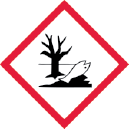
- Prompt:warning
- Signal Word:Warning
- Hazard Statement: H302,H315,H317,H319,H335,H410
- Warning Statement: P261,P273,P280,P305+P351+P338,P501
- Hazardous Material transportation number:UN 3077 9/PG 3
- WGK Germany:3
- Hazard Category Code: 22-36/37/38-43-50/53
- Safety Instruction: S24-S37-S60-S61
- RTECS:ZH0350000
-
Hazardous Material Identification:


- Packing Group:III
- Hazard Level:6.1
- Safety Term:6.1
- Packing Group:III
- Risk Phrases:R22; R36/37/38; R43; R50/53
- HazardClass:6.1
- PackingGroup:III
- TSCA:Yes
Zinc dethyldithiocarbamate Customs Data
- HS CODE:2935009090
- Customs Data:
China Customs Code:
2935009090Overview:
2935009090 Other sulphonates(Acyl)amine. VAT:17.0% Tax refund rate:9.0% Regulatory conditions:nothing MFN tariff:6.5% general tariff:35.0%
Declaration elements:
Product Name, component content, use to
Summary:
2935009090 other sulphonamides VAT:17.0% Tax rebate rate:9.0% Supervision conditions:none MFN tariff:6.5% General tariff:35.0%
Zinc dethyldithiocarbamate Pricemore >>
| Related Categories | No. | Product Name | Cas No. | Purity | Specification | Price | update time | Inquiry |
|---|---|---|---|---|---|---|---|---|
| XI GE MA AO DE LI QI ( SHANG HAI ) MAO YI Co., Ltd. | 329703-25G |
Zinc dethyldithiocarbamate |
14324-55-1 | 25g |
¥459.8 | 2023-12-08 | ||
| SHANG HAI XIAN DING Biotechnology Co., Ltd. | D0492-500g |
Zinc dethyldithiocarbamate |
14324-55-1 | 99.0%(T) | 500g |
¥1750.0 | 2022-05-30 | |
| SHANG HAI XIAN DING Biotechnology Co., Ltd. | D0492-25g |
Zinc dethyldithiocarbamate |
14324-55-1 | 99.0%(T) | 25g |
¥225.0 | 2022-05-30 | |
| SHANG HAI MAI KE LIN SHENG HUA Technology Co., Ltd. | Z820697-2.5kg |
Zinc diethyldithiocarbamate |
14324-55-1 | 98% | 2.5kg |
711.00 | 2021-05-17 | |
| TRC | Z439998-25g |
Zinc Diethyldithiocarbamate |
14324-55-1 | 25g |
$ 64.00 | 2023-09-05 | ||
| TRC | Z439998-50g |
Zinc Diethyldithiocarbamate |
14324-55-1 | 50g |
$ 98.00 | 2023-09-05 | ||
| ChemScence | CS-B1734-500g |
Zinc Diethyldithiocarbamate |
14324-55-1 | ≥97.0% | 500g |
$60.0 | 2022-04-27 | |
| SHANG HAI JI ZHI SHENG HUA Technology Co., Ltd. | Z66630-25g |
Zinc Diethyldithiocarbamate |
14324-55-1 | 98% | 25g |
¥49.0 | 2023-09-05 | |
| SHANG HAI YI EN HUA XUE JI SHU Co., Ltd. | R018430-100g |
Zinc dethyldithiocarbamate |
14324-55-1 | 98% | 100g |
¥31 | 2023-09-10 | |
| SHANG HAI YI EN HUA XUE JI SHU Co., Ltd. | R018430-25g |
Zinc dethyldithiocarbamate |
14324-55-1 | 98% | 25g |
¥26 | 2023-09-10 |
Zinc dethyldithiocarbamate Suppliers
 Audited Supplier
Audited Supplier
Audited Supplier
Zinc dethyldithiocarbamate Related Literature
-
Jason Y. C. Lim,Yong Yu,Guorui Jin,Kai Li,Yi Lu,Jianping Xie Nanoscale Adv., 2020,2, 3921-3932
-
Yiding Jiao,Liqun Kang,Jasper Berry-Gair,Kit McColl,Jianwei Li,Haobo Dong,Hao Jiang,Ryan Wang,Furio Corà,Dan J. L. Brett,Ivan P. Parkin J. Mater. Chem. A, 2020,8, 22075-22082
-
Partha Laskar,Christine Dufès Nanoscale Adv., 2021,3, 6007-6026
-
Vishwesh Venkatraman,Marco Foscato,Vidar R. Jensen,Bj?rn K?re Alsberg J. Mater. Chem. A, 2015,3, 9851-9860
Additional information on Zinc dethyldithiocarbamate
Introduction to Zinc dethyldithiocarbamate (CAS No. 14324-55-1) and Its Emerging Applications in Chemical and Pharmaceutical Sciences
Zinc dethyldithiocarbamate, with the chemical identifier CAS No. 14324-55-1, is a compound of significant interest in the fields of chemical biology and pharmaceutical research. This organometallic compound, characterized by its zinc(II) core coordinated to dethyldithiocarbamate ligands, has garnered attention for its versatile applications in catalysis, material science, and medicinal chemistry. The unique structural and electronic properties of this molecule make it a valuable candidate for developing novel therapeutic agents and functional materials.
The dethyldithiocarbamate moiety, a sulfur-rich ligand system, contributes to the compound's chelating ability, enabling stable complexation with transition metals. This feature is particularly advantageous in catalytic applications, where metal complexes often serve as efficient catalysts for organic transformations. Recent studies have highlighted the role of Zinc dethyldithiocarbamate in facilitating cross-coupling reactions, such as Suzuki-Miyaura and Heck reactions, which are pivotal in constructing complex organic molecules used in drug synthesis.
In the realm of pharmaceutical science, Zinc dethyldithiocarbamate has been explored for its potential bioactivity. The compound's ability to interact with biological targets, such as enzymes and receptors, has prompted investigations into its role as an anti-inflammatory and antioxidant agent. Preliminary in vitro studies suggest that Zinc dethyldithiocarbamate may modulate inflammatory pathways by inhibiting key pro-inflammatory cytokines. Additionally, its sulfur-rich structure suggests radical-scavenging capabilities, which could be beneficial in combating oxidative stress-related diseases.
The synthesis of Zinc dethyldithiocarbamate involves the reaction of zinc salts with dethyldithiocarbamic acid or its derivatives. The reaction conditions can be optimized to achieve high yields and purity, making it a practical choice for industrial-scale production. Advances in synthetic methodologies have enabled the incorporation of functional groups into the dethyldithiocarbamate backbone, expanding the compound's utility in drug discovery and material design.
One of the most compelling aspects of Zinc dethyldithiocarbamate is its potential in nanotechnology applications. Metal-organic frameworks (MOFs) incorporating this ligand system have shown promise as sensors for detecting environmental pollutants and gases. The porous structure of these MOFs allows for selective adsorption and recognition of target analytes, making them valuable tools in environmental monitoring and industrial safety applications.
The pharmaceutical industry has also leveraged Zinc dethyldithiocarbamate in the development of novel antimicrobial agents. The compound's ability to disrupt bacterial cell membranes has been investigated as a strategy to combat antibiotic-resistant strains. In collaboration with biologists and medicinal chemists, researchers have designed derivatives of Zinc dethyldithiocarbamate that exhibit enhanced efficacy against Gram-negative bacteria while maintaining low toxicity profiles.
Emerging research indicates that Zinc dethyldithiocarbamate may play a role in photodynamic therapy (PDT). When combined with photosensitizers, this compound can generate reactive oxygen species upon exposure to light, leading to targeted cell destruction. This approach has been explored in oncology for treating solid tumors and has shown encouraging results in preclinical studies.
The environmental impact of using Zinc dethyldithiocarbamate has also been carefully evaluated. Studies have demonstrated its biodegradability under controlled conditions, reducing concerns about long-term ecological persistence. Furthermore, efforts are underway to develop green synthetic routes that minimize waste generation and energy consumption during production.
In conclusion, Zinc dethyldithiocarbamate (CAS No. 14324-55-1) represents a multifaceted compound with broad applications across chemical biology and pharmaceutical sciences. Its unique structural features enable diverse functionalities, from catalysis to drug development and nanotechnology. As research continues to uncover new applications for this compound, it is poised to remain a cornerstone in innovation within these fields.
14324-55-1 (Zinc dethyldithiocarbamate) Related Products
- 14239-68-0(Cadmium Diethyldithiocarbamate)
- 1518-58-7(Diethylammonium N,N-Diethyldithiocarbamate)
- 2391-78-8(Diethylammonium diethyldithiocarbamate)
- 12367-51-0(Titanium,tetrakis(diethylcarbamodithioato-S,S')- (9CI))
- 147-84-2(Carbamodithioic acid,N,N-diethyl-)
- 1470-61-7(Silver diethyldithiocarbamate)
- 148-18-5(Ditiocarb sodium)
- 14239-51-1(Mercury,bis(N,N-diethylcarbamodithioato-kS,kS')-, (T-4)-)
- 13681-87-3(DIETHYLDITHIOCARBAMIC ACID COPPER SALT)
- 17549-30-3(Lead,bis(N,N-diethylcarbamodithioato-kS,kS')-, (T-4)-)

