Cas no 131747-43-8 (2-(trifluoromethyl)pyridine-3-carboxylic acid)

2-(trifluoromethyl)pyridine-3-carboxylic acid Chemical and Physical Properties
Names and Identifiers
-
- 2-Trifluoromethylnicotinic acid
- 2-(Trifluoromethyl)pyridine-3-carboxylic acid
- 2-(Trifluoromethyl)nicotinic Acid
- 2-(Trifluoromethyl)
- 2-(TRIFLUOROMETHYL)PYRIDINE-3-CARBOXYLI&
- 2-(trifluoroMethyl)pyridin-3-carboxylic acid
- 2-(TRIFLUOROMETHYL)-3-PYRIDINECARBOXYLIC ACID
- 3-Pyridinecarboxylic acid, 2-(trifluoroMethyl)-
- 2-(Trifluoromethyl)pyridine-3-carboxylic acid, 3-Carboxy-2-(trifluoromethyl)pyridine
- 2-(TrifluoroMethyl)nicotinic acid SynonyM 2-(TrifluoroMethyl)pyridine-3-carboxylic acid
- 2-Trifluoromethyl-nicotinic acid
- PubChem12728
- trifluoromethylnicotinic acid
- 2-trifluormethyl nicotinic acid
- 2-trifluoromethyl nicotinic acid
- BCP12623
- CT0071
- WT1966
- SBB053042
- 2-(Trifluoromethyl)nicotinicacid,97%
- 2-(Trifluoromethyl)nicotinic acid ,98%
- MFCD01862052
- FT-0600178
- SCHEMBL413572
- SY017968
- 2-Trifluoromethylnicotinicacid
- DTXSID00380556
- CS-W002847
- BH-0434
- 3-Pyridinecarboxylic acid,2-(trifluoromethyl)-
- Z255150388
- 2-(Trifluoromethyl) Nicotinic Acid
- 2-(Trifluoromethyl)pyridine-3-carboxylic acid, 96%
- AM20050764
- 2-Trifluoromethyl-pyridine-3-carboxylic acid
- AKOS005063819
- T3132
- 131747-43-8
- AC-1100
- EN300-36127
- A2764
- W-205370
- DB-005112
- 2-(trifluoromethyl)pyridine-3-carboxylic acid
-
- MDL: MFCD01862052
- Inchi: 1S/C7H4F3NO2/c8-7(9,10)5-4(6(12)13)2-1-3-11-5/h1-3H,(H,12,13)
- InChI Key: BFROETNLEIAWNO-UHFFFAOYSA-N
- SMILES: FC(C1C(C(=O)O)=CC=CN=1)(F)F
Computed Properties
- Exact Mass: 191.01900
- Monoisotopic Mass: 191.019
- Isotope Atom Count: 0
- Hydrogen Bond Donor Count: 1
- Hydrogen Bond Acceptor Count: 6
- Heavy Atom Count: 13
- Rotatable Bond Count: 1
- Complexity: 204
- Covalently-Bonded Unit Count: 1
- Defined Atom Stereocenter Count: 0
- Undefined Atom Stereocenter Count : 0
- Defined Bond Stereocenter Count: 0
- Undefined Bond Stereocenter Count: 0
- Topological Polar Surface Area: 50.2
- XLogP3: 1.3
Experimental Properties
- Color/Form: White to Yellow Solid
- Density: 1.5±0.1 g/cm3
- Melting Point: 185.0 to 189.0 deg-C
- Boiling Point: 259.9±40.0 °C at 760 mmHg
- Flash Point: 111℃
- Refractive Index: 1.475
- PSA: 50.19000
- LogP: 1.79860
2-(trifluoromethyl)pyridine-3-carboxylic acid Security Information
-
Symbol:
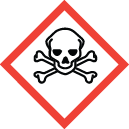
- Prompt:warning
- Signal Word:Danger
- Hazard Statement: H301
- Warning Statement: P301+P310
- Hazardous Material transportation number:NONH for all modes of transport
- WGK Germany:3
- Hazard Category Code: 22
- Safety Instruction: 26-37
-
Hazardous Material Identification:

- HazardClass:IRRITANT
- Storage Condition:Store at room temperature
- Risk Phrases:R22
2-(trifluoromethyl)pyridine-3-carboxylic acid Customs Data
- HS CODE:2933399090
- Customs Data:
China Customs Code:
2933399090Overview:
2933399090. Other compounds with non fused pyridine rings in structure. VAT:17.0%. Tax refund rate:13.0%. Regulatory conditions:nothing. MFN tariff:6.5%. general tariff:20.0%
Declaration elements:
Product Name, component content, use to, Please indicate the appearance of Urotropine, 6- caprolactam please indicate the appearance, Signing date
Summary:
2933399090. other compounds containing an unfused pyridine ring (whether or not hydrogenated) in the structure. VAT:17.0%. Tax rebate rate:13.0%. . MFN tariff:6.5%. General tariff:20.0%
2-(trifluoromethyl)pyridine-3-carboxylic acid Pricemore >>
| Related Categories | No. | Product Name | Cas No. | Purity | Specification | Price | update time | Inquiry |
|---|---|---|---|---|---|---|---|---|
| Chemenu | CM102691-25g |
2-Trifluoromethylnicotinic acid |
131747-43-8 | 98% | 25g |
$138 | 2021-08-06 | |
| Chemenu | CM102691-100g |
2-Trifluoromethylnicotinic acid |
131747-43-8 | 98% | 100g |
$416 | 2021-08-06 | |
| TRC | T791325-250mg |
2-(Trifluoromethyl) Nicotinic Acid |
131747-43-8 | 250mg |
$ 92.00 | 2023-09-05 | ||
| TRC | T791325-500mg |
2-(Trifluoromethyl) Nicotinic Acid |
131747-43-8 | 500mg |
$ 126.00 | 2023-09-05 | ||
| TRC | T791325-1g |
2-(Trifluoromethyl) Nicotinic Acid |
131747-43-8 | 1g |
$ 190.00 | 2023-09-05 | ||
| TRC | T791325-2.5g |
2-(Trifluoromethyl) Nicotinic Acid |
131747-43-8 | 2.5g |
$230.00 | 2023-05-17 | ||
| TRC | T791325-5g |
2-(Trifluoromethyl) Nicotinic Acid |
131747-43-8 | 5g |
$305.00 | 2023-05-17 | ||
| Apollo Scientific | PC8684-1g |
2-(Trifluoromethyl)nicotinic acid |
131747-43-8 | 98% | 1g |
£15.00 | 2025-02-22 | |
| Apollo Scientific | PC8684-5g |
2-(Trifluoromethyl)nicotinic acid |
131747-43-8 | 98% | 5g |
£30.00 | 2025-02-22 | |
| SHANG HAI JI ZHI SHENG HUA Technology Co., Ltd. | T36980-1g |
2-(Trifluoromethyl)nicotinic acid |
131747-43-8 | 98% | 1g |
¥29.0 | 2023-09-06 |
2-(trifluoromethyl)pyridine-3-carboxylic acid Related Literature
-
Haitao Li,Yu Pan,Zhizhi Wang,Shan Chen,Ruixin Guo,Jianqiu Chen RSC Adv., 2015,5, 100775-100782
-
Karl Crowley,Eimer O'Malley,Aoife Morrin,Malcolm R. Smyth,Anthony J. Killard Analyst, 2008,133, 391-399
-
Huabin Zhang,Shaowu Du CrystEngComm, 2014,16, 4059-4068
-
Ravi Kumar Yadav,R. Govindaraj Phys. Chem. Chem. Phys., 2020,22, 26876-26886
Additional information on 2-(trifluoromethyl)pyridine-3-carboxylic acid
Introduction to 2-(trifluoromethyl)pyridine-3-carboxylic acid (CAS No. 131747-43-8)
2-(trifluoromethyl)pyridine-3-carboxylic acid, identified by the Chemical Abstracts Service Number (CAS No.) 131747-43-8, is a fluorinated heterocyclic compound that has garnered significant attention in the field of pharmaceutical and agrochemical research. This compound belongs to the pyridine family, characterized by a nitrogen-containing aromatic ring, and incorporates a trifluoromethyl group at the 2-position and a carboxylic acid moiety at the 3-position. The presence of these functional groups imparts unique electronic and steric properties, making it a valuable intermediate in synthetic chemistry and a potential building block for various bioactive molecules.
The trifluoromethyl group, a well-known pharmacophore, enhances the metabolic stability and lipophilicity of molecules, which is often desirable in drug design. This modification can influence the binding affinity of a compound to its target receptor, potentially improving its efficacy and duration of action. The carboxylic acid functionality provides opportunities for further derivatization, allowing chemists to modify the compound into esters, amides, or salts, which can be crucial for optimizing pharmacokinetic profiles.
In recent years, there has been growing interest in fluorinated pyridines due to their applications in medicinal chemistry. Researchers have explored derivatives of 2-(trifluoromethyl)pyridine-3-carboxylic acid in the development of novel therapeutic agents. For instance, studies have demonstrated its utility in synthesizing kinase inhibitors, which are critical in treating cancers and inflammatory diseases. The trifluoromethyl group's ability to modulate electronic properties makes it particularly useful in designing molecules that interact with enzymes or receptors with high selectivity.
One notable area of research involves the use of 2-(trifluoromethyl)pyridine-3-carboxylic acid in the synthesis of agrochemicals. Fluorinated compounds often exhibit improved resistance to degradation by environmental factors, leading to more effective and sustainable crop protection agents. Recent publications have highlighted its role in developing novel herbicides and fungicides that target specific enzymes involved in plant pathogens. The structural features of this compound allow for precise tuning of its biological activity, making it a versatile tool for agricultural scientists.
The chemical synthesis of 2-(trifluoromethyl)pyridine-3-carboxylic acid is another area of active investigation. Given its importance as an intermediate, efficient synthetic routes are essential for industrial-scale production. Researchers have reported multi-step syntheses involving cross-coupling reactions, fluorination techniques, and carboxylation processes. These methods often leverage palladium-catalyzed reactions or transition metal complexes to achieve high yields and purity. Advances in green chemistry have also prompted efforts to develop more environmentally friendly synthetic pathways, reducing waste and minimizing hazardous byproducts.
From a computational chemistry perspective, 2-(trifluoromethyl)pyridine-3-carboxylic acid has been studied to understand its molecular interactions and electronic structure. Techniques such as density functional theory (DFT) have been employed to predict how this compound might behave in different environments, including within biological systems. These insights are valuable for rational drug design, as they can guide modifications to enhance binding affinity or reduce off-target effects.
The pharmacological potential of derivatives of 2-(trifluoromethyl)pyridine-3-carboxylic acid continues to be explored through preclinical studies. Researchers are investigating its effects on various biological pathways, including those involved in neurodegenerative diseases and infectious disorders. The combination of computational modeling with experimental validation has provided a comprehensive understanding of how structural modifications influence biological activity. This interdisciplinary approach is crucial for translating laboratory findings into viable therapeutic options.
In conclusion, 2-(trifluoromethyl)pyridine-3-carboxylic acid (CAS No. 131747-43-8) represents a significant compound in modern chemical research. Its unique structural features make it a valuable intermediate for synthesizing pharmaceuticals and agrochemicals with enhanced properties such as metabolic stability and bioavailability. As research progresses, new applications and synthetic methodologies are likely to emerge, further solidifying its importance in the chemical industry.
131747-43-8 (2-(trifluoromethyl)pyridine-3-carboxylic acid) Related Products
- 116383-72-3(3-Pyridinecarboxylic acid, 2,6-bis(trifluoromethyl)-)
- 1105979-57-4(5-methyl-6-(trifluoromethyl)pyridine-3-carboxylic acid)
- 1256809-21-8(2-(DIFLUOROMETHYL)PYRIDINE-3-CARBOXYLIC ACID)
- 136483-17-5(Methyl 2-(trifluoromethyl)nicotinate)
- 261635-74-9(6-(Trifluoromethyl)-4-methylpyridine-3-carboxylic Acid)
- 261635-93-2(2-methyl-6-(trifluoromethyl)pyridine-3-carboxylic acid)
- 240408-97-3(2-(Trifluoromethyl)-1,6-naphthyridine-3-carboxylic Acid)
- 587886-26-8(2-(Trifluoromethyl)quinoline-3-carboxylic acid)
- 280566-41-8(6-(difluoromethyl)-2-methylpyridine-3-carboxylic acid)
- 1245915-92-7(5-methyl-2-(trifluoromethyl)pyridine-3-carboxylic acid)
 Audited Supplier
 Audited Supplier
 Audited Supplier
 Audited Supplier
 Audited Supplier
