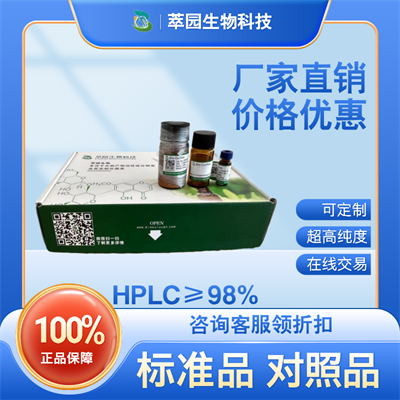
Cas no 110623-73-9 (Epimedin B)

Epimedin B Chemical and Physical Properties
Names and Identifiers
-
- Epimedin B
- 3-[(2S,3R,4R,5R,6S)-4,5-dihydroxy-6-methyl-3-[(2S,3R,4S,5R)-3,4,5-trihydroxyoxan-2-yl]oxyoxan-2-yl]oxy-5-hydroxy-2-(4-methoxyphenyl)-8-(3-methylbut-2-enyl)-7-[(2S,3R,4S,5S,6R)-3,4,5-trihydroxy-6-(hydr
- EPIMEDIN B(P) PrintBack
- Epimedin-B
- Epmedin B
- 3-((6-Deoxy-2-O-beta-D-xylopyranosyl-alpha-L-mannopyranosyl)oxy)-7-(beta-D-glucopyranosyloxy)-5-hydroxy-2-(4-methoxyphenyl)-8-(3-methyl-2-butenyl)-4H-1-benzopyran-4-one
- EPIMEDIN B(PRIMARY STANDARD)
- 4H-1-Benzopyran-4-one,3-[(6-deoxy-2-O-β-D-xylopyranosyl-α-L-mannopyranosyl)oxy]-7-(β-D-glucopyranosyloxy)-5-hydroxy-2-(4-methoxyphenyl)-8-(3-methyl-2-buten-1-yl)-
- 3-[(6-Deoxy-2-O-beta-D-xylopyranosyl-alpha-L-mannopyranosyloxy)]-7-(beta-D-glucopyranosyloxy)-5-hydroxy-2-(4-methoxy-phenyl)-8-(3-methylbut-2-en-1-yl)-4H-chromen-4-one
- 3-[(2S,3R,4R,5R,6S)-4,5-dihydroxy-6-methyl-3-[(2S,3R,4S,5R)-3,4,5-trihydroxyoxan-2-yl]oxyoxan-2-yl]oxy-5-hydroxy-2-(4-methoxyphenyl)-8-(3-methylbut-2-enyl)-7-[(2S,3R,4S,5S,6R)-3,4,5-trihydroxy-6-(hydroxymethyl)oxan-2-yl]oxychromen-4-one
- Epimedin B;
- C38H48O19
- AB0029005
- X1132
- ST24046684
- 623E739
- 4H-1-Benzopyran-4-one, 3-((6-deo
- l)-7-(((2S,3R,4S,5S,6R)-3,4,5-trihydroxy-6-(hydrox
-
- MDL: MFCD04039834
- Inchi: 1S/C38H48O19/c1-14(2)5-10-18-21(53-37-31(49)28(46)26(44)22(12-39)54-37)11-19(40)23-27(45)34(32(55-33(18)23)16-6-8-17(50-4)9-7-16)56-38-35(29(47)24(42)15(3)52-38)57-36-30(48)25(43)20(41)13-51-36/h5-9,11,15,20,22,24-26,28-31,35-44,46-49H,10,12-13H2,1-4H3/t15-,20+,22+,24-,25-,26+,28-,29+,30+,31+,35+,36-,37+,38-/m0/s1
- InChI Key: OCZZCFAOOWZSRX-LRHLXKJSSA-N
- SMILES: O([C@H]1[C@@H]([C@H]([C@@H](CO1)O)O)O)[C@H]1[C@H](OC2=C(C3C=CC(=CC=3)OC)OC3C(C/C=C(\C)/C)=C(C=C(C=3C2=O)O)O[C@H]2[C@@H]([C@H]([C@@H]([C@@H](CO)O2)O)O)O)O[C@@H](C)[C@@H]([C@H]1O)O
Computed Properties
- Exact Mass: 808.27900
- Monoisotopic Mass: 808.27897930 g/mol
- Isotope Atom Count: 0
- Hydrogen Bond Donor Count: 10
- Hydrogen Bond Acceptor Count: 19
- Heavy Atom Count: 57
- Rotatable Bond Count: 11
- Complexity: 1420
- Covalently-Bonded Unit Count: 1
- Defined Atom Stereocenter Count: 14
- Undefined Atom Stereocenter Count : 0
- Defined Bond Stereocenter Count: 0
- Undefined Bond Stereocenter Count: 0
- Topological Polar Surface Area: 293
- Molecular Weight: 808.8
- XLogP3: 0.1
Experimental Properties
- Color/Form: Yellow powder
- Boiling Point: 1066.1 ℃ at 760 mmHg
- PSA: 297.12000
- LogP: -1.46880
Epimedin B Pricemore >>
| Related Categories | No. | Product Name | Cas No. | Purity | Specification | Price | update time | Inquiry |
|---|---|---|---|---|---|---|---|---|
| ChemFaces | CFN99940-20mg |
Epimedin B |
110623-73-9 | >=98% | 20mg |
$128 | 2021-07-22 | |
| S e l l e c k ZHONG GUO | S9268-1mg |
Epmedin B |
110623-73-9 | 99.93% | 1mg |
¥1286.46 | 2023-09-15 | |
| HE FEI BO MEI SHENG WU KE JI YOU XIAN ZE REN GONG SI | BZP0229-20mg |
Epimedin B |
110623-73-9 | HPLC≥98% | 20mg |
¥1000元 | 2023-09-15 | |
| SHANG HAI YUAN YE Biotechnology Co., Ltd. | B20172-20mg |
Epimedin B |
110623-73-9 | ,HPLC≥98% | 20mg |
¥800.00 | 2021-09-02 | |
| XI GE MA AO DE LI QI ( SHANG HAI ) MAO YI Co., Ltd. | PHL80587-10MG |
Epimedin B |
110623-73-9 | 10mg |
¥4890.46 | 2025-01-11 | ||
| SHANG HAI XIAN DING Biotechnology Co., Ltd. | QD739-20mg |
Epimedin B |
110623-73-9 | HPLC≥95+% | 20mg |
1249CNY | 2021-05-08 | |
| Chengdu Biopurify Phytochemicals Ltd | BP0546-1000mg |
Epimedin B |
110623-73-9 | 98% | 1000mg |
$890 | 2023-09-20 | |
| Chengdu Biopurify Phytochemicals Ltd | BP0546-20mg |
Epimedin B |
110623-73-9 | 98% | 20mg |
$86 | 2023-09-20 | |
| Chengdu Biopurify Phytochemicals Ltd | BP0546-100mg |
Epimedin B |
110623-73-9 | 98% | 100mg |
$260 | 2023-09-20 | |
| SHANG HAI JI ZHI SHENG HUA Technology Co., Ltd. | E19891-20mg |
Epmedin B |
110623-73-9 | 20mg |
¥798.0 | 2021-09-09 |
Epimedin B Suppliers
 Audited Supplier
Epimedin B Related Literature
-
Li Yu Bo,Tanui Emmanuel Kipletting,Jin Jing,Zhang Yan Jun Anal. Methods 2013 5 3741
-
Lixian Zhang,Zhimin Zhang,Jianhua Huang,Yisu Jin,Hongmei Lu Anal. Methods 2013 5 5331
-
Qianyi Luo,Yonghuan Yun,Wei Fan,Jianhua Huang,Lixian Zhang,Baichuan Deng,Hongmei Lu RSC Adv. 2015 5 5046
-
Chi Ma,Yuhao Zhang,Xiuxiu Dou,Li Liu,Weidong Zhang,Ji Ye RSC Adv. 2022 12 27781
-
5. Total flavonoids in Epimedium koreanum Nakai alleviated chronic renal failure via promoting AMPK activationYudan Zhao,Ruiqi Zhang,Lintong Mu,Wanyue Yang,Xin Zhang,Ling Han,Chongning Lv,Jincai Lu Food Funct. 2022 13 904
Additional information on Epimedin B
Epimedin B (CAS No. 110623-73-9): A Comprehensive Guide to Its Properties and Applications
Epimedin B (CAS No. 110623-73-9) is a bioactive flavonoid compound primarily found in plants of the Epimedium genus, commonly known as "horny goat weed." This naturally occurring phytochemical has garnered significant attention in recent years due to its potential health benefits, particularly in the fields of traditional medicine, nutraceuticals, and pharmaceutical research. As consumer interest in plant-derived compounds and natural therapeutics continues to rise, Epimedin B stands out as a promising candidate for various applications.
The chemical structure of Epimedin B belongs to the prenylated flavonol glycosides class, characterized by its unique sugar moieties and isoprenyl groups. This structural complexity contributes to its distinctive biological activities. Researchers have identified Epimedin B as one of the major active components in Epimedium extracts, alongside other closely related compounds like icariin and epimedin C. The growing popularity of natural supplements for men's health and herbal alternatives to conventional medicine has propelled interest in this compound.
In traditional Chinese medicine (TCM), Epimedium-derived products containing Epimedin B have been used for centuries to support bone health, joint function, and reproductive wellness. Modern scientific investigations have begun to validate some of these traditional uses, with studies suggesting potential benefits for osteoporosis management, cardiovascular health, and neuroprotection. The compound's mechanism of action appears to involve modulation of various cellular signaling pathways and hormonal regulation.
The extraction and purification of Epimedin B typically involve advanced techniques such as high-performance liquid chromatography (HPLC) and preparative chromatography. These methods ensure the production of high-purity Epimedin B standard for research and commercial applications. Quality control measures for Epimedin B supplements often include verification of the compound's presence and concentration through analytical chemistry methods.
Recent trends in the dietary supplement industry show increasing demand for standardized Epimedium extracts with guaranteed Epimedin B content. Manufacturers are responding by developing specialized extraction protocols to optimize bioactive compound yield while maintaining the natural balance of constituents. This approach aligns with current consumer preferences for whole-plant synergies rather than isolated compounds.
Scientific research on Epimedin B has expanded significantly in the past decade, with studies exploring its potential as a natural antioxidant, anti-inflammatory agent, and bone metabolism modulator. The compound's ability to influence osteoblast activity makes it particularly interesting for bone health applications. Additionally, preliminary research suggests possible benefits for cognitive function and age-related conditions, although more clinical studies are needed.
The market for Epimedin B-containing products has seen steady growth, particularly in the nutraceutical sector and functional food industry. Product developers are incorporating Epimedium extracts into various formulations, from capsules and tablets to liquid extracts and powdered blends. Regulatory considerations for these products vary by region, with most countries classifying Epimedin B as a dietary ingredient rather than a pharmaceutical compound.
Quality assessment of Epimedin B materials involves multiple parameters, including purity testing, heavy metal screening, and microbiological analysis. Reputable suppliers provide comprehensive certificates of analysis (CoA) detailing these quality metrics. For research purposes, Epimedin B reference standards are available with documented chemical characterization and spectroscopic data.
Future research directions for Epimedin B may include more extensive clinical trials to validate its therapeutic potential, as well as investigations into its synergistic effects with other plant compounds. The development of novel delivery systems to enhance bioavailability represents another promising area of exploration. As interest in plant-based medicine continues to grow globally, Epimedin B is likely to remain an important subject of scientific and commercial interest.
For consumers and practitioners interested in Epimedin B supplements, it's important to source products from reputable manufacturers that provide transparent information about compound concentration, extraction methods, and quality assurance. While generally considered safe when used appropriately, consultation with a healthcare professional is recommended, especially for individuals with pre-existing conditions or those taking medications.
The scientific community continues to uncover new potential applications for Epimedin B, from supporting healthy aging to potentially modulating metabolic processes. As research progresses, our understanding of this fascinating plant-derived compound will undoubtedly expand, potentially leading to novel applications in both nutritional support and therapeutic interventions.